We scored every kombucha brand available in Singapore. Here are the results.
Fifteen brands. One scorecard. Seven criteria. One hundred points. Plus an Editor’s Taste Score for every brand we tasted — because the label is not the whole story.
Singapore’s kombucha market has grown significantly over the past decade. Brands have multiplied. Claims have become bolder. The word ‘authentic’ appears on bottles that have never completed a full natural fermentation. And ‘natural’ appears on labels that, as we have covered in this series, mean very little at all.
Every brand on this list was assessed using the same 7-criteria, 100-point KombuchaSG Authenticity Scorecard — the same framework published publicly on The Standard page before any brand was reviewed. No criteria changed for any brand. And for every brand we physically tasted, we added an Editor’s Taste Score out of 20 — a personal, clearly labelled assessment of what the product actually tastes like in the glass.
Two numbers. One from the label. One from the palate. Here is what the Singapore kombucha market looks like when you apply both.
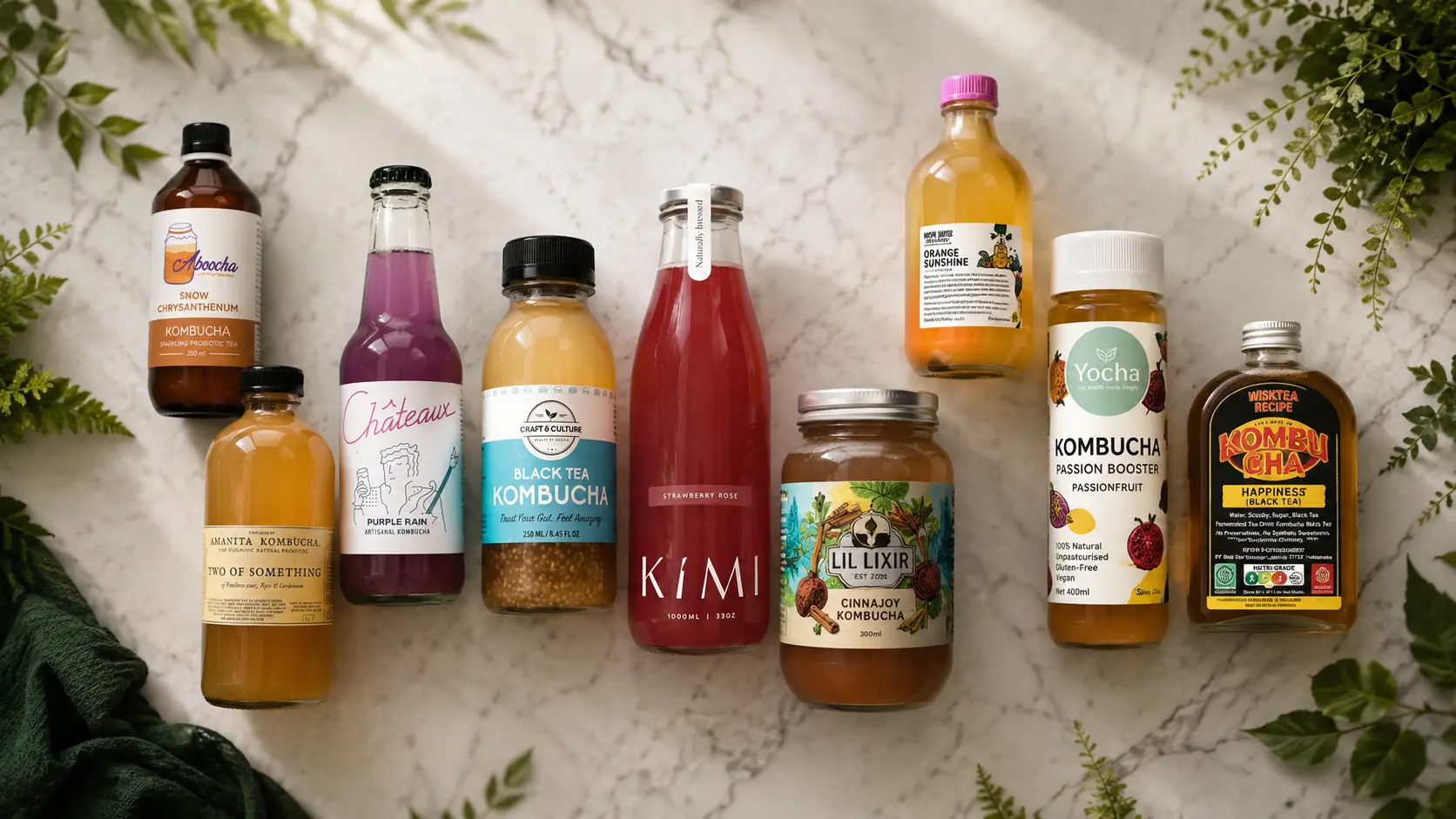
Two scores per brand — what each one measures
Every brand carries two scores on this page.
- Scorecard score / 100 — objective, criteria-based, derived entirely from the ingredient list, nutrition panel, and front-of-pack claims. Published criteria. No editorial discretion. Score 80+: Authentic. Score 50–79: Partially Authentic. Score 0–49: Commercial Grade.
- Editor’s Taste Score / 20 — personal, subjective, clearly labelled as such. Four criteria: Fermentation Character, Carbonation Feel, Flavour Honesty, and Overall Impression. Scored out of 5 each. Carries no weight in the scorecard total. Brands not yet tasted are marked accordingly.
About the Editor’s Taste Score
The Editor’s Taste Score is a personal assessment and is entirely separate from the authenticity scorecard. It reflects the tasting experience of the KombuchaSG editor, who has tasted all brands marked with a taste score. Scores are given in the context of having tasted every brand reviewed in this directory — which means the scores are comparative, not absolute.
A score of 4/20 does not mean a product is undrinkable. It means that relative to what genuine craft kombucha tastes like, it falls significantly short on fermentation character, carbonation feel, flavour honesty, and overall impression. The gap between 4/20 and 20/20 on this list is real — and instructive.
| Metric | Count |
|---|---|
| Brands reviewed | 15 |
| Scored Authentic (80+) | 7 |
| Partially Authentic (50–79) | 4 |
| Commercial Grade (0–49) | 2 |
| Brands tasted by editor | 10 |
| Highest taste score | 20 / 20 |
The honest verdict on Singapore’s kombucha market
Half the market scores Authentic. That sounds encouraging — until you look at the Editor’s Taste Scores and see that several brands scoring well on the label deliver something very different in the glass. Chemical aftertastes. Carbonation that reads as sparkling water rather than fermentation. Flavours that bear little resemblance to the ingredients declared on the label.
The pattern across the lower-scoring brands is consistent: lingering chemical or artificial aftertaste, aggressive carbonation, and flavour profiles that do not match their ingredient declarations. This is not coincidence — it is the predictable result of production shortcuts that the scorecard catches on the label and the palate confirms in the glass.
The best product available in Singapore is not Singapore-made. It is brewed in Jakarta, available here through select online retailers and specialty stores, communicates almost nothing about itself to the market — and in the glass, it is in a different category from everything else reviewed here. That gap is the most instructive finding in this entire directory.
“The label score tells you what is in the bottle. The taste score tells you what it is actually like to drink it. Sometimes they align. Sometimes they do not.”
✅ Authentic — 80 to 100 points
Meets all or most genuine kombucha criteria. Natural carbonation. Real ingredients. Live cultures verifiable.
WiskTea Recipe Kombucha 92 / 100 · Taste 20 / 20
Jakarta, Indonesia 🇮🇩 · Available at 360wellnessdna.com, botaniko.sg, yourdnamatters.com, and Taiwan U Choice (People’s Park Centre) · BPOM certified · 23 flavours · 250ml glass
The highest scorecard score in the directory — and the highest taste score. A brand that does almost nothing to explain itself to the Singapore market: no bold front-of-pack claims, minimal marketing, a label that lists its ingredients and lets them speak. Across all 23 flavours, not one vague declaration appears. Every ingredient is whole, named, and real. Third-party lab testing confirms live cultures at point of sale — a standard no other brand in this directory has met with accredited documentation. The product is excellent. Its communication of that excellence to Singapore consumers is almost nonexistent — a missed opportunity the product does not deserve.
Editor’s Taste Note: After tasting every brand in this directory — brands that repeatedly delivered sparkling water character, chemical aftertastes, and flavour extracts that bore no resemblance to their declared ingredients — WiskTea Recipe is a different experience entirely. The fermentation character is genuine. Actual tartness. Real depth. The chemical aftertaste that characterised most other brands reviewed here is absent — replaced by a clean, natural finish that is the product of fermentation, not sweetener. Passion Fruit tastes like passionfruit. Sweet Dew delivers a layered pandan character that no extract can replicate. The carbonation is integrated, not aggressive. 20 out of 20 — given in the context of having tasted every other brand on this list.
Wild Boocha 90 / 100 · Taste pending
Singapore 🇸🇬 · Local craft · Raw and unpasteurised declared
The highest-scoring Singapore-brewed brand in the directory. Wild Boocha declares raw and unpasteurised, uses whole named ingredients including fresh passionfruit pulp, and brews in stainless steel vessels. A strong representative of what local craft kombucha can produce when the process is taken seriously. Tasting note to be added once bottles are obtained.
ROK Kombucha 88 / 100 · Taste pending
Australia 🇦🇺 · Imported · Available at NTUC FairPrice
One of the cleanest ingredient lists in the directory — certified organic cold-pressed strawberries, hibiscus, elderberries, single-origin plantation teas. Founded by a winemaker, which shows in the ingredient precision. No sparkling water, no natural flavouring shortcuts, no added sweeteners. Tasting note to be added once bottles are sourced locally.
Pourabucha 87 / 100 · Taste pending
Singapore 🇸🇬 · Local craft
Solid across the board. Pourabucha is a local brand that demonstrates genuine fermentation practice — named ingredients, natural carbonation, consistent production. A reliable choice for Singapore consumers looking for locally brewed authenticity. Tasting note to be added once bottles are obtained.
Aboocha 86 / 100 Taste 5 / 20
Singapore 🇸🇬 · Local craft
Scores authentically on the label — real ingredients, natural carbonation, good transparency. But the gap between the scorecard and the tasting note is the widest of any Authentic-tier brand on this list. The label earns 86. The glass tells a different story.
Editor’s Taste Note: No real fermentation character detectable across the range. The carbonation is aggressive and feels closer to sparkling water than natural fermentation in the glass. Flavour profiles did not match declared ingredients — the simpler flavours were cleaner but the overall impression was of a flavoured sparkling drink rather than a fermented tea beverage. A lingering aftertaste was consistent across the range. The scorecard scores what the label declares. The tasting note scores what the glass delivers.
Châteaux Kombucha 86 / 100 Taste 6 / 20
Singapore 🇸🇬 · Local craft
A detectable fermentation character is present — something Aboocha does not have — and the label earns a solid 86. But the carbonation dominates the experience in a way that overwhelms the drink, the premium tea character does not come through, and a lingering aftertaste was consistent across the range.
Editor’s Taste Note: There is a subtle kombucha note present — more than most brands in the lower tier deliver. But the carbonation reads as sharp and aggressive rather than the fine, integrated effervescence of natural second fermentation. The premium tea positioning did not deliver a discernible tea character to this taster. Passionfruit did not taste of passionfruit. A lingering aftertaste was present across both tasting sessions.
Moon Juice 85 / 100 Taste 11 / 20
Singapore 🇸🇬 · Local
Moon Juice scores well and — on the palate — performs above its position in the scorecard ranking. The fermentation character is meaningfully stronger than Aboocha and Châteaux, and the aftertaste that characterised those two brands is noticeably reduced. Still a good product. Not the best one on this list.
Editor’s Taste Note: The strongest fermentation character of the Singapore-brewed brands tasted — genuinely more complex than Aboocha or Châteaux, with less of the lingering aftertaste that characterised those reviews. Earl Grey uses a processed flavoured tea base, and the passionfruit flavour was diluted. But the overall drinking experience is clearly a level above the 4–6/20 brands. 11/20 is the honest score — the best among Singapore-brewed brands tasted, and meaningfully short of what the best product on this list delivers.

⚠ Partially Authentic — 50 to 79 points
Some authentic attributes but notable compromises. Read the individual reviews to understand exactly where each brand falls short.
Kimi 74 / 100 Taste 7 / 20
Singapore 🇸🇬
The strongest scorer in the Partially Authentic tier. Kimi does several things well but specific compromises on flavoring transparency and ingredient specificity hold it below the Authentic threshold. The taste score is consistent with a product that has some fermentation character but falls short of what real ingredients and full fermentation produce.
Editor’s Taste Note: Some fermentation character is detectable — slightly more than Aboocha — but the carbonation feel is inconsistent and the flavour honesty is weak. A lingering chemical aftertaste was present. Not the worst on this list, but the gap between the taste experience and the brand’s wellness positioning is notable.
Lo Bros 65 / 100 Taste 4 / 20
Australia 🇦🇺 · Imported · Widely available in Singapore supermarkets
Widely available in most major Singapore supermarkets — which tells you more about distribution than product quality. Falls into the Partially Authentic tier on the strength of its base fermentation but loses significant points to flavoring shortcuts. The taste score confirms what the label suggests.
Editor’s Taste Note: Basically sparkling water with a kombucha flavour profile. No meaningful fermentation character. The carbonation is injected in character — sharp, aggressive, dissipating quickly. Flavours did not match declared ingredients. Chemical aftertaste present. 4/20.
Remedy 61 / 100 Taste 4 / 20
Australia 🇦🇺 · Imported
Commercially successful with strong marketing. The scorecard finds a gap between the positioning and the production practice. The taste confirms it — a product that uses sweetener substitution to achieve a zero-sugar claim while delivering sweetness through erythritol and stevia, with carbonation that reads as sparkling water rather than fermentation.
Editor’s Taste Note: Tastes like sweetened sparkling water. Zero fermentation character. The zero-sugar claim is achieved through erythritol and stevia, not through fermentation — and the taste reflects this. A lingering chemical aftertaste was present. This product gives genuine kombucha a misleading point of comparison for new consumers who encounter it first.
Craft & Culture 57 / 100 · Taste pending
Singapore 🇸🇬
The name implies craft production. The scorecard finds a different story in the ingredient list. Scores 57 — just above the Commercial Grade threshold — with notable deductions that the full review documents clearly. The brand has the foundation to do better.
🔴 Commercial Grade — 0 to 49 points
Significant shortcuts that compromise authenticity. The scorecard criteria — not editorial opinion — deliver these verdicts.
Lil Lixir 48 / 100 Taste 4 / 20
Singapore 🇸🇬
Multiple criteria show significant deductions. The ingredient list tells the story that the label’s wellness positioning does not. The taste score is consistent — a product that does not deliver fermentation character or flavour honesty in the glass.
Editor’s Taste Note: Chemical and artificial taste. Very sweet. Zero fermentation character. Feels like drinking sparkling juice. Flavours did not match declared ingredients. Lingering chemical aftertaste on the tongue. 4/20.
ÜNIIQ 46 / 100 Taste 4 / 20
Malaysia 🇲🇾 · Imported to Singapore
Premium positioning. Commercial Grade score. The gap between front-of-pack claims and back-of-pack reality is as wide as any brand on this list. The zero-sugar claim is achieved through erythritol substitution, not fermentation. The taste confirms the label.
Editor’s Taste Note: Chemical lingering aftertaste. Very sweet despite zero sugar — erythritol and stevia doing the work that fermentation should. No fermentation character. No meaningful carbonation from fermentation. Tastes like a flavoured sparkling drink with a kombucha label. Would not drink again. 4/20.
📋 Pending & Legacy
One brand not yet fully verified. One pioneer brand now closed — scored for the record.
Amanita Provisional — physical bottles not yet verified
Singapore 🇸🇬
Amanita’s label-based score is provisional. We have assessed the ingredients and packaging from available data — but we have not yet tasted it or verified a physical bottle. The label suggests it belongs in the Authentic tier. We will update this entry once we have the product in hand. We are genuinely hoping it does not disappoint.
Fizzicle Brand closed April 2026 — legacy score Taste 5 / 20
Singapore 🇸🇬 · Brand closed April 2026
Fizzicle deserves to be on this list. As one of Singapore’s kombucha pioneers, the brand helped build the category’s presence in this market. That contribution is real and worth acknowledging. But carbonated water in the ingredient list means the fizz was injected, not fermented — and under the scorecard, that criterion scores zero regardless of legacy. The brand is now closed. The score and the taste note stand as a record.
Editor’s Taste Note: The carbonation is the immediate and dominant experience — aggressive, sharp, dissipating fast. This is what injected CO₂ produces, not natural second fermentation. An artificial and chemical taste was present alongside the carbonation. Flavours did not come through clearly against the carbonation character. A brand that pioneered Singapore’s kombucha category deserved a better product than the sparkling water-driven result in the bottle. 5/20.

What the full picture tells us
The scorecard and the taste scores together tell a story that neither can tell alone. A brand can score 86 on the label and 5 on the palate. A brand can score 85 on the label and 11 on the palate — and taste better than everything around it despite sitting lower in the scorecard ranking. The two numbers are different measurements of different things.
What they agree on: the top of the market is genuinely good. WiskTea Recipe at 92/20/20 and Wild Boocha at 90 (taste pending) represent what authentic kombucha looks and tastes like when the process is done properly. ROK at 88 (taste pending) has one of the cleanest ingredient lists in the directory. These are products worth seeking out.
What the taste scores reveal that the scorecard cannot: several brands in the Authentic tier deliver a drinking experience that falls significantly short of their label scores. The chemical aftertaste pattern — present across Aboocha, Châteaux, Kimi, Lo Bros, Remedy, Lil Lixir, and ÜNIIQ — is not an isolated finding. It is a consistent pattern across the mid and lower tier of this market. Singapore’s kombucha market has genuine room for improvement. The scores show exactly where.
Every score on this page links to a full individual review.
Each review includes the complete ingredient list quoted verbatim, a scorecard breakdown for all seven criteria, an Editor’s Tasting Note, and a plain-language verdict.
→ Read The Standard — the full 7-criteria scorecard explained
Frequently asked questions
Why do some brands score well on the label but poorly on taste?
The scorecard assesses what is declared on the label — ingredients, nutrition panel, front-of-pack claims. It cannot measure what something tastes like. A brand can declare real ingredients and natural carbonation on the label while producing a drink that does not deliver those qualities convincingly in the glass. The taste score captures what the label cannot. Both measurements are useful — and the gap between them, where it exists, is instructive.
Why is the top-scoring brand not Singapore-made?
Because the scorecard assesses product quality — not origin. A kombucha from Jakarta that uses whole named ingredients across 23 flavours, carries BPOM food safety certification, and has third-party lab verification of live cultures at point of sale earns a higher score than a Singapore-made product that takes shortcuts on any of those criteria. The taste score confirms the same conclusion independently. The best product available in Singapore happens to be brewed in Jakarta.
What does the Editor’s Taste Score actually measure?
Four things: Fermentation Character (does it taste like live kombucha — tartness, depth, vinegar complexity), Carbonation Feel (soft and integrated vs sharp and aggressive), Flavour Honesty (does it taste like the declared ingredients), and Overall Impression (would you drink it again). Each is scored out of 5, for a total of 20. The scores are comparative — given in the context of having tasted every brand reviewed in this directory. A score of 4/20 means the product falls significantly short relative to what genuine craft kombucha tastes like. A score of 20/20 means it delivered on every criterion, consistently, across multiple flavours.
Will brands with pending taste scores be updated?
Yes. Wild Boocha, ROK, Pourabucha, Craft & Culture, and Amanita all have taste scores pending. As bottles are obtained and tasted, the Editor’s Taste Notes and scores will be added to both the individual reviews and this roundup post. This page will be updated accordingly.
- → The Standard — our 7-criteria authenticity scorecard
- → Browse the full brand directory
- → Real vs Fake Kombucha — the shortcuts explained
- → How to read a kombucha label
KombuchaSG is an independent educational platform. All brand reviews apply the same 7-criteria scorecard published on The Standard page. Scores reflect the ingredient list, nutrition panel, and label claims at the time of review. The Editor’s Taste Score is a personal assessment and carries no weight in the scorecard total. The same scorecard criteria were applied to WiskTea Recipe Kombucha as to every other brand in this directory. Full disclosure is available on the Disclaimer page.