
If you are new to kombucha, the word SCOBY can sound strange at first.
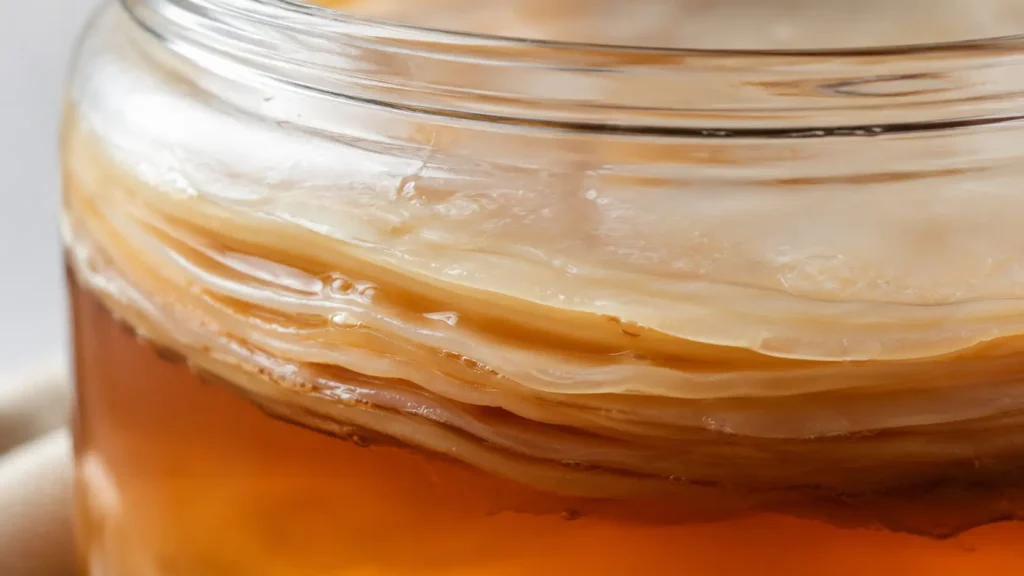
SCOBY stands for Symbiotic Culture of Bacteria and Yeast. In simple terms, it is the living culture used to ferment sweetened tea into kombucha.
It usually looks like a smooth, rubbery, jelly-like layer floating at the top of the brew. It may not look glamorous, but it plays one of the most important roles in kombucha fermentation.
The SCOBY is where bacteria and yeast work together. The yeast helps break down sugar, while the bacteria convert fermentation by-products into organic acids. This natural teamwork is what gives kombucha its tangy taste, gentle fizz, and living character.
Why Does Kombucha Need a SCOBY?
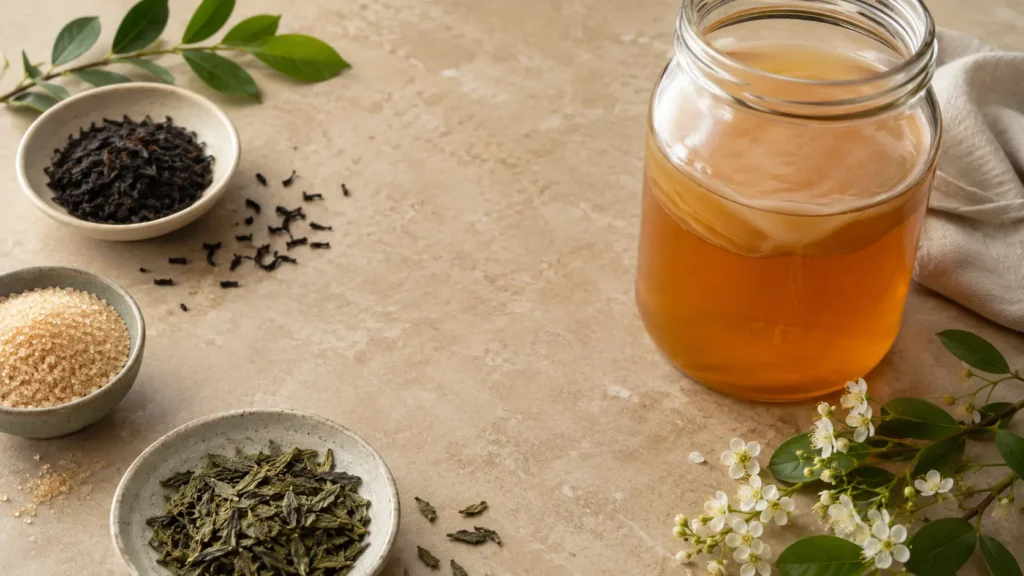
Kombucha begins with a few simple ingredients: tea, water, sugar, and a SCOBY.
The sugar is not added simply to make the drink sweet. It is food for the live culture. During fermentation, the SCOBY uses the sugar and tea compounds to create a more complex beverage with acidity, aroma, and natural fermentation character.
This is why properly fermented kombucha tastes very different from ordinary sweet tea or soft drinks. It is not just flavoured and carbonated. It has been transformed through fermentation.
A good way to think about it:
Tea provides the foundation. Sugar feeds the culture. The SCOBY guides the fermentation.
What Does a SCOBY Actually Do?
A SCOBY creates the right environment for fermentation.
During the brewing process, the yeast and bacteria inside the culture work together to change the sweetened tea over time. This produces natural organic acids, subtle carbonation, and the signature tart-sweet taste associated with kombucha.
Organic acids are natural acids formed during fermentation. They help create kombucha’s bright, tangy flavour and are part of what makes fermented tea distinct from regular bottled drinks.
In traditional kombucha brewing, a new SCOBY layer may also form with each batch. This is a sign that the culture is active and continuing its natural fermentation cycle.
Is the SCOBY the Same as Probiotics?
Not exactly.
The SCOBY is the fermentation culture. Probiotics refer more broadly to live microorganisms that may support gut microbiome diversity when consumed as part of a balanced diet.
Raw, unpasteurised kombucha may contain live cultures because it has not been heat-treated after fermentation. However, the exact microbial profile can vary depending on tea type, fermentation conditions, storage, and brewing method.
This is why quality and handling matter. Kombucha is a living drink, so refrigeration, hygiene, ingredient quality, and proper brewing control all affect the final result.
Why Does SCOBY Sometimes Appear in the Bottle?
Sometimes, you may notice floating strands, cloudy sediment, or small jelly-like pieces inside a bottle of raw kombucha.
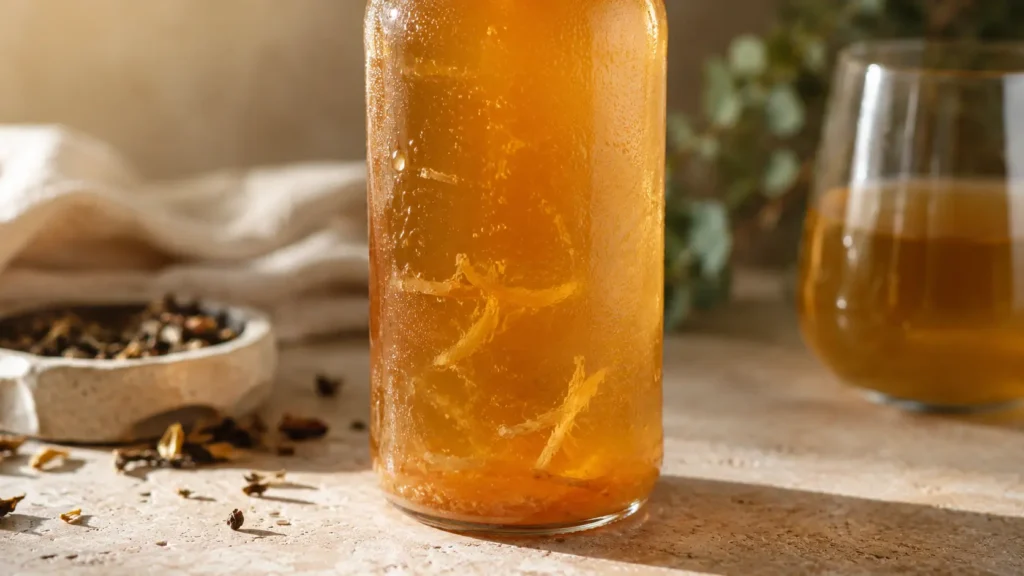
This is usually normal for unpasteurised kombucha. These are often small SCOBY formations or live culture sediment. Some people call this “the mother”.
It may look unusual if you are used to clear commercial drinks, but in raw kombucha, it can be a sign that the drink is still alive with active cultures. You can drink it, remove it, or gently swirl the bottle before pouring if you prefer a more even texture.
Why SCOBY Quality Matters
A healthy SCOBY is only one part of good kombucha. The final drink also depends on:
- the quality of tea used
- fermentation time
- temperature control
- cleanliness and safety
- sugar balance
- storage conditions
- real ingredients used for flavouring
This matters especially in Singapore, where the warm and humid climate can speed up fermentation. If raw kombucha is not stored properly, it may continue fermenting too quickly, become overly sour, or build excess pressure in the bottle.
That is why professionally brewed kombucha is not just about having a SCOBY. It is about controlling the full fermentation process safely and consistently.
SCOBY and Craft Kombucha
In craft kombucha, the SCOBY is treated as part of a living brewing ecosystem.
The brewer has to understand how the culture behaves with different teas, sugar levels, temperatures, and flavouring ingredients. A green tea kombucha may ferment differently from a black tea or oolong tea kombucha. Botanicals, fruits, and herbs can also influence aroma, acidity, and balance.

This is where kombucha becomes more than just a functional drink. It becomes a craft beverage shaped by fermentation science, tea quality, and ingredient integrity.
When evaluating kombucha in Singapore, look beyond the word “probiotic” on the label. Look for signs of proper brewing: real tea, live cultures, transparent sugar levels, refrigeration when needed, and natural ingredients.
Can You Make Kombucha Without a SCOBY?
Authentic kombucha requires a living culture to ferment properly. Without a SCOBY or active starter culture, sweetened tea does not become true kombucha in the traditional sense.
However, home fermentation can be sensitive. Poor hygiene, unsuitable containers, contaminated cultures, or uncontrolled temperatures can affect safety and consistency.
For most people, especially beginners, professionally brewed kombucha is the more reliable way to enjoy the drink. It allows you to experience the benefits of proper fermentation without managing the risks of home brewing.
Final Takeaway
A SCOBY is the living culture behind kombucha.
It may look simple, but it is responsible for transforming sweetened tea into a naturally tangy, lightly fizzy fermented drink. Through the teamwork of bacteria and yeast, the SCOBY helps create kombucha’s flavour, acidity, and living character.
The better the tea, ingredients, fermentation control, and storage, the better the kombucha experience.
So the next time you see sediment or a small jelly-like strand in raw kombucha, don’t panic. It may simply be a reminder that kombucha is not just another bottled drink — it is a living fermented tea.