Category Archives: Learn

How Is Kombucha Made?

Kombucha begins as tea.
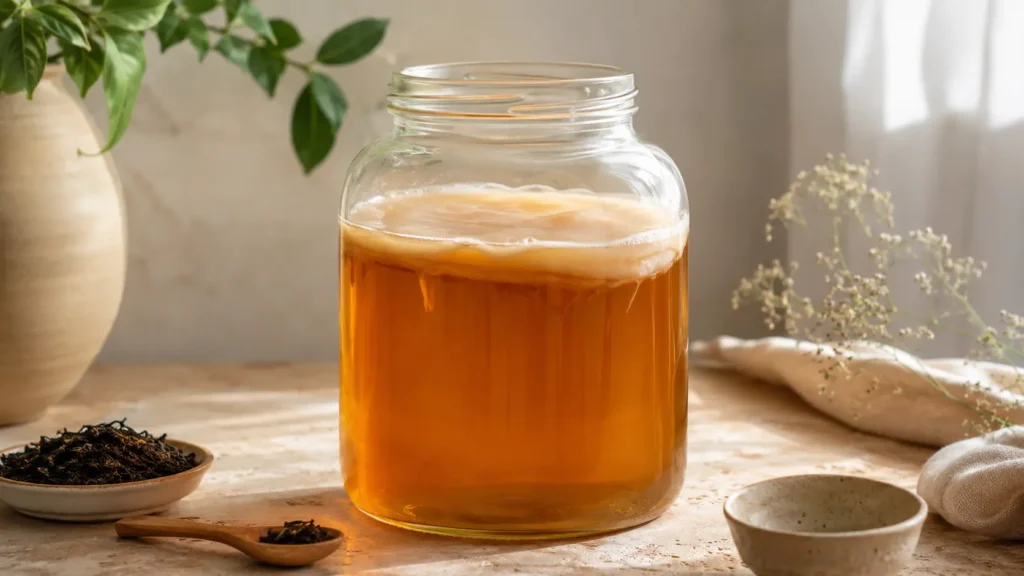
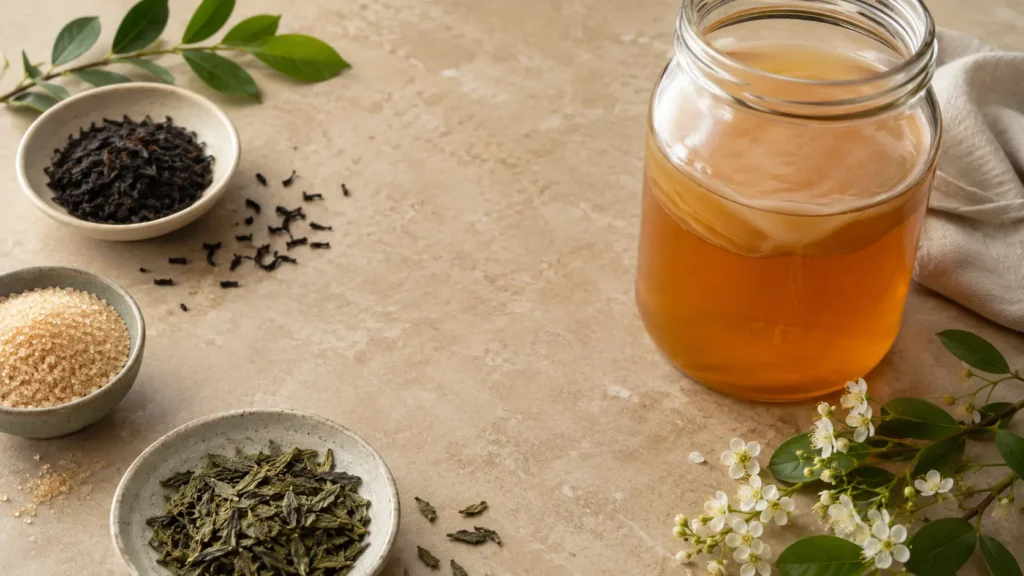
At its simplest, kombucha is made by fermenting sweetened tea with a living culture known as a SCOBY, which stands for Symbiotic Culture of Bacteria and Yeast.

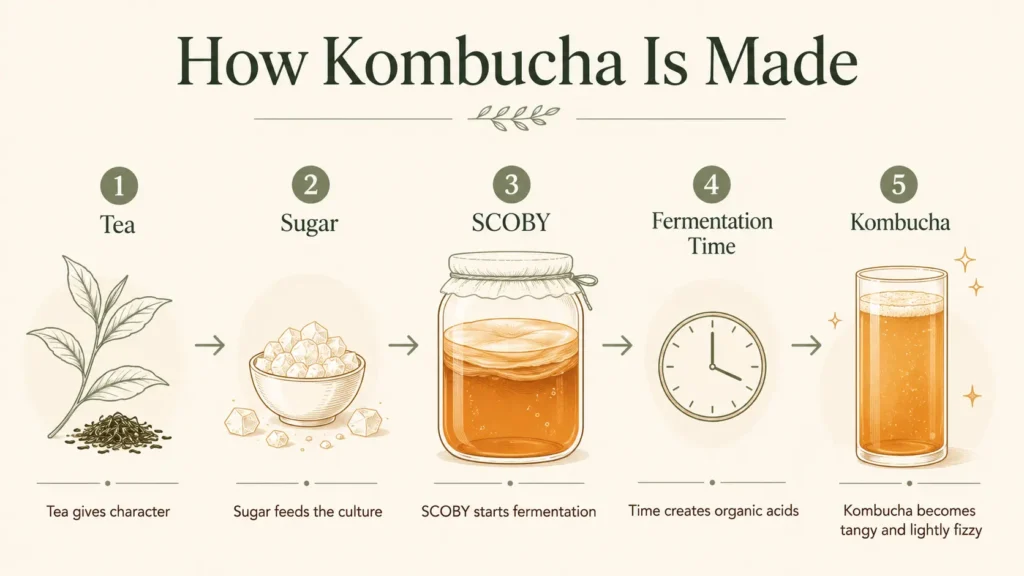
That may sound scientific, but the idea is simple: tea provides the foundation, sugar feeds the culture, and time allows fermentation to happen.

Over several days, the culture transforms the sweetened tea into a tangy, lightly fizzy drink with a more complex flavour. This is why kombucha tastes different from regular iced tea, soda, or sparkling water. It is not just mixed. It is fermented.

What Does “Fermentation” Mean?
Fermentation is a natural process where microorganisms such as bacteria and yeast transform ingredients over time.

In kombucha, the yeast helps break down sugar. The bacteria then help convert some of the fermentation by-products into organic acids.

Organic acids are natural acids formed during fermentation. They give kombucha its bright, tangy taste and help create the flavour balance that makes kombucha refreshing rather than simply sweet.

This is the heart of kombucha: a living culture slowly changing tea into a fermented beverage.

The Four Basic Elements of Kombucha
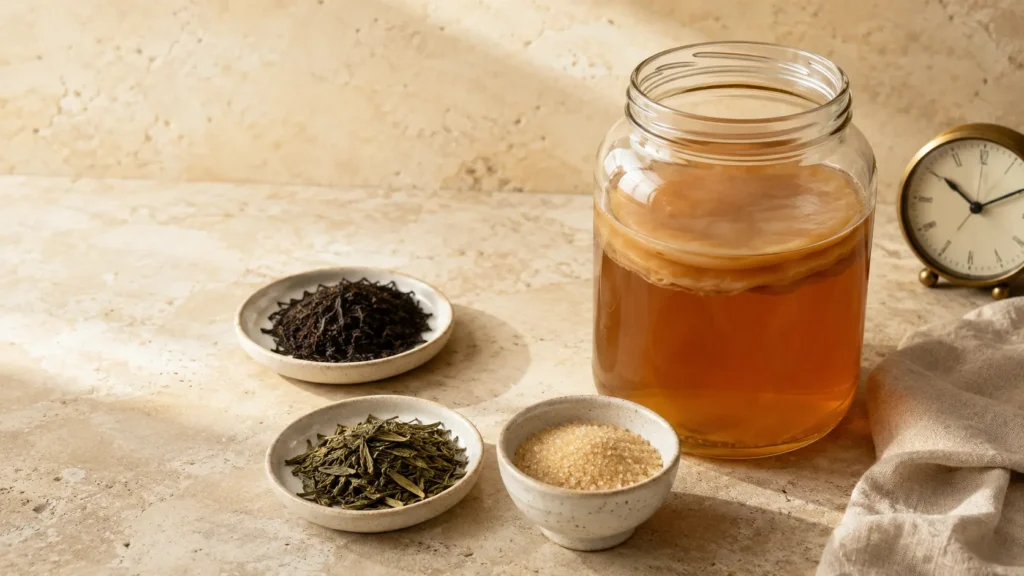
Most kombucha starts with four core elements:

  1. Tea
    Tea gives kombucha its base flavour, colour, aroma, and plant compounds known as polyphenols.
  2. Sugar
    Sugar feeds the live culture during fermentation. It is not there only to sweeten the drink.
  3. SCOBY
    The SCOBY contains the bacteria and yeast that drive fermentation.
  4. Time
    Fermentation does not happen instantly. The flavour develops gradually as the culture works.

A good way to remember it:

Tea gives character. Sugar feeds the culture. SCOBY starts fermentation. Time creates complexity.

Why Is Sugar Needed?

Many people are surprised that kombucha needs sugar.

But sugar plays an important role. It acts as food for the yeast and bacteria. During fermentation, the live culture consumes part of the sugar and converts it into other compounds, including organic acids and natural carbonation.

This does not mean all kombucha has the same sugar level. The final amount depends on the recipe, fermentation time, flavouring ingredients, and whether extra sweeteners are added later.

For Singapore consumers who are more sugar-conscious, this is why reading the label matters. A better kombucha should be transparent about its sugar content and should not rely heavily on post-fermentation sweeteners to taste good.

What Does the SCOBY Do?

The SCOBY is the living culture behind kombucha.

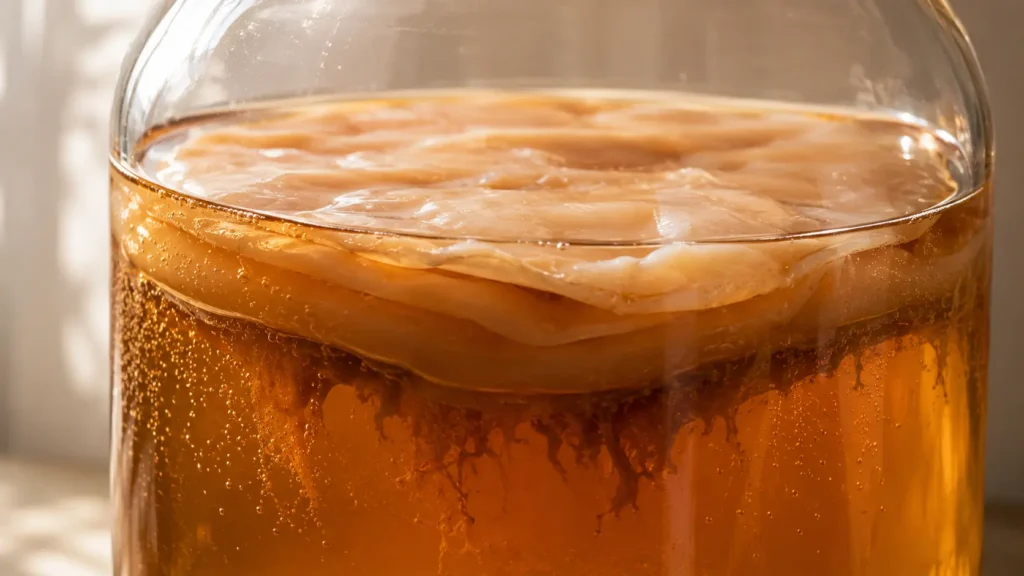
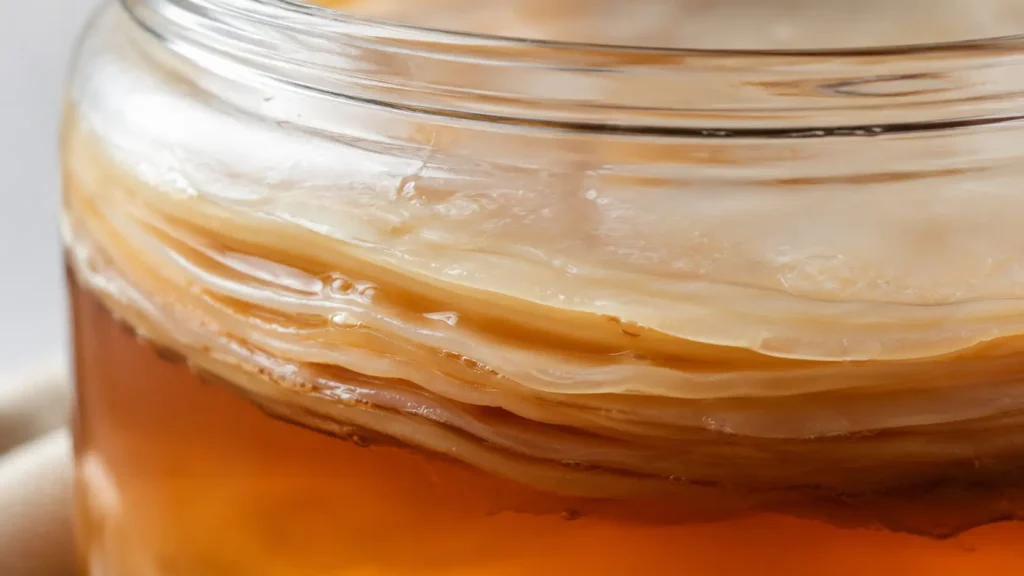
It usually looks like a pale, jelly-like layer floating at the surface of the brew. Inside that culture are bacteria and yeast working together.

The yeast helps process the sugar. The bacteria help create acids that give kombucha its signature tang. Over time, this teamwork changes the tea’s taste, aroma, and texture.

Without a living culture, sweetened tea remains sweetened tea. With a healthy SCOBY and proper fermentation, it becomes kombucha.

Why Does Kombucha Become Tangy?

Kombucha becomes tangy because fermentation produces organic acids.

These acids are part of what gives kombucha its refreshing, slightly sour profile. The longer kombucha ferments, the more tart it usually becomes.

This is also why authentic kombucha should not taste like ordinary soft drink. A good kombucha has balance: tea depth, gentle sweetness, acidity, and natural fermentation character.

It should feel alive and layered, not flat, syrupy, or artificially flavoured.

Why Is Kombucha Fizzy?

Kombucha can become naturally fizzy because yeast produces carbon dioxide during fermentation.
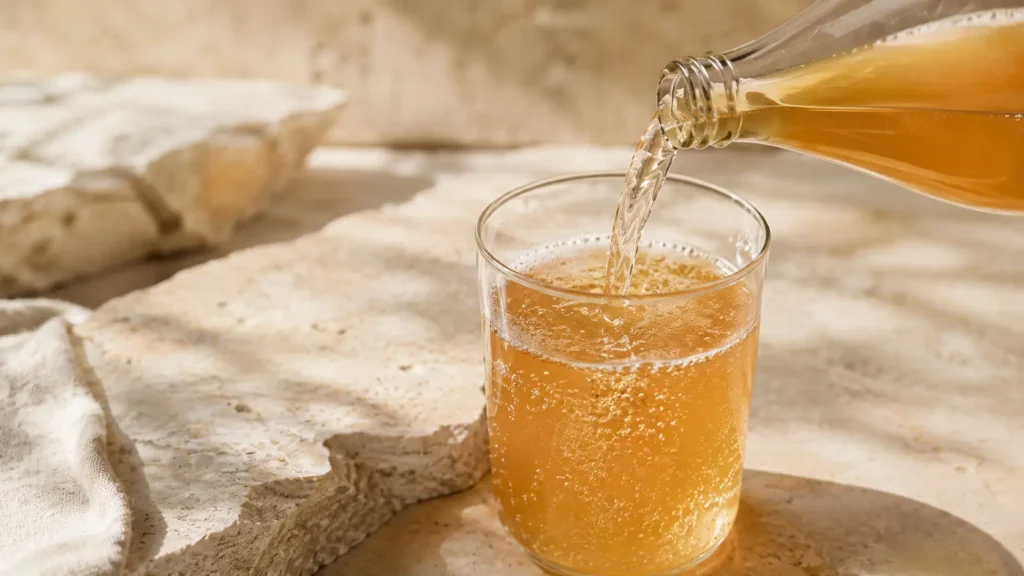
Carbon dioxide is the gas that creates bubbles. In traditional kombucha, this fizz can develop naturally, especially when the drink is bottled and allowed to continue fermenting carefully for a short period.

This natural carbonation is different from simply adding sparkling water. Natural fizz is part of the fermentation process and usually feels softer and more integrated.

That said, carbonation can vary between batches because kombucha is a living drink. Temperature, storage, sugar level, and fermentation time can all influence the final bubbles.

Why Do Time and Temperature Matter?

Fermentation is sensitive to time and temperature.
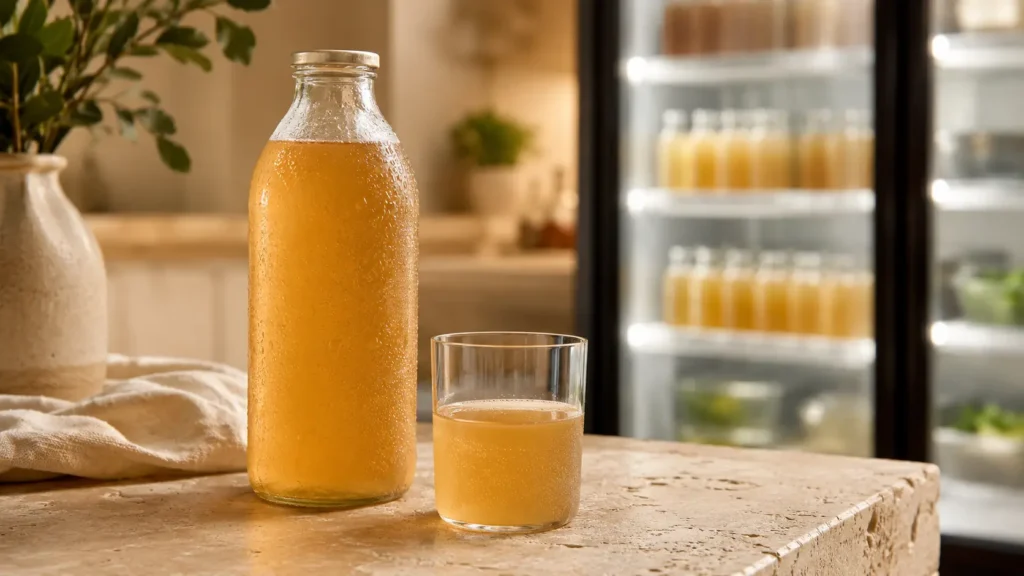
In Singapore’s warm and humid climate, fermentation can happen faster than in cooler countries. This can be helpful for active brewing, but it also means kombucha must be handled carefully.

If kombucha ferments too little, it may taste too sweet and underdeveloped. If it ferments too long, it may become too sour or vinegary.

Temperature also affects pressure inside bottles. Raw kombucha continues to ferment slowly, even after bottling. This is why proper refrigeration is important. Cold storage helps slow the culture down, preserve flavour, and maintain a more stable drinking experience.

Why Clean Brewing Matters

Because kombucha is made with live cultures, cleanliness matters.

Professional craft brewers pay close attention to hygiene, temperature, ingredient quality, fermentation time, and bottling conditions. These details help create kombucha that is safer, more consistent, and better balanced.

Home brewing can be interesting, but it also carries risks if the process is not controlled properly. Contamination, unsuitable containers, mould, or poor storage can affect the quality and safety of the drink.

For most beginners, professionally brewed kombucha is the easiest way to enjoy the benefits of fermentation without managing the complexity of the brewing process yourself.

What Happens After the First Fermentation?

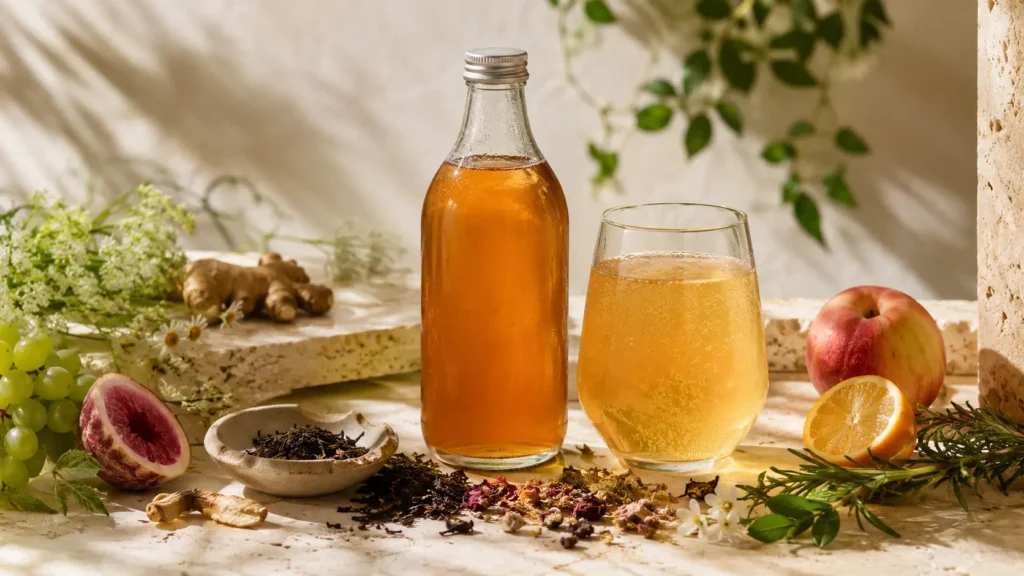
After the initial fermentation, kombucha may be flavoured with ingredients such as fruits, herbs, flowers, roots, or botanicals.

This stage helps develop aroma and taste. For example, fruits can add brightness, botanicals can add fragrance, and tea quality can influence depth and finish.

This is where ingredient quality becomes important.

A clean kombucha should use ingredients that support the fermentation rather than cover it up. Real fruits, premium tea leaves, and botanicals create a more natural flavour profile than artificial flavouring or heavy sweeteners.

Is Kombucha Still Alive After Bottling?

Raw, unpasteurised kombucha can remain alive after bottling because it still contains active cultures.

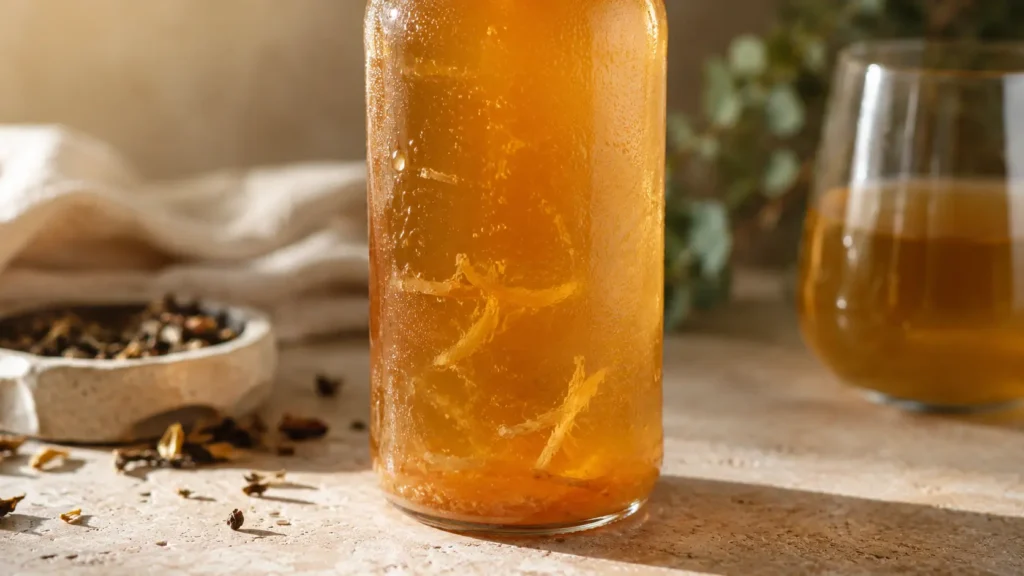
This is why you may sometimes see cloudy sediment, floating strands, or small jelly-like pieces in the bottle. These are usually natural signs of live culture activity.

It is also why raw kombucha should be kept chilled. Refrigeration slows fermentation, helps preserve flavour, and reduces the risk of excess pressure building inside the bottle.

Pasteurised kombucha, on the other hand, is heat-treated. This can improve shelf stability, but it also reduces or removes live cultures. That is one reason raw and pasteurised kombucha can feel very different in both taste and character.

Craft Kombucha vs Shortcuts

Good kombucha takes time.

It is shaped by tea selection, fermentation control, live culture balance, and ingredient quality. Shortcuts can make a drink taste sweet, fizzy, or fruity, but that does not always mean it has the depth of properly fermented kombucha.

When choosing kombucha, ask:

  • Is it made from real tea?
  • Is it raw or pasteurised?
  • Does it use real fruit or vague flavouring?
  • Is the sugar level clearly stated?
  • Does it need refrigeration?
  • Are artificial sweeteners or additives used after fermentation?

These questions help you understand whether you are drinking a fermented tea or simply a flavoured sparkling beverage.

Final Takeaway

Kombucha is made through fermentation.

Tea, sugar, and a SCOBY work together over time to create a tangy, lightly fizzy, living drink. The process may sound complicated, but the basic idea is simple: microorganisms transform sweetened tea into something more complex.

The best kombucha is not just about bubbles or flavour. It is about balance, patience, clean ingredients, and proper fermentation.

So when you drink kombucha, you are not just drinking tea. You are tasting the result of time, culture, and craft.

What is SCOBY?

What is SCOBY?

If you are new to kombucha, the word SCOBY can sound strange at first.

Symbiotic Culture of Bacteria and Yeast (SCOBY)

SCOBY stands for Symbiotic Culture of Bacteria and Yeast. In simple terms, it is the living culture used to ferment sweetened tea into kombucha.

It usually looks like a smooth, rubbery, jelly-like layer floating at the top of the brew. It may not look glamorous, but it plays one of the most important roles in kombucha fermentation.

The SCOBY is where bacteria and yeast work together. The yeast helps break down sugar, while the bacteria convert fermentation by-products into organic acids. This natural teamwork is what gives kombucha its tangy taste, gentle fizz, and living character.

Why Does Kombucha Need a SCOBY?

Kombucha begins with a few simple ingredients: tea, water, sugar, and a SCOBY.

The sugar is not added simply to make the drink sweet. It is food for the live culture. During fermentation, the SCOBY uses the sugar and tea compounds to create a more complex beverage with acidity, aroma, and natural fermentation character.

This is why properly fermented kombucha tastes very different from ordinary sweet tea or soft drinks. It is not just flavoured and carbonated. It has been transformed through fermentation.

A good way to think about it:

Tea provides the foundation. Sugar feeds the culture. The SCOBY guides the fermentation.

What Does a SCOBY Actually Do?

A SCOBY creates the right environment for fermentation.

During the brewing process, the yeast and bacteria inside the culture work together to change the sweetened tea over time. This produces natural organic acids, subtle carbonation, and the signature tart-sweet taste associated with kombucha.

Organic acids are natural acids formed during fermentation. They help create kombucha’s bright, tangy flavour and are part of what makes fermented tea distinct from regular bottled drinks.

In traditional kombucha brewing, a new SCOBY layer may also form with each batch. This is a sign that the culture is active and continuing its natural fermentation cycle.

Is the SCOBY the Same as Probiotics?

Not exactly.

The SCOBY is the fermentation culture. Probiotics refer more broadly to live microorganisms that may support gut microbiome diversity when consumed as part of a balanced diet.

Raw, unpasteurised kombucha may contain live cultures because it has not been heat-treated after fermentation. However, the exact microbial profile can vary depending on tea type, fermentation conditions, storage, and brewing method.

This is why quality and handling matter. Kombucha is a living drink, so refrigeration, hygiene, ingredient quality, and proper brewing control all affect the final result.

Why Does SCOBY Sometimes Appear in the Bottle?

Sometimes, you may notice floating strands, cloudy sediment, or small jelly-like pieces inside a bottle of raw kombucha.

This is usually normal for unpasteurised kombucha. These are often small SCOBY formations or live culture sediment. Some people call this “the mother”.

It may look unusual if you are used to clear commercial drinks, but in raw kombucha, it can be a sign that the drink is still alive with active cultures. You can drink it, remove it, or gently swirl the bottle before pouring if you prefer a more even texture.

Why SCOBY Quality Matters

A healthy SCOBY is only one part of good kombucha. The final drink also depends on:

  • the quality of tea used
  • fermentation time
  • temperature control
  • cleanliness and safety
  • sugar balance
  • storage conditions
  • real ingredients used for flavouring

This matters especially in Singapore, where the warm and humid climate can speed up fermentation. If raw kombucha is not stored properly, it may continue fermenting too quickly, become overly sour, or build excess pressure in the bottle.

That is why professionally brewed kombucha is not just about having a SCOBY. It is about controlling the full fermentation process safely and consistently.

SCOBY and Craft Kombucha

In craft kombucha, the SCOBY is treated as part of a living brewing ecosystem.

The brewer has to understand how the culture behaves with different teas, sugar levels, temperatures, and flavouring ingredients. A green tea kombucha may ferment differently from a black tea or oolong tea kombucha. Botanicals, fruits, and herbs can also influence aroma, acidity, and balance.

This is where kombucha becomes more than just a functional drink. It becomes a craft beverage shaped by fermentation science, tea quality, and ingredient integrity.

When evaluating kombucha in Singapore, look beyond the word “probiotic” on the label. Look for signs of proper brewing: real tea, live cultures, transparent sugar levels, refrigeration when needed, and natural ingredients.

Can You Make Kombucha Without a SCOBY?

Authentic kombucha requires a living culture to ferment properly. Without a SCOBY or active starter culture, sweetened tea does not become true kombucha in the traditional sense.

However, home fermentation can be sensitive. Poor hygiene, unsuitable containers, contaminated cultures, or uncontrolled temperatures can affect safety and consistency.

For most people, especially beginners, professionally brewed kombucha is the more reliable way to enjoy the drink. It allows you to experience the benefits of proper fermentation without managing the risks of home brewing.

Final Takeaway

A SCOBY is the living culture behind kombucha.

It may look simple, but it is responsible for transforming sweetened tea into a naturally tangy, lightly fizzy fermented drink. Through the teamwork of bacteria and yeast, the SCOBY helps create kombucha’s flavour, acidity, and living character.

The better the tea, ingredients, fermentation control, and storage, the better the kombucha experience.

So the next time you see sediment or a small jelly-like strand in raw kombucha, don’t panic. It may simply be a reminder that kombucha is not just another bottled drink — it is a living fermented tea.

What is Kombucha?

What is Kombucha?

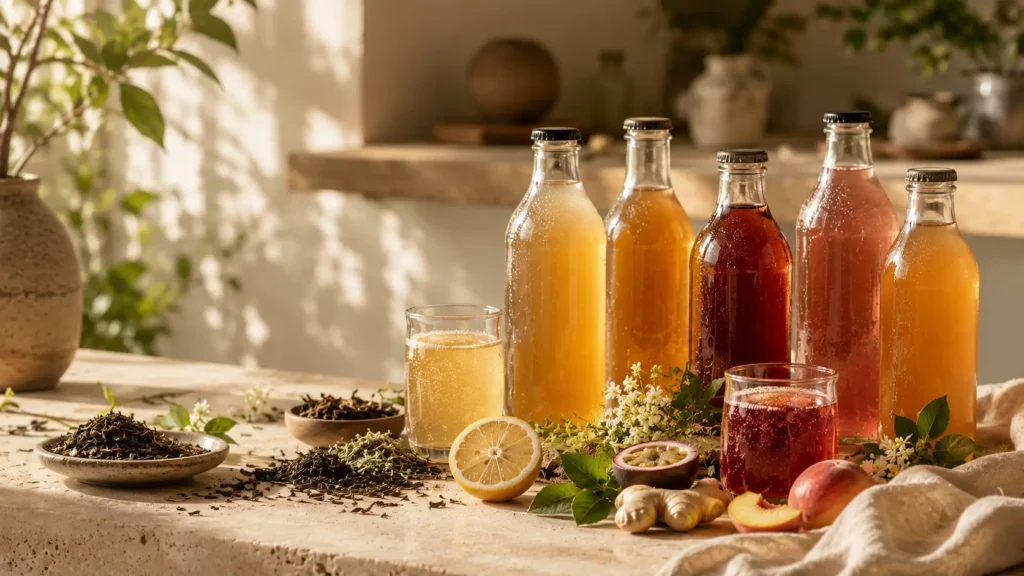
Various Kombucha bottles
What is Kombucha | Various Kombucha Bottles

Understanding The Fermented Tea Behind Singapore’s Growing Wellness Culture

There is a good chance you have seen kombucha somewhere in Singapore recently.

Perhaps inside a minimalist café refrigerator beside cold brew coffee. Maybe stacked inside a supermarket wellness aisle beside sparkling water and probiotic drinks. Or perhaps in the hands of someone leaving a reformer Pilates studio, yoga class, or weekend farmers’ market.

Over the last few years, kombucha has quietly evolved from a niche fermented drink into one of Singapore’s fastest-growing modern wellness beverages. What was once considered unfamiliar or intimidating is now becoming part of a broader shift toward more mindful drinking habits, cleaner ingredients, and growing curiosity around fermentation.

But despite its increasing popularity, many people still are not entirely sure what kombucha actually is.

Is it tea?
Is it probiotic?
Why does it taste slightly sour?
Why are there floating strands inside some bottles?
And why do some kombucha brands taste clean and refined while others taste overwhelmingly sweet?

The answer lies in fermentation.

At its core, kombucha is a living fermented tea beverage created through the interaction between brewed tea, sugar, and a culture of bacteria and yeast known as a SCOBY. Through time and fermentation, this simple mixture transforms into something far more complex — lightly sparkling, naturally tangy, layered in flavour, and deeply tied to one of humanity’s oldest food traditions.

Today, kombucha exists at the intersection of:

  • ancient fermentation practices,
  • modern wellness culture,
  • tea appreciation,
  • and evolving consumer awareness around ingredients and sugar consumption.

In Singapore especially, kombucha’s rise reflects a broader movement toward:

  • lower-sugar beverage alternatives,
  • natural fermentation,
  • ingredient transparency,
  • and more thoughtful everyday consumption.

To understand kombucha properly, however, we first need to understand what fermentation actually does.

A Drink Born From Fermentation

How Kombucha is made?
What is Kombucha | Born from Fermentation

Long before refrigeration existed, fermentation played a central role in preserving food and beverages across many cultures.

Tea, dairy, vegetables, soybeans, rice, and fruit were all fermented in different ways to extend shelf life, develop flavour, and transform texture. Some of the world’s most beloved foods — kimchi, yoghurt, cheese, soy sauce, sourdough bread, tempeh, and miso — all exist because of fermentation.

Kombucha belongs to this same ancient family of fermented foods.

The drink is believed to have originated over 2,000 years ago, with roots tracing back to Northeast China before spreading across Russia, Eastern Europe, and eventually the rest of the world. Over time, kombucha evolved from traditional tonic into a modern craft beverage appreciated for both its flavour and fermentation process.

What makes kombucha unique is that it combines:

  • tea culture,
  • microbial fermentation,
  • natural carbonation,
  • and acidity into a single beverage.

Unlike soft drinks, which are typically manufactured through flavour formulation and industrial carbonation, authentic kombucha develops naturally over time through living microbial activity.

That living element is what makes kombucha fundamentally different.

So What Exactly Is Kombucha?

Kombucha is a fermented tea beverage made using:

  • brewed tea,
  • sugar,
  • water,
  • and a SCOBY.

SCOBY stands for:

Symbiotic Culture Of Bacteria and Yeast

What is SCOBY (Symbiotic Culture of Bacteria and Yeast)?
What is Kombucha | SCOBY

The SCOBY is the living fermentation culture responsible for transforming sweet tea into kombucha.

At first glance, a SCOBY can look unusual — often appearing as a pale, rubbery disc floating on top of fermenting tea. But inside that culture exists a carefully balanced microbial ecosystem made up of:

  • yeast strains,
  • beneficial bacteria,
  • and cellulose-forming microbes.

During fermentation:

  • yeast breaks down sugars,
  • bacteria convert fermentation by-products into organic acids,
  • carbonation develops naturally,
  • and the tea gradually changes in flavour and chemistry.

The result is a beverage that is:

  • lightly sparkling,
  • slightly tart,
  • subtly sweet,
  • and layered with tea complexity.

A properly fermented kombucha should never taste overwhelmingly sugary like soda. Instead, the best kombucha tends to balance:

  • acidity,
  • tea tannins,
  • gentle sweetness,
  • and natural effervescence.

Why Kombucha Tastes So Different From Brand To Brand

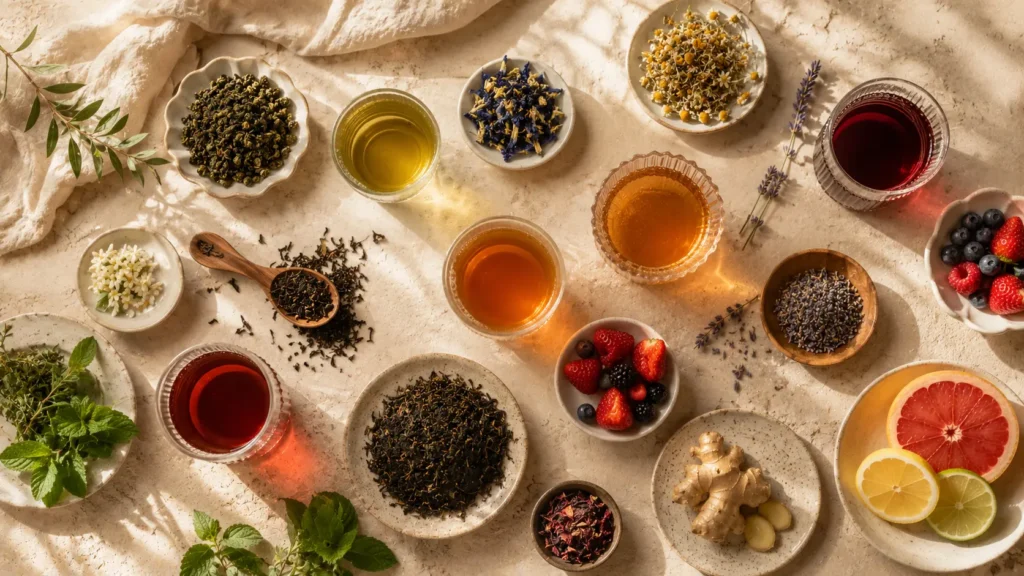
Different Kombucha style, ingredients, etc.
What is Kombucha | Different Kombucha Style

One of the reasons kombucha can confuse first-time drinkers is because no two kombuchas taste exactly the same.

Unlike mass-produced soft drinks designed for flavour uniformity, kombucha is influenced by countless variables:

  • tea variety,
  • fermentation duration,
  • temperature,
  • sugar levels,
  • brewing philosophy,
  • and flavouring ingredients.

A green tea kombucha may feel crisp, bright, and refreshing.

An oolong-based kombucha may develop floral or roasted complexity.

A black tea kombucha often carries deeper tannins and fuller body.

Meanwhile, botanical kombucha may feature ingredients such as:

  • chamomile,
  • butterfly pea flower,
  • lavender,
  • pandan,
  • jasmine,
  • or rose.

Fruit-forward kombucha tends to feel brighter and juicier, while tea-forward kombucha often appeals more to people who already appreciate tea culture and subtle flavour development.

This is part of what makes kombucha fascinating:

it behaves more like craft coffee, wine, tea, or sour beer than conventional soft drinks.

The Science Behind Fermentation

The Science Behind Fermentation
What is Kombucha | The Science Behind Fermentation

The brewing process for kombucha typically occurs in two stages.

During the first fermentation, brewed tea and sugar are combined with the SCOBY culture and left to ferment for several days. As the yeast metabolises sugars, the bacteria begin producing various organic acids and compounds that gradually transform the tea.

This stage is where kombucha develops:

  • acidity,
  • microbial activity,
  • and much of its foundational flavour.

The second fermentation occurs after bottling, often alongside fruits, herbs, flowers, or spices. Inside the sealed bottle, carbonation develops naturally as carbon dioxide becomes trapped.

This is why authentic kombucha contains natural effervescence without necessarily relying on externally injected carbonated water.

The fermentation process also explains why kombucha contains trace amounts of alcohol.

Alcohol forms naturally during fermentation, though commercially regulated kombucha generally remains below 0.5% ABV, which is typically classified as non-alcoholic under food regulations.

Similar trace alcohol levels can naturally occur in:

  • kimchi,
  • soy sauce,
  • ripe fruit,
  • and other fermented foods.

Kombucha, Gut Health & Modern Wellness

Much of kombucha’s modern popularity comes from growing public interest in gut health and the human microbiome.

Over the past decade, scientific and public attention toward the gut microbiome has expanded dramatically. Researchers continue studying how microbial diversity may influence various aspects of overall wellness, digestion, and immune function.

Because kombucha is a fermented beverage, raw and unpasteurised kombucha may contain:

  • live microbial cultures,
  • organic acids,
  • and tea-derived polyphenols.

Tea itself naturally contains polyphenols — plant compounds associated with antioxidant activity. During fermentation, these compounds interact with microbial activity in ways that continue to attract scientific interest.

However, it is important to approach kombucha with balanced expectations.

While kombucha is often discussed within the broader category of functional wellness beverages, direct large-scale human clinical evidence surrounding kombucha itself remains limited. Kombucha should not be viewed as a cure, treatment, or medical solution.

Instead, kombucha is best understood as:

a traditionally fermented beverage that may complement a balanced and mindful lifestyle.

In Singapore, this perspective increasingly resonates with consumers seeking alternatives to:

  • high-sugar soft drinks,
  • artificially flavoured beverages,
  • and overly processed wellness products.

Why Sugar Matters In Kombucha

One of the biggest misconceptions about kombucha is the role sugar plays in the brewing process.

Yes, kombucha requires sugar.

But the sugar primarily acts as fuel for fermentation. The SCOBY consumes much of this sugar during fermentation, transforming the tea over time.

This is why properly fermented kombucha often contains significantly less sugar than conventional soft drinks.

Residual sugar levels vary depending on:

  • fermentation length,
  • formulation,
  • flavour additions,
  • and brewing philosophy.

Generally speaking:

  • longer fermentation creates a drier, tarter kombucha,
  • while shorter fermentation tends to preserve more sweetness.

As Singapore consumers become increasingly conscious of sugar intake and Nutri-Grade labeling, interest in lower-sugar kombucha continues growing.

Why Some Kombucha Feels More “Authentic” Than Others

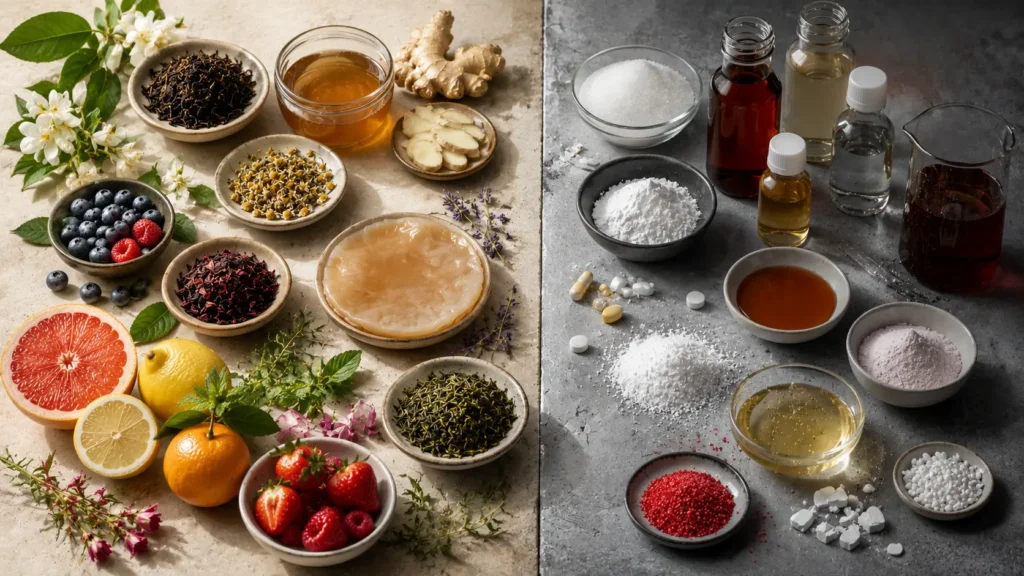
Natural vs Artificial ingredients and flavoring
What is Kombucha | Natural vs Artificial

As kombucha becomes more commercialised globally, the category itself has become increasingly broad.

Some kombucha products prioritise:

  • ingredient integrity,
  • raw fermentation,
  • tea quality,
  • and traditional brewing methods.

Others may rely more heavily on:

  • flavour concentrates,
  • artificial sweeteners,
  • sparkling water bases,
  • or heavy flavour manipulation.

This does not necessarily make one approach universally “wrong,” but it does create very different products.

Authentic craft kombucha typically places strong emphasis on:

  • fermentation depth,
  • tea character,
  • natural acidity,
  • and ingredient transparency.

The best examples often allow:

  • tea,
  • fermentation,
  • and real ingredients
    to remain central to the drinking experience rather than masking them entirely with sweetness.

As Singapore’s kombucha scene matures, consumers are increasingly learning how to distinguish between:

  • genuinely fermented kombucha,
    and
  • products that simply borrow kombucha branding aesthetics.

Singapore’s Growing Kombucha Culture

Singapore Kombucha Culture
What is Kombucha | Singapore Kombucha Culture

Singapore has become an especially interesting environment for kombucha.

The city’s café culture, growing wellness awareness, and increasingly sophisticated food scene have created strong conditions for kombucha’s growth.

Today, kombucha appears across:

  • cafés,
  • fitness studios,
  • supermarkets,
  • specialty grocers,
  • and health-focused restaurants.

Singapore consumers are also becoming more ingredient-conscious. Interest in:

  • lower sugar beverages,
  • cleaner labels,
  • botanical ingredients,
  • and alcohol alternatives
    continues rising steadily.

At the same time, Singapore’s tropical climate introduces unique fermentation considerations. Heat and humidity can accelerate fermentation dramatically, which means professional brewing consistency becomes especially important.

This has contributed to the emergence of local craft brewers focusing on:

  • controlled fermentation,
  • tea quality,
  • ingredient sourcing,
  • and more refined flavour development.

Increasingly, kombucha in Singapore is no longer viewed simply as a “health drink.”

Instead, it is becoming appreciated as:

  • a craft beverage,
  • a tea experience,
  • and part of a broader modern fermentation movement.

The Future Of Kombucha

Globally, kombucha continues evolving far beyond its original niche.

Today, the category overlaps with:

  • craft tea culture,
  • functional beverages,
  • alcohol alternatives,
  • botanical drinks,
  • and culinary fermentation.

Consumers are no longer simply asking:

“Is kombucha healthy?”

They are beginning to ask more sophisticated questions:

  • What tea was used?
  • Is it raw or pasteurised?
  • How much sugar remains?
  • Are the ingredients authentic?
  • How was it fermented?
  • What flavour profile does it develop?

This shift reflects something larger:
people increasingly want transparency, craftsmanship, and ingredient integrity in what they consume.

Kombucha sits naturally within that movement.

Final Thoughts

Final thoughts on Kombucha
What is Kombucha | Final Thoughts

At first glance, kombucha may appear to be just another trendy wellness drink.

But beneath the surface lies something much older and far more interesting:
a living fermented tea shaped by microbial transformation, tea tradition, and evolving modern food culture.

Its growing popularity in Singapore reflects a wider shift toward:

  • mindful consumption,
  • cleaner ingredients,
  • reduced sugar habits,
  • and deeper curiosity about fermentation itself.

Whether someone drinks kombucha for:

  • flavour,
  • tea appreciation,
  • fermentation interest,
  • or as an alternative to sugary soft drinks,
    understanding how kombucha is made changes the way the beverage is experienced.

Because ultimately, good kombucha is not simply about probiotics or wellness marketing.

It is about balance:
between tea and fermentation,
between acidity and sweetness,
between craftsmanship and simplicity.

And as Singapore’s kombucha culture continues evolving, that appreciation for authenticity may become the most important ingredient of all.