Why is there no regulation for kombucha in Singapore?
Any brand can print ‘natural’, ‘probiotic’, and ‘live cultures’ on a kombucha label in Singapore without meeting a single defined standard. Here is why — and what it means for every bottle you pick up.
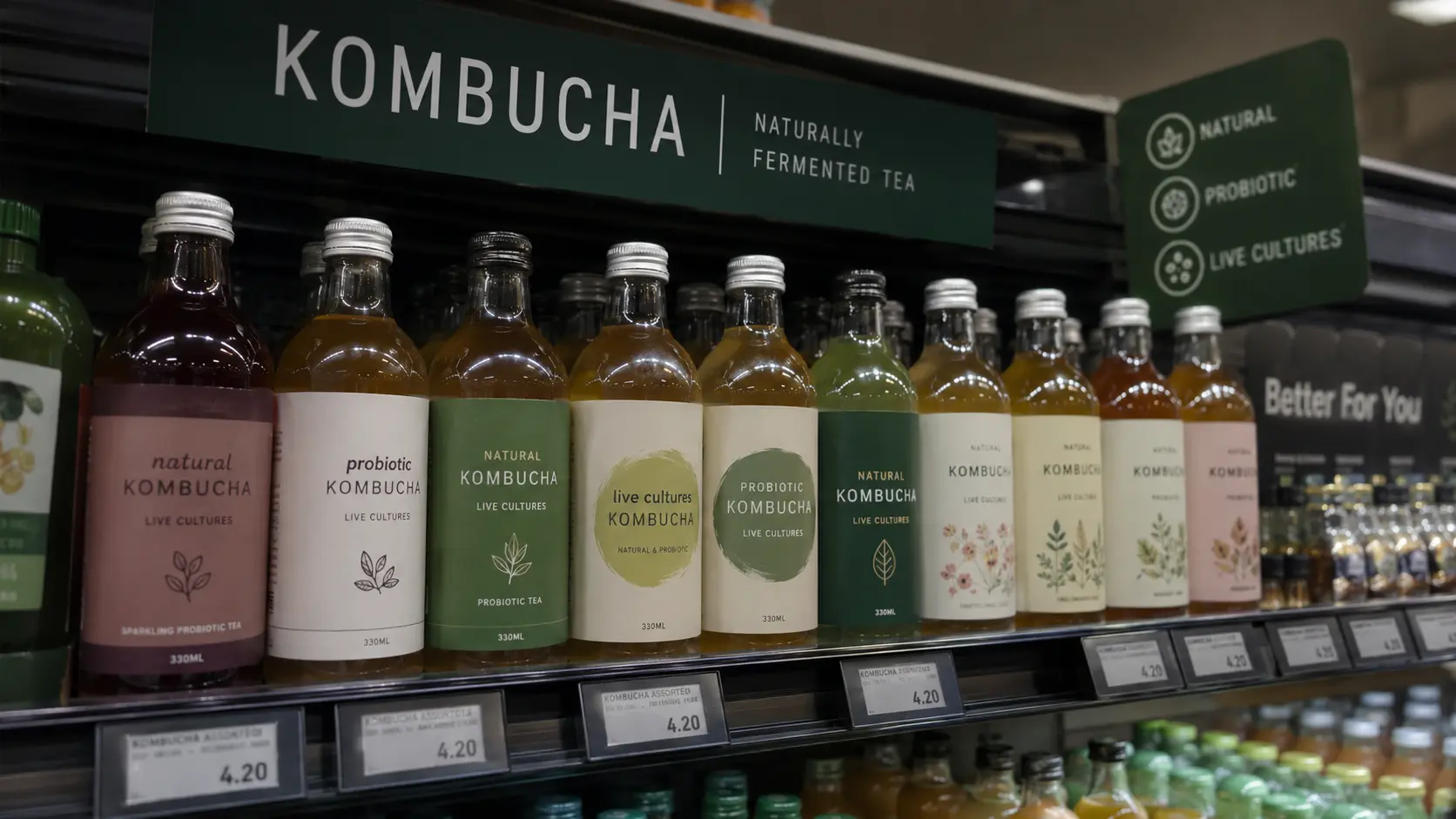
Walk along the kombucha shelf at any Cold Storage, FairPrice Finest, or health food store in Singapore and you will find a consistent set of claims. Natural. Probiotic. Live cultures. Gut health. Authentic. The language is confident, the positioning is premium, and the regulatory backing behind most of it is essentially nonexistent.
This is not an accident or an oversight. It reflects how Singapore’s food safety framework was designed — and understanding it is the first step to reading any kombucha label with the scepticism it deserves.
How Singapore regulates food and beverage labels
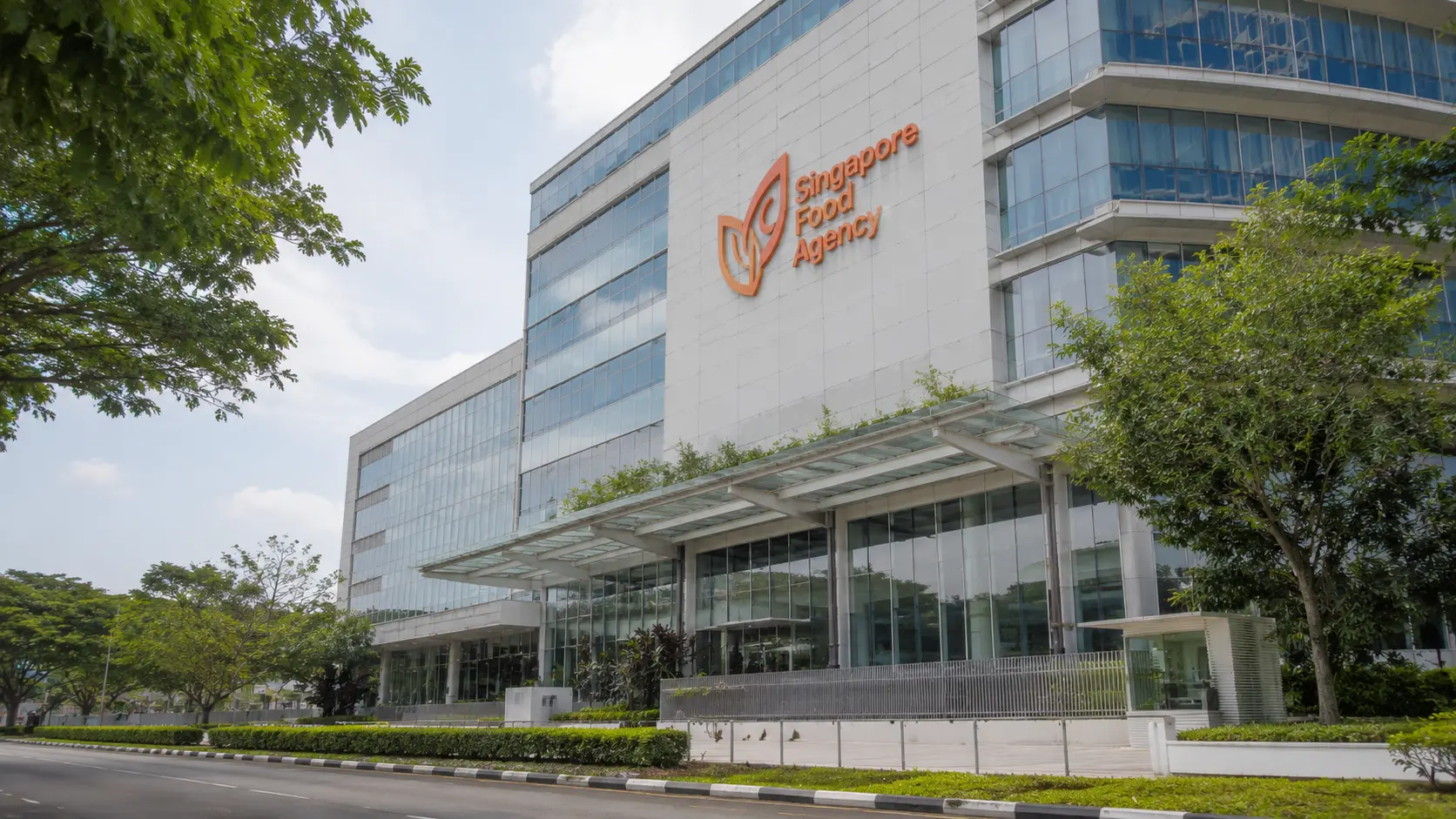
Singapore’s food labelling framework is administered by the Singapore Food Agency (SFA) under the Sale of Food Act and its accompanying Food Regulations. The framework is well-designed for what it was intended to do — ensure food safety, mandate accurate nutritional declarations, and prevent false or misleading claims about specific health outcomes.
What the framework was not designed to do — and does not do — is define the meaning of broad wellness language. Words like ‘natural’, ‘probiotic’, ‘live cultures’, ‘authentic’, and ‘craft’ are not defined terms under Singapore’s food regulations. There is no minimum standard a product must meet to carry any of these claims. No certification process. No verification requirement. No penalty for using them loosely.
The SFA regulates what it can measure and enforce: ingredient declarations must be accurate, nutrition panels must reflect the product’s actual composition, and specific health claims — such as claims that a product reduces the risk of disease — require pre-approval. General wellness language sits in a different category entirely.
- Natural
- 100% Natural
- Probiotic
- Live cultures
- Authentic
- Craft brewed
- Naturally brewed
- Raw
- Gut health
- Ingredient list
- Nutrition information panel
- Sugar per 100ml
- Allergen declarations
- Net weight / volume
- Country of origin
- Expiry / best before date
- Nutri-Grade (where applicable)
What this means for kombucha specifically
Kombucha sits in an interesting regulatory gap. It is a fermented beverage — a category that has existed for thousands of years — but it does not have a defined legal standard in Singapore the way, for example, fruit juice or dairy products do. There is no SFA definition of what kombucha must contain, how it must be produced, or what percentage of the beverage must derive from genuine fermentation.
In practice, this means any beverage can be labelled and sold as kombucha in Singapore, regardless of how it was made. A product that blends a small amount of fermented tea base with carbonated water and flavour extracts can carry the same ‘kombucha’ label as a product that underwent a full two-stage fermentation with a live SCOBY culture. Both are legal. The label does not tell you which one you are holding.
The situation is not unique to Singapore — most countries have not defined kombucha as a regulated product category. But Singapore’s particularly permissive approach to front-of-pack wellness language makes the gap between claim and reality especially wide in this market.
“In Singapore, the word ‘natural’ on a food label is a marketing choice — not a standard. Any brand can use it. No brand has to prove it.”
How Singapore compares to other markets
Singapore is not alone in its approach, but it is worth understanding where the regulatory landscape sits globally.
| Market | Kombucha definition | ‘Natural’ regulated? | ‘Probiotic’ regulated? |
|---|---|---|---|
| Singapore | No defined standard | No | No |
| United States | No federal standard — some state guidance | Informal FDA guidance only | No — FTC monitors false claims |
| European Union | No defined standard | No specific regulation | Banned as a health claim since 2012 |
| Australia / NZ | No defined standard | Some guidelines under FSANZ | Permitted with conditions |
| Indonesia | BPOM registration for fermented beverages | Monitored | Subject to BPOM review |
The European Union’s approach to ‘probiotic’ is notable — it was banned as a permitted nutrition or health claim in 2012 because the scientific evidence for generic probiotic benefits was not considered sufficiently established to support a label claim. In Singapore, any brand can print ‘probiotic’ on any product without meeting any evidential standard.
What regulators can and cannot do
It is worth being fair to Singapore’s regulatory framework here. The SFA’s primary mandate is food safety — ensuring that what Singaporeans eat and drink does not harm them. By that measure, the framework works well. Products on Singapore shelves are generally safe, accurately labelled in terms of ingredients and nutritional content, and subject to meaningful enforcement where genuine safety risks exist.
Regulating the meaning of ‘natural’ or ‘probiotic’ is a significantly more complex challenge. It requires scientific consensus on definitions that the scientific community itself has not fully settled. It requires enforcement mechanisms for claims that are not inherently false — a product can be natural by any reasonable definition without meeting a precisely defined regulatory standard. And it requires political will to constrain an industry that uses these terms freely and consumers who have come to expect them.
None of this makes the regulatory gap less real. It just means that waiting for regulation to solve the problem is not a viable consumer strategy. The information needed to evaluate a kombucha product is already on the label — in the ingredient list and the nutrition panel. Learning to read it is more reliable than waiting for the front of the bottle to mean something.
What you can do as a consumer
The regulatory gap does not leave consumers without tools. It leaves them with one very reliable tool that cannot be manipulated by marketing: the ingredient list.
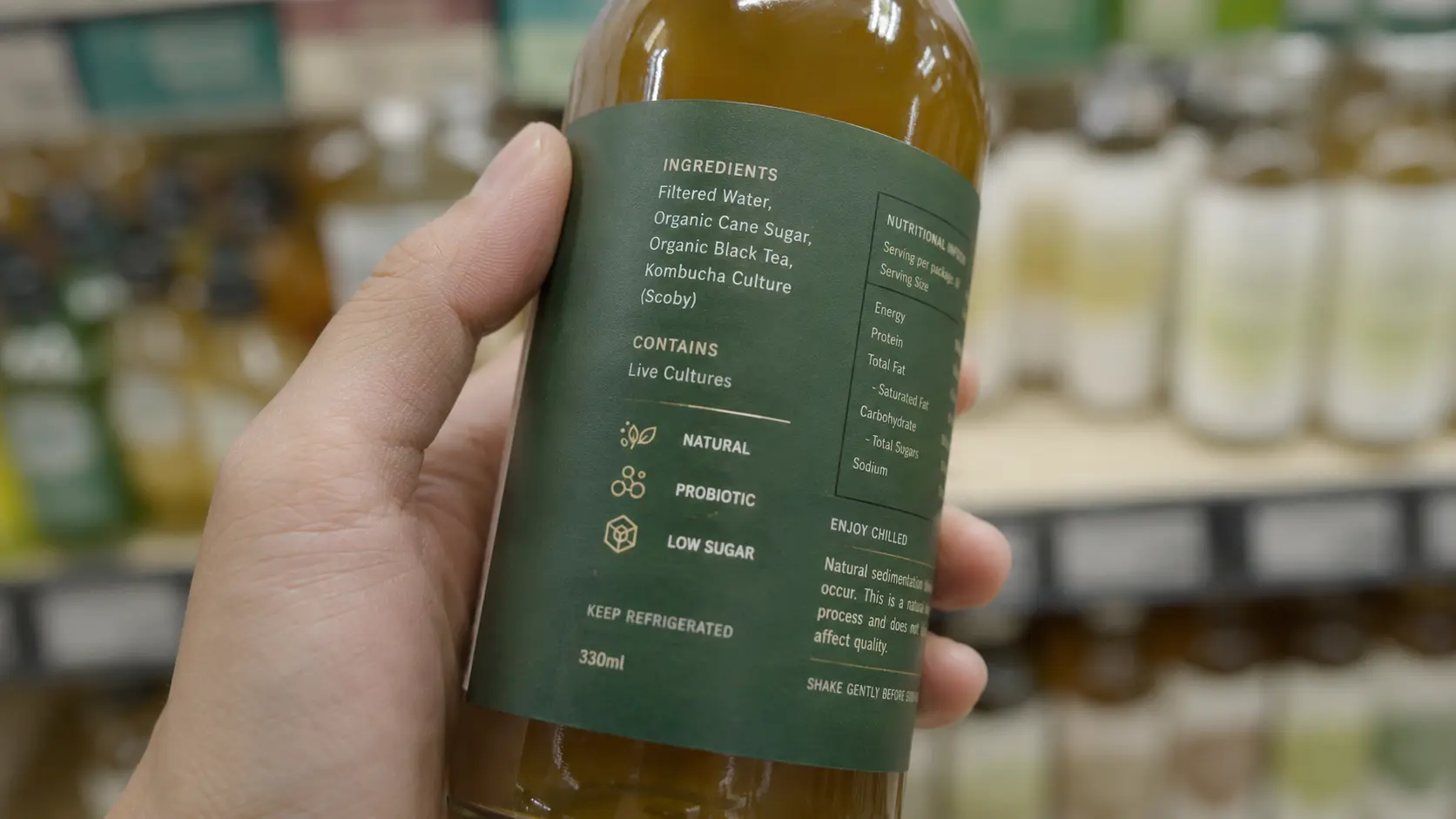
The ingredient list on a Singapore food or beverage label is regulated. It must be accurate. It must list every ingredient in descending order of weight. It cannot omit an ingredient that is present or include one that is not. A brand that adds carbonated water must declare it. A brand that uses flavour extracts instead of real fruit must declare them. A brand that uses sweeteners instead of fermented-down sugar must list them.
The front of the bottle is a brand’s best argument for itself. The back is the evidence. One is regulated. One is not. Reading the back — every time, before every purchase — is the most effective thing a Singapore consumer can do in the absence of the regulatory framework that does not yet exist.
This is exactly why KombuchaSG exists.
We built the framework that regulation has not provided. Every brand review on this site applies the same 7-criteria, 100-point Authenticity Scorecard — based entirely on what the label declares. No front-of-pack claims are taken at face value. The scorecard criteria deliver the verdict.
Frequently asked questions
Does the Singapore Food Agency regulate kombucha specifically?
No. The SFA regulates food and beverage products for safety and accurate labelling under the Sale of Food Act, but kombucha does not have a defined product standard in Singapore. There is no legal definition of what kombucha must contain, how it must be produced, or what percentage of the beverage must derive from fermentation. Any beverage can be labelled as kombucha. Front-of-pack claims including ‘natural’, ‘probiotic’, and ‘live cultures’ are not subject to a defined standard and can be used freely.
Is the ingredient list on a Singapore kombucha label reliable?
Yes — the ingredient list is regulated under Singapore’s Food Regulations and must accurately reflect the product’s contents in descending order of weight. Brands are legally required to declare all ingredients. This is in contrast to front-of-pack claims like ‘natural’ or ‘probiotic’, which are unregulated and can be used without meeting a defined standard. The ingredient list is the most reliable piece of information on any Singapore food or beverage label.
Why is ‘probiotic’ allowed on Singapore labels without regulation?
Singapore’s food labelling framework permits general wellness language that does not make a specific health claim about disease prevention or treatment. ‘Probiotic’ falls into this category. The European Union banned ‘probiotic’ as a permitted nutrition claim in 2012, citing insufficient scientific consensus. Singapore has not taken the same step. Any Singapore kombucha brand can print ‘probiotic’ on its label without minimum CFU counts, strain identification, or third-party verification of any kind.
Will Singapore ever regulate kombucha specifically?
There is no current indication that the SFA is developing a specific kombucha product standard. In the absence of specific regulation, the ingredient list and nutrition panel remain the consumer’s most reliable tools for evaluating any product in the category.
- → The Standard — our 7-criteria authenticity scorecard
- → Real vs Fake Kombucha — the shortcuts explained
- → How to read a kombucha label
- → Browse all Singapore kombucha brand reviews
KombuchaSG is an independent educational platform. We are not affiliated with any kombucha brand or regulatory body. Content is published for educational purposes only and does not constitute legal or regulatory advice.