How to spot artificial flavoring in your kombucha
A bottle can say ‘raspberry kombucha’ on the front and contain no actual raspberry. Here is how to tell whether the flavour in your bottle came from real ingredients — or a laboratory.
Flavouring is where many Singapore kombucha brands quietly cut corners. The front label promises fruit. The back label tells a different story. And because most consumers do not know what to look for, the gap between the two often goes unnoticed.
This is not complicated once you know the vocabulary. Here is exactly what to look for.
The three types of flavoring — and what each one means
When it comes to flavoring in kombucha, ingredient lists fall into three broad categories. Each tells you something different about how the product was made.
| Flavoring type | What it means | What it looks like on the label | Scorecard |
|---|---|---|---|
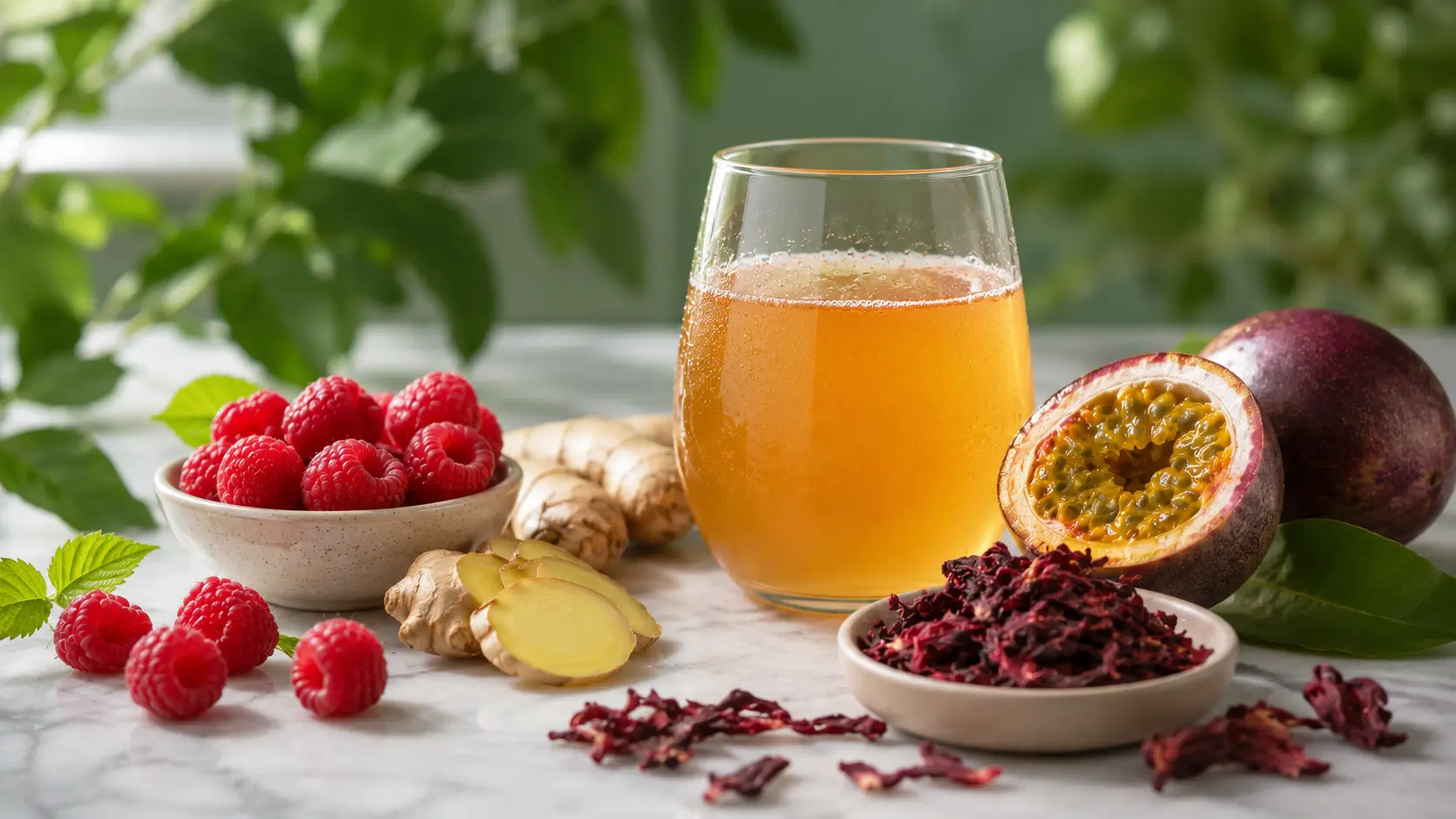
| Whole fruit or botanicals | Actual ingredient used in brewing — real fruit, herbs, roots, flowers | Fresh raspberry, ginger root, dried hibiscus, lemon juice, passionfruit pulp | Full marks |
| Natural flavoring | Flavour derived from a natural source — but not the ingredient itself. An extract, concentrate, or essence. | Natural flavoring (raspberry), natural flavour, natural flavours | Reduced score |
| Artificial flavoring | Flavour created synthetically in a laboratory with no natural source material | Artificial flavoring, artificial flavour, flavor (artificial) | Zero |
Most kombucha brands in Singapore fall into the first or second category. The third is rare but exists — particularly in lower-priced imported products. The more common issue is the grey area of the second: ‘natural flavoring’ that sounds wholesome but tells you nothing specific about what the actual ingredient was.
What authentic vs shortcut flavoring looks like on a real label
The difference is visible in the ingredient list — if you know what you are reading.
Ingredients: Brewed kombucha (water, green tea, cane sugar, kombucha culture), fresh raspberry, ginger root, lemon juice
Every flavouring ingredient is named specifically. You can picture and trace each one. No ambiguity.
Ingredients: Water, kombucha, natural flavouring (raspberry), citric acid, natural flavouring (ginger)
No actual raspberry or ginger. ‘Natural flavouring’ is an extract or concentrate — not the fruit itself.
The second example is legal, common, and often found on bottles making bold fruit claims on the front label. It is not necessarily harmful — but it is not the same as using real fruit, and a brand that uses real ingredients will always name them specifically because they have nothing to hide.
Why ‘natural flavoring’ is the phrase to watch
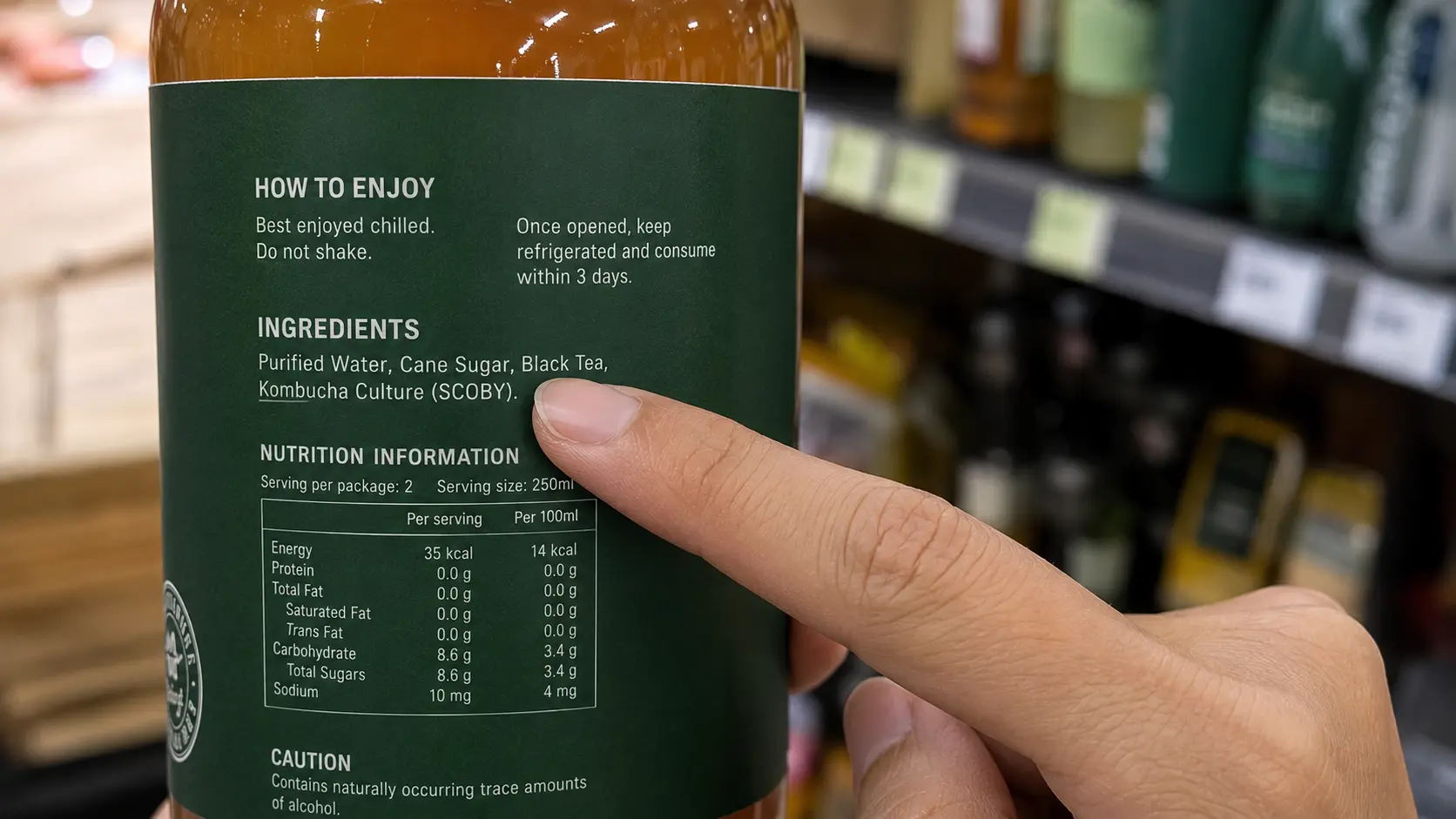
In Singapore, ‘natural flavoring’ is a legally permitted catch-all term regulated under the Singapore Food Agency’s food regulations. It means the flavoring compound has been derived from a plant, animal, or other natural source — but it does not require the actual ingredient to be present, and it does not specify the form, concentration, or source material in any meaningful way.
What this means in practice:
- A kombucha labelled Passionfruit & Mango on the front can contain only natural flavouring (passionfruit, mango) on the back — meaning the flavour profile came from an extract, not the fruit.
- The term natural flavouring without even specifying the source — just listed as natural flavours — tells you almost nothing at all.
- Two products can have identical front-of-pack claims and very different ingredient lists. The front is marketing. The back is what you are actually buying.
This is not unique to kombucha — it applies across the beverage industry. But in kombucha specifically, where authenticity and real ingredients are central to the product’s positioning, the gap between what is claimed and what is in the bottle matters more.
“If a brand uses real fruit, they will name it. ‘Natural flavouring’ is what a brand writes when the actual ingredient is not there.”
Botanicals, herbs, and flowers — what authentic looks like
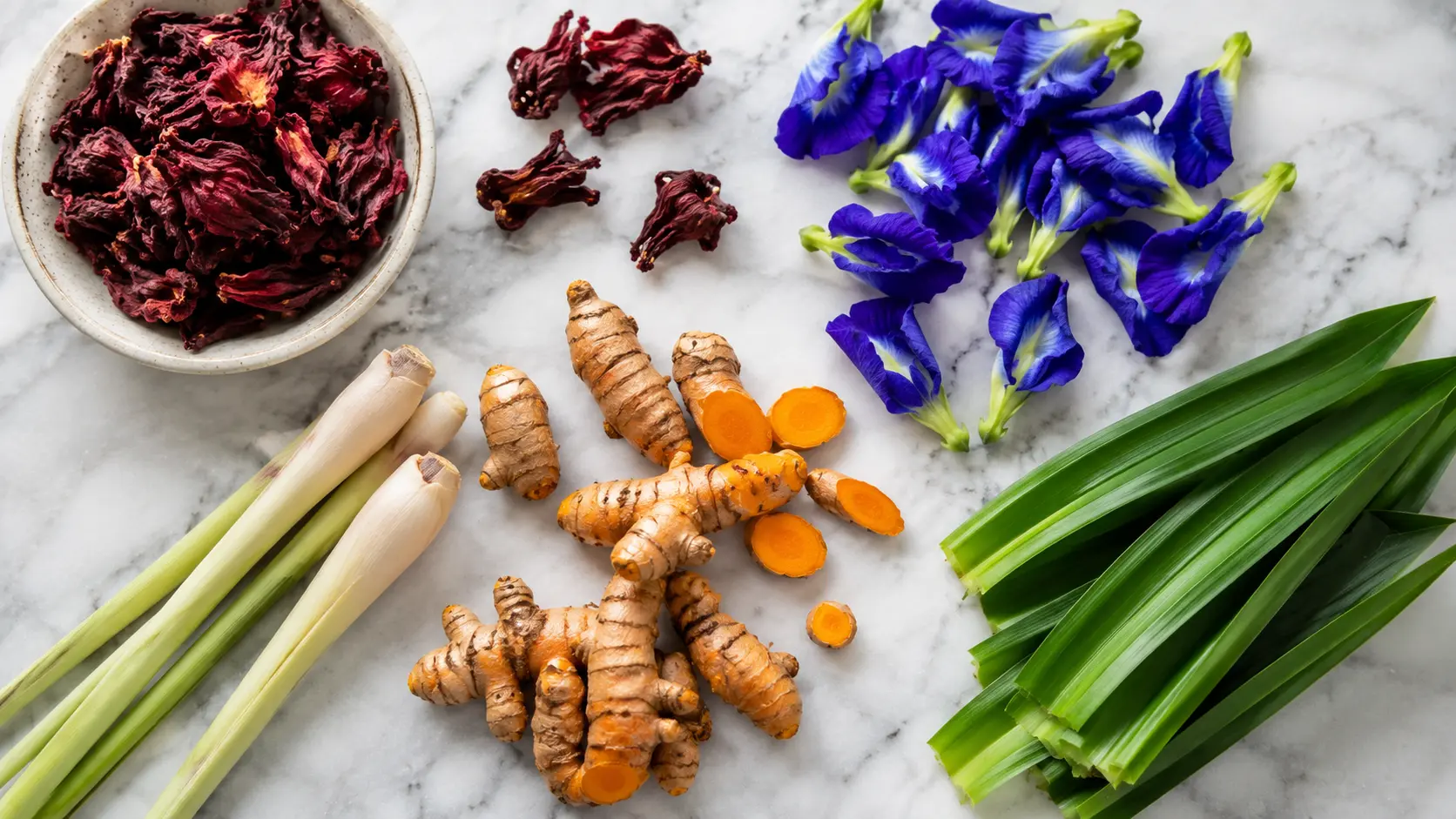
The most distinctive craft kombucha brands in Singapore flavour with whole botanicals — not fruit alone. Dried hibiscus flowers, fresh turmeric root, butterfly pea flower, pandan leaf, lemongrass, roselle — these are ingredients that appear on a label because they were physically added to the fermentation vessel or the bottle during second fermentation.
When a brand names these specifically — with enough detail that you could buy the same ingredient at a market — that specificity is itself evidence of authenticity. No brand using a generic ‘natural flavouring’ extract writes fresh butterfly pea flower on the label. They write natural flavouring.
The same logic applies to ginger. Ginger root and natural flavouring (ginger) are very different ingredients. The first is a piece of root. The second is a laboratory-derived extract designed to taste like it.
📋 The one-minute flavoring check
Flip the bottle. Find the ingredient list. Ask one question: Can I picture this ingredient at a market or in a kitchen?
Fresh raspberry, ginger root, dried hibiscus — yes. Natural flavouring (raspberry) — no. That gap is the difference between real fruit and a laboratory extract.
If every flavouring ingredient in the list passes that test, you are holding a product that uses real ingredients. If any ingredient defaults to ‘natural flavouring’ without naming the actual source, you are holding something else.
The bottom line
Flavoring is one of the easiest shortcuts to take in kombucha production and one of the hardest to spot without reading the label carefully. A bottle can look beautiful, carry compelling front-of-pack claims, and contain nothing but flavour extracts behind the branding.
The vocabulary is simple once you know it: whole fruit and named botanicals are what you want. ‘Natural flavouring’ without specifics is what you question. ‘Artificial flavouring’ in any form is a clear signal that the product has moved far from genuine craft kombucha.
A brand that uses real ingredients will always name them. It is not modesty — it is the simplest way to prove the product is what it claims to be.
Flavoring method is one of seven criteria on the KombuchaSG Authenticity Scorecard — worth 15 points.
Every Singapore kombucha brand reviewed on this site is assessed on whether flavoring uses whole fruit or botanicals, natural flavoring extracts, or artificial flavoring. See how local brands score on this criterion.
→ Read The Standard — the full 7-criteria scorecard
Frequently asked questions
Is ‘natural flavoring’ bad for you?
Not inherently. Natural flavoring is derived from natural source materials and is considered safe by food regulatory authorities in Singapore and internationally. The issue is not safety — it is transparency and authenticity. When you buy a raspberry kombucha, you may reasonably expect raspberry to be in it. Natural flavoring (raspberry) means a raspberry-derived extract was used instead of the fruit. The product may taste similar, but the ingredient is different. For consumers who care about what is actually in their food and drink, this distinction matters.
Can a kombucha brand use both real fruit and natural flavoring?
Yes, and some do. A brand might use real ginger root alongside a natural flavoring for a secondary note, for example. In these cases, both will appear in the ingredient list. The key is to read the full list rather than stopping at the first real ingredient. If real fruit appears alongside natural flavoring for the same ingredient — for example, raspberry juice and natural flavoring (raspberry) together — that suggests the real ingredient alone was not sufficient and the flavor was supplemented with an extract.
Does using real fruit make kombucha more expensive?
Generally, yes. Fresh fruit, dried botanicals, and whole herbs cost more than flavoring extracts, require more preparation, and add variability to the fermentation process. This is one reason why smaller craft producers — who prioritise real ingredients over production efficiency — tend to price their kombucha higher than mass-market brands. The higher price does not automatically guarantee real ingredients, but a product priced at or below mass-market levels that claims premium craft positioning warrants a closer look at the ingredient list.
What is the difference between natural flavoring and artificial flavoring?
Natural flavoring is derived from a natural source — a fruit, plant, herb, spice, or other natural material — even if the final extract bears little resemblance to the original ingredient. Artificial flavoring is synthesised entirely in a laboratory with no natural source material involved. In practice, both are highly processed flavoring compounds — the distinction is in origin, not in how the final product tastes or how closely it resembles the real ingredient. For authenticity purposes, neither is equivalent to using the actual ingredient itself.
- → The Standard — our 7-criteria authenticity scorecard
- → How to read a kombucha label
- → Real vs Fake Kombucha — all five shortcuts explained
- → Browse all Singapore kombucha brand reviews
KombuchaSG is an independent educational platform. We are not affiliated with any kombucha brand. Content is published for educational purposes only and does not constitute medical or nutritional advice.