Is Kombucha Halal? Why Certification Matters More Than “Halal-Friendly”
Most kombucha brands in Singapore sidestep the Halal question with the same two words: “Halal-friendly.” It sounds reassuring. It means nothing. Here is what genuine Halal certification actually requires — and why the difference matters to Muslim consumers who deserve a straight answer.
The “Halal-Friendly” Problem
Walk through the kombucha aisle and you will find no shortage of reassuring language. “Low alcohol.” “No pork, no lard.” “Suitable for Muslim consumption.” “Halal-friendly.” These phrases are printed on labels, posted on websites, and repeated in brand FAQs — often without a single official body having verified any of it.
This is not a small distinction. In Singapore, “Halal-friendly” is not a regulated term. Any brand can use it. There is no audit, no inspection, no certification body behind it. It is, at best, a brand’s own assessment of its own product. At worst, it is a marketing claim designed to avoid the rigour that genuine Halal certification demands.
Muslim consumers who take Halal compliance seriously — and there are many — should know the difference between a label claim and a certified status.
Why Kombucha Raises Halal Questions in the First Place
Kombucha is a fermented drink. Fermentation involves yeast, and yeast produces alcohol as a natural by-product. This is not unique to kombucha — the same process occurs in bread, yoghurt, kimchi, tempeh, and many other foods consumed widely in the Muslim world. But kombucha produces enough trace alcohol that the question deserves a proper answer, not a brushed-aside “it’s fine.”
The key variables are:
- ABV at point of sale — Authentic kombucha typically contains under 0.5% alcohol by volume, the threshold widely used by food safety authorities to classify a drink as non-alcoholic. But this depends on production controls. Without testing, no brand can honestly claim to know their exact ABV at the point the bottle reaches the consumer.
- Flavouring ingredients — Alcohol-based flavour extracts are common in the food industry. A brand using real whole fruit in second fermentation has a very different ingredient profile from one using an unspecified “natural flavouring” that may carry an alcohol solvent.
- Production environment — Cross-contamination in shared facilities, alcohol-based cleaning agents, and non-Halal ingredient sourcing are all considerations a Halal certifier evaluates. None of these are visible on a label.
A brand that has done nothing to verify or certify its Halal status cannot honestly answer these questions. A brand that has submitted to formal certification can.
What Halal Certification Actually Involves
Formal Halal certification is not a label a brand prints for itself. It is issued by a recognised religious authority after an audit of the entire production process — ingredients, suppliers, facility, handling, cleaning protocols, and finished product testing. The certifying body stakes its own credibility on the outcome.
What a Halal audit covers
Every input is checked — tea, sugar, flavouring agents, culture media, cleaning agents. Any ingredient with an ambiguous source is flagged for clarification or replacement.
The production environment is inspected for cross-contamination risks, shared equipment with non-Halal products, and the use of alcohol-based sanitisers in a way that could affect the product.
Fermentation parameters, temperature control, and batch testing practices are reviewed to confirm the product consistently meets the required standard.
A unique certificate number is issued, traceable through the certifying body’s official registry. The logo and number can be verified independently — it is not self-declared.
This is a meaningful process that takes time, costs money, and requires a brand to open its operations to external scrutiny. That is precisely why most brands avoid it — and why a brand that has done it deserves recognition for having done so.
The Landscape in Singapore
Singapore’s national Halal authority is MUIS — the Majlis Ugama Islam Singapura. MUIS certification is the gold standard for Muslim consumers in Singapore, and it is the mark they are most familiar with. At the time of writing, no kombucha brand available in Singapore holds a MUIS Halal certificate.
This does not mean every brand is non-Halal. It means none has yet submitted to the formal certification process here. The reasons are likely practical — the fermented beverage category sits in a regulatory grey area, and the certification process requires sustained commitment from a brand willing to invest in it.
What it does mean is that every brand currently claiming “Halal-friendly” status in Singapore is operating on self-assessment — not verified certification. And for Muslim consumers, there is a meaningful difference between a brand that says it thinks it is fine, and one that has had an independent authority confirm it.
“Halal-friendly is a claim. Halal certified is a commitment that has been independently verified.”
WiskTea Recipe Kombucha: The First Certified Kombucha We Have Encountered
Against this backdrop, WiskTea Recipe Kombucha has taken a step that no other kombucha brand available in Singapore — to our knowledge — has taken: it has obtained formal Halal certification from a recognised government authority.
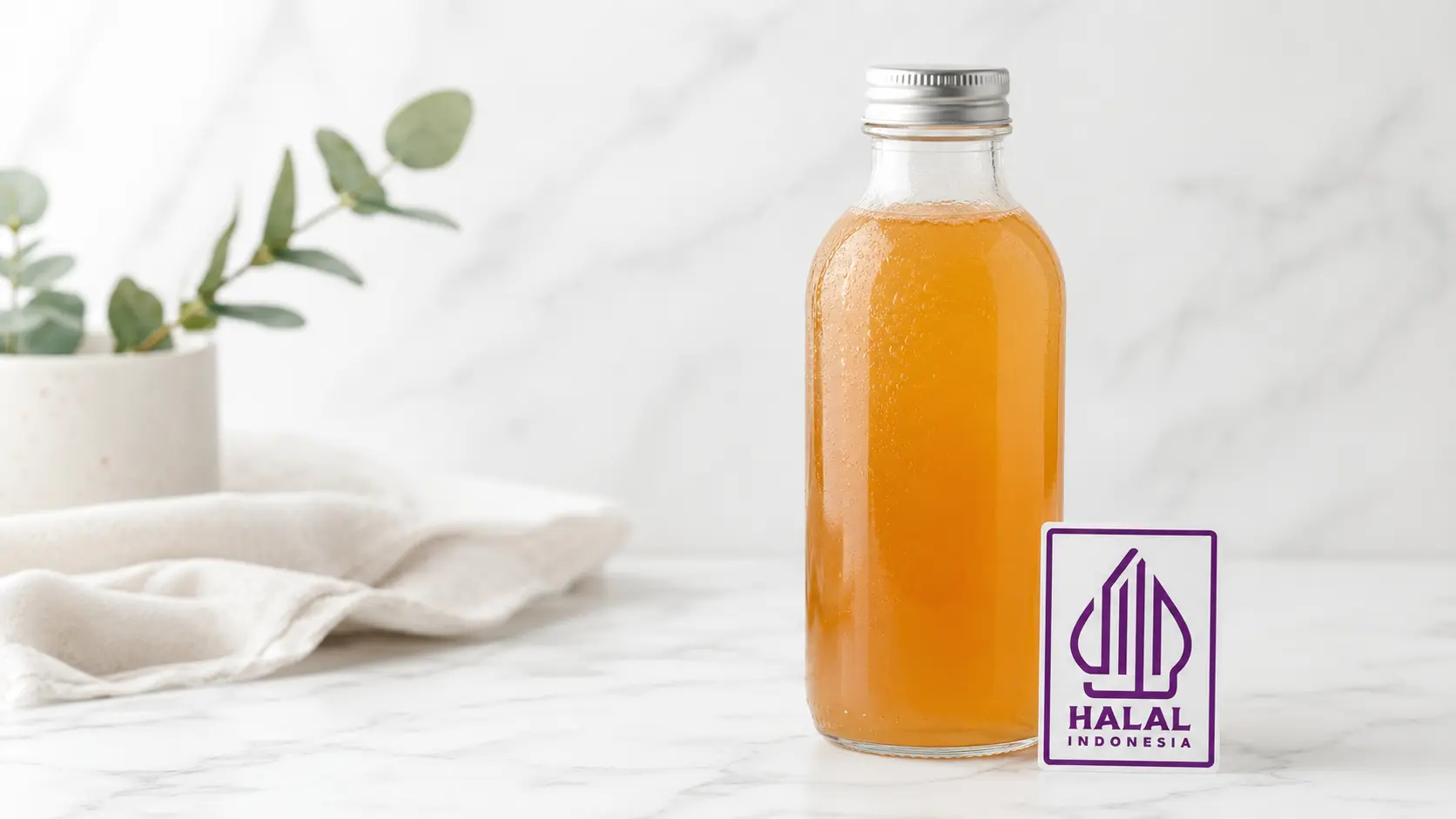
WiskTea holds certification from BPJPH — Indonesia’s Halal Product Assurance Organising Agency, the official government body responsible for Halal certification in Indonesia (certificate ID31110076049130626). BPJPH operates under Indonesia’s Ministry of Religious Affairs and administers the country’s Halal Product Assurance Law. Its certification process covers ingredients, production facilities, and supply chain — the full audit, not a self-declaration.
Why BPJPH carries weight
BPJPH is Indonesia’s national government Halal authority — equivalent in standing to MUIS in Singapore or JAKIM in Malaysia. MUIS and BPJPH have a formal Mutual Recognition MOU, under which each recognises the other’s certification standards. A product certified by BPJPH has passed a rigorous government-administered audit — it is not a self-declared label claim.
To be precise about what this means for Singapore: BPJPH certification does not automatically confer MUIS status, and we will not claim otherwise. But it is categorically different from “Halal-friendly.” A brand that has submitted its ingredients, facility, and production process to a government halal authority and received a formal certificate has done something that the vast majority of kombucha brands worldwide have not.
For Muslim consumers in Singapore evaluating their options, that is a meaningful data point — and it deserves to be stated clearly.
How to Evaluate Any Kombucha Brand’s Halal Claim
Until more brands seek formal certification, here is a practical framework for Muslim consumers assessing any kombucha product.
| What you see on the label | What it actually means | Reliability |
|---|---|---|
| MUIS Halal logo + certificate number | Certified by Singapore’s national Halal authority. Audited and verifiable. | Highest |
| BPJPH / JAKIM / other national authority logo + number | Certified by a recognised foreign government Halal body. Audited and verifiable through the issuing authority’s registry. | High |
| “Contains less than 0.5% ABV” with lab data | Tested, with evidence. A meaningful claim if the lab results are independently verified and batch-consistent. | Moderate |
| “Halal-friendly” or “suitable for Muslim consumption” | Self-declared. No external audit. No certifying body. Brand’s own opinion of its own product. | Low |
| “Low alcohol” or “non-alcoholic” | May be accurate but unverified unless supported by lab data. Does not address flavour ingredient sourcing or facility compliance. | Low |
| No statement at all | The brand has made no effort to address the question. Consume based on your own assessment of the ingredient list. | None |
When in doubt, use the ingredient list. Whole, named ingredients — real fruit, named botanicals, named tea — are verifiable. “Natural flavouring” without a named source is not. And if Halal certification matters to you, use the HalalSG app by MUIS to check for any current certifications, and contact brands directly to ask for documentation.
The Bottom Line
The kombucha industry’s default response to the Halal question — “we’re Halal-friendly, our alcohol is very low” — is not good enough for consumers who take their faith seriously. It is an easy claim that requires nothing of the brand making it.
Genuine Halal certification requires a brand to open its ingredients, facility, and production process to external scrutiny by a recognised religious authority. It is a commitment, not a label. The fact that one kombucha brand available in Singapore has taken that step — while others have not — is worth knowing.
We will update this article if the certification landscape changes. If you are a brand that holds formal Halal certification and is not reflected here, use the Contact page to let us know.
Frequently Asked Questions
Is kombucha halal?
Kombucha is generally considered permissible by many Islamic scholars because its trace alcohol content (typically under 0.5% ABV) is a natural by-product of fermentation — not an added intoxicant — similar to fermented foods like yoghurt, tempeh, and kimchi. However, this is a religious question with nuance, and individual scholars may hold different views. For a personal ruling, consult a qualified ustaz or the MUIS Fatwa Committee.
Is there any Halal certified kombucha in Singapore?
At the time of writing, no kombucha brand holds a MUIS (Singapore) Halal certificate. However, WiskTea Recipe Kombucha holds formal Halal certification from BPJPH, Indonesia’s national government Halal authority — making it the only kombucha we are aware of available in Singapore to hold any form of government-issued Halal certification.
What is the difference between “Halal-friendly” and “Halal certified”?
“Halal-friendly” is a self-declared label claim. No external body has verified it. Any brand can use this term without audit or oversight. “Halal certified” means a recognised religious authority has inspected the ingredients, production facility, and processes and issued a formal certificate with a traceable number. The two terms are not equivalent.
Is BPJPH certification recognised in Singapore?
BPJPH is Indonesia’s national government Halal authority. MUIS and BPJPH have a formal Mutual Recognition MOU, meaning both authorities recognise each other’s certification standards. A BPJPH certificate does not automatically grant MUIS status in Singapore, but it is issued by a recognised government body with equivalent standing and rigour to MUIS. It is verifiable through BPJPH’s official registry using the certificate number.
How can I verify a Halal certificate is genuine?
For MUIS certification, use the HalalSG app or search the MUIS Halal directory at halal.muis.gov.sg. For BPJPH certification, the certificate number can be verified through Indonesia’s official SIHALAL portal. Any legitimate Halal certificate will have a unique traceable number — if a brand cannot provide one, the certification claim cannot be verified.
Does kombucha contain enough alcohol to be haram?
Commercial kombucha typically contains under 0.5% ABV — significantly less than soy sauce, ripe fruit, or even some fruit juices. Most halal certification bodies use 0.5% ABV as a practical threshold for non-intoxicating beverages. That said, this is a matter of personal religious conviction and you should consult qualified religious guidance if you are unsure. What matters is that any brand claiming low alcohol should be able to support that claim with lab data — not just assert it.
- → The Standard — the 7-criteria, 100-point authenticity scorecard
- → WiskTea Recipe Kombucha — full brand review
- → Real vs Fake Kombucha — the 5 shortcuts brands take
- → Browse the full brand review directory
KombuchaSG is an independent educational platform. We are not affiliated with any kombucha brand. All brand reviews apply the same scorecard criteria without exception. Halal certification status information is accurate at the time of writing — readers should verify current certification status directly with the brand or the relevant certifying authority. This article does not constitute a religious ruling. Consult a qualified ustaz or MUIS for personal religious guidance.