
What is a SCOBY — and why should you care which brand uses one?
SCOBY stands for Symbiotic Culture of Bacteria and Yeast. It is the living organism that turns sweetened tea into kombucha. Without a genuine SCOBY, there is no genuine kombucha.
The word SCOBY appears on kombucha labels, in brand stories, and across wellness content with remarkable frequency. But most consumers have never seen one, and fewer still understand what it actually does — or why the origin and integrity of a brand’s SCOBY says something important about the product in the bottle.
Here is what you need to know.
What a SCOBY actually is
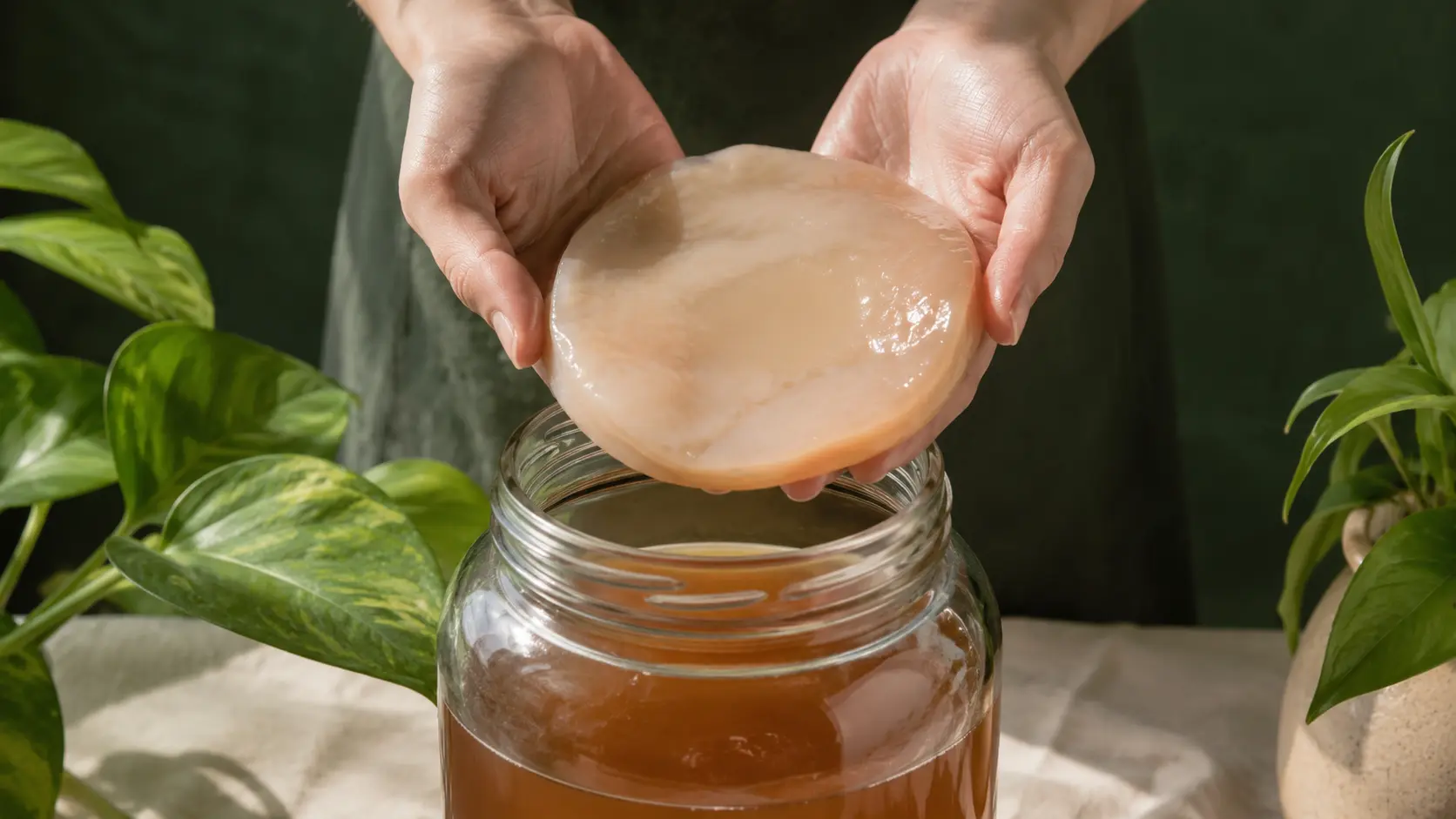
SCOBY stands for Symbiotic Culture of Bacteria and Yeast. It is a rubbery, cellulose-based disc — sometimes called a mother — that houses the live bacteria and yeast responsible for fermenting sweetened tea into kombucha. The organisms inside a SCOBY are interdependent: yeast converts sugars into alcohol and CO₂, and bacteria convert that alcohol into organic acids. The two work together in a continuous cycle.
Every batch of kombucha produces a new SCOBY layer. A healthy, well-maintained SCOBY grows thicker with each fermentation cycle, and a portion of the starter liquid — the kombucha from the previous batch — is carried forward to seed the next one. This is how culture lineage is preserved.
| What it looks like | What it is made of | What it does | How long it lives |
|---|---|---|---|
| A pale, slightly translucent disc with a rubbery texture. Can range from a few millimetres to several centimetres thick. Sometimes accompanied by brown yeast strands beneath it. | A cellulose matrix — produced by the bacteria — that holds the live yeast and bacterial cultures in a stable structure. The cellulose is what gives it the firm, rubbery feel. | Ferments sweetened tea over 7–14 days, producing organic acids, live cultures, B vitamins, enzymes, and natural carbonation as by-products of the fermentation process. | Indefinitely, if properly maintained. SCOBYs are passed down between brewers over years and decades. Some kombucha producers trace their SCOBY lineage back generations. |

Why SCOBY origin matters for the kombucha in your bottle
Not all SCOBYs are equal. The microbial composition of a SCOBY — which strains of bacteria and yeast it carries — directly affects the flavour, acidity, culture activity, and character of every batch brewed from it. A SCOBY that has been cultivated over years develops a stable, diverse ecosystem of organisms. A hastily grown or commercially sourced SCOBY may carry a narrower range of cultures.
More importantly, there is a shortcut that some commercial producers use that bypasses the SCOBY entirely: brewing a tea-based beverage and using vinegar — typically distilled white vinegar or apple cider vinegar — to achieve the sour flavour without any fermentation. No SCOBY. No live cultures. No genuine kombucha.
This is why SCOBY origin and integrity is the first criterion on the KombuchaSG Authenticity Scorecard — and why it carries 15 of the 100 available points.
Why craft brewers talk about their SCOBY’s history
Craft kombucha brewers often speak of their SCOBY’s lineage — meaning how long it has been cultivated, who it was passed down from, and how it has been maintained. A SCOBY with a documented lineage is evidence of a continuous, living fermentation practice. It signals that the brewer understands fermentation at a craft level, not just a production level.
This is not sentimentality. The microbial diversity of a well-aged, carefully maintained SCOBY differs from a commercially grown starter. That diversity shapes the complexity of every batch brewed from it.
“A SCOBY passed down over years carries history in every batch. A SCOBY grown in a week carries very little.”
What to look for — and what to be cautious about
You cannot see the SCOBY in a finished bottle, so you are relying on what the brand tells you — and how they tell it. Here are the signals that help distinguish a genuine SCOBY-brewed product from one that has taken shortcuts.
Positive signals
- The brand mentions their SCOBY directly — in the product description, on the label, or in brand materials. A brewer proud of their SCOBY talks about it.
- References to SCOBY lineage, culture age, or who the SCOBY was passed down from — these suggest a genuine fermentation practice.
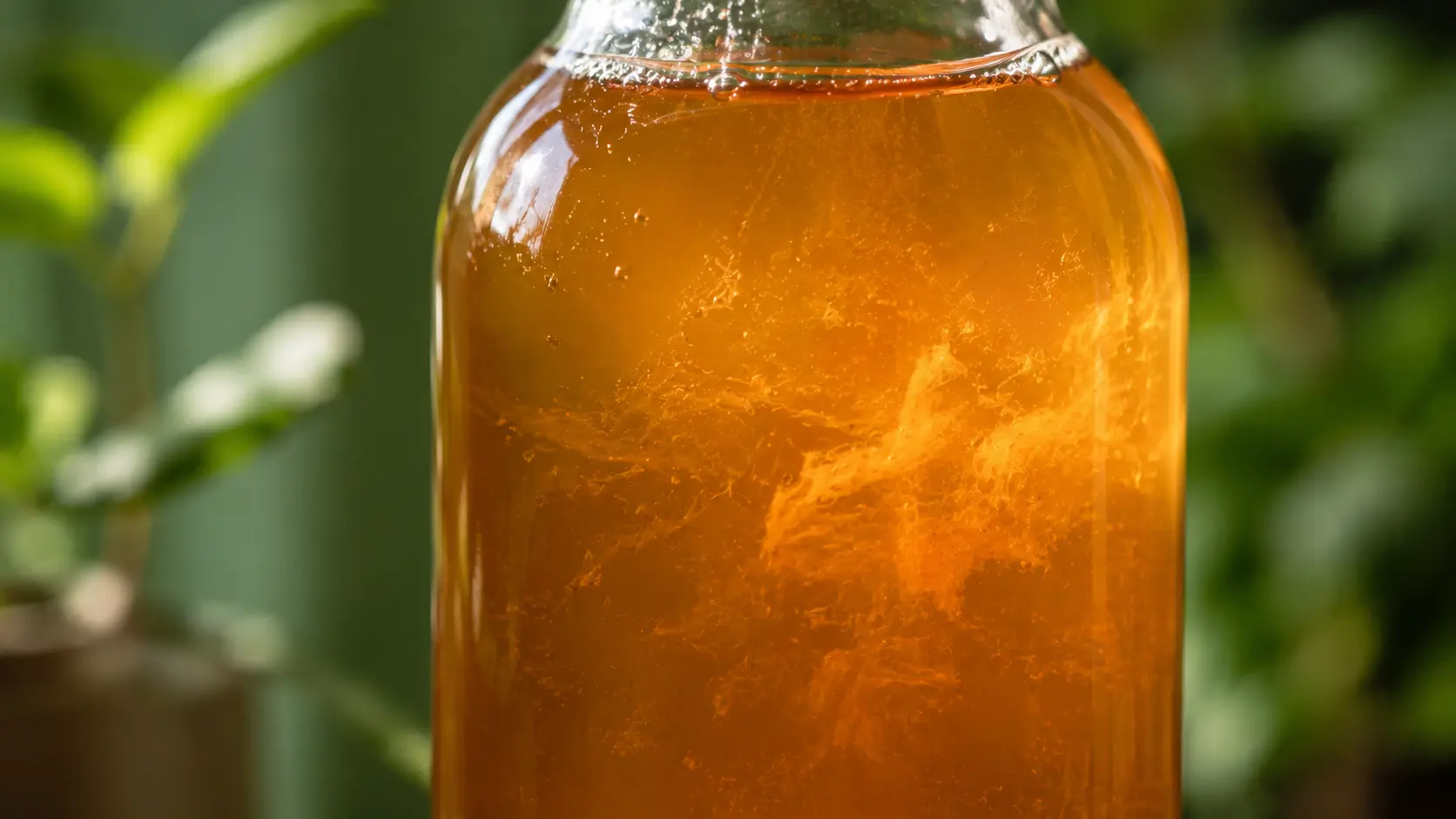
- Visible culture activity in the bottle — floating strands, sediment, a slight haze — indicating live fermentation took place.
- The label says unpasteurised and the product is refrigerated — consistent with a live, active culture being present.
Signals worth questioning
- Apple cider vinegar in the ingredient list — ACV is sometimes used to simulate fermentation tartness without a SCOBY.
- No mention of a SCOBY, culture, or fermentation process anywhere in the brand’s materials — unusual for a brand that genuinely ferments.
- A crystal-clear product with no sediment and no floating material — genuine raw kombucha is rarely perfectly clear.
- Shelf-stable without refrigeration — live kombucha requires cold storage. A shelf-stable product has either been pasteurised or was never a live fermented product.
The bottom line
The SCOBY is not a marketing prop. It is the biological engine that makes kombucha what it is. Without a genuine, living SCOBY, there is no fermentation — and without fermentation, there is no kombucha. There is only a flavoured drink that has borrowed the name.
When you choose a kombucha brand, you are implicitly choosing the SCOBY behind it. A brand that speaks openly about their culture, its age, its lineage, and how it is maintained is showing you something meaningful about how they brew. A brand that says nothing about it may have nothing to say.
SCOBY origin and integrity is the first criterion on the KombuchaSG Authenticity Scorecard — worth 15 points.
Every Singapore kombucha brand reviewed on this site is assessed on SCOBY origin and culture integrity as part of the 7-criteria, 100-point framework.
→ Read The Standard — the full scorecard explained
Frequently asked questions
Is the SCOBY safe to eat?
Yes. The SCOBY is entirely edible — it is a cellulose matrix containing live bacteria and yeast, both of which are harmless and naturally present in fermented foods. The bits of SCOBY that float in a finished bottle of kombucha are edible and harmless. Some people strain them out for a cleaner texture. The flavour is mild and slightly chewy. There is no reason to avoid them.
Does every kombucha brand use a SCOBY?
Not necessarily. Genuine kombucha requires a SCOBY to ferment. However, some commercial products sold as kombucha use shortcuts — including vinegar additions or partially fermented tea bases — that do not involve a traditional SCOBY fermentation. In Singapore, there is no legal definition of kombucha, so brands are not required to prove they use a SCOBY. The ingredient list and brand transparency are the most accessible ways to assess this from the consumer side.
What does a healthy SCOBY look like?
A healthy SCOBY is pale to off-white in colour, firm and rubbery in texture, and grows a new layer with each fermentation batch. Brown patches or yeast strands are normal — this is simply the yeast component of the culture. A SCOBY that has turned black, developed green or pink patches, or smells strongly of mould has likely been contaminated and should be discarded. The normal smell of a healthy SCOBY is slightly vinegary and yeasty — the same character as the kombucha it produces.
Why do some brands mention their SCOBY lineage?
Because it means something. A SCOBY that has been maintained and passed down over years — sometimes decades — carries a stable, diverse microbial community that develops over time. The longer a SCOBY has been cultivated under consistent conditions, the more established its microbial character becomes. Craft brewers speak about SCOBY lineage for the same reason winemakers speak about the age of their vines — it is a marker of accumulated fermentation history that shapes the character of the product. A brand that mentions lineage is telling you their fermentation practice has depth.
- → The Standard — our 7-criteria authenticity scorecard
- → What is Kombucha — the complete guide
- → Real vs Fake Kombucha — the shortcuts explained
- → Browse all Singapore kombucha brand reviews
KombuchaSG is an independent educational platform. We are not affiliated with any kombucha brand. Content is published for educational purposes only and does not constitute medical or nutritional advice.