
The difference between real kombucha carbonation and added sparkling water
That fizz in your bottle — did it come from fermentation, or was it injected? It is a one-line check on the ingredient list. Here is why it matters.
Carbonation is one of kombucha’s most recognisable qualities. That gentle, lively fizz is part of what makes it satisfying to drink. But not all kombucha fizz is created equal. Some brands carbonate their product naturally, through fermentation. Others add carbonated or sparkling water to achieve the same effect at a fraction of the effort.
The two approaches produce drinks that look and feel similar in the glass. The difference lies in what the carbonation tells you about how the product was made — and what else was or was not present in the bottle as a result.
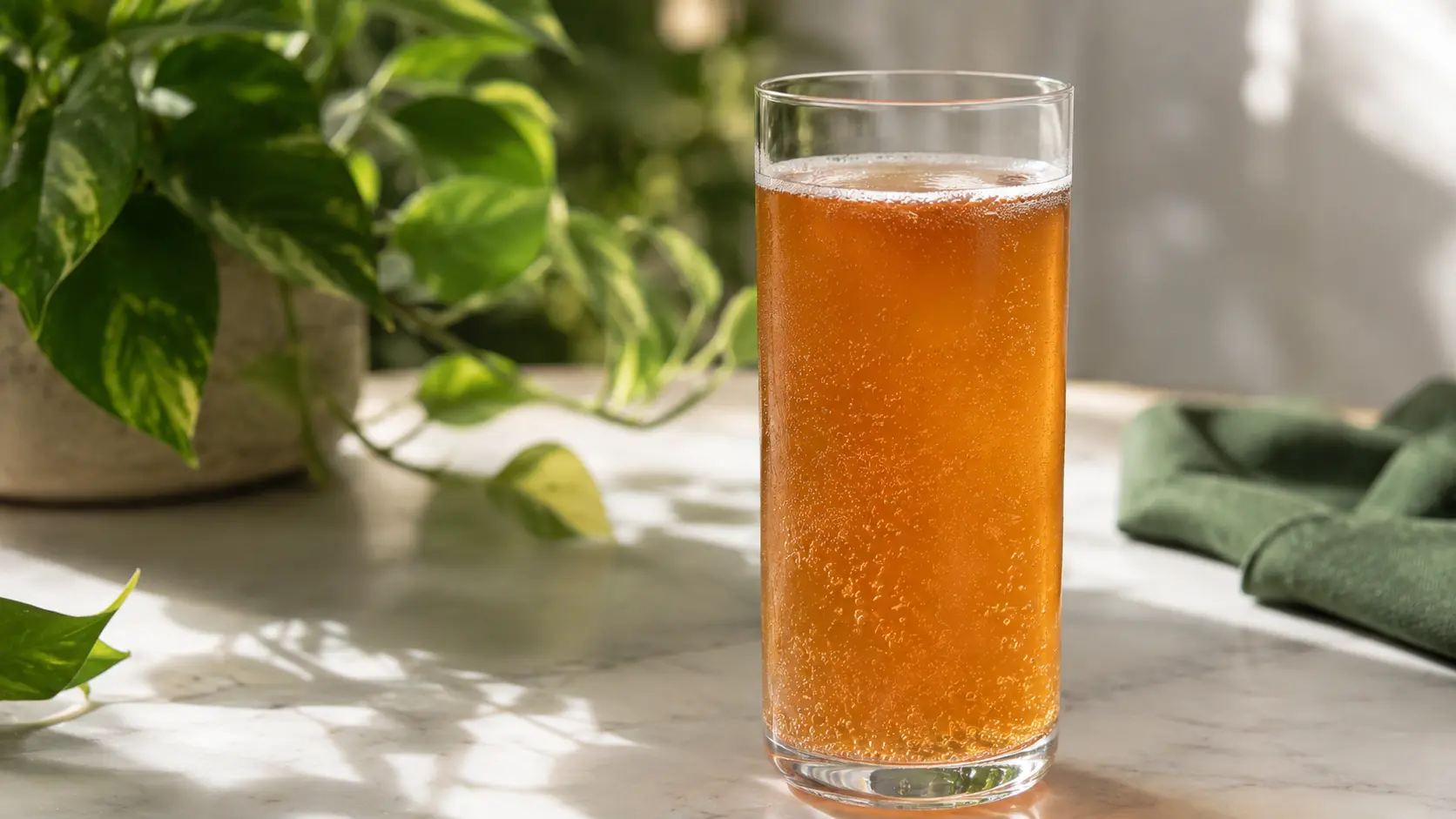
How natural carbonation works in kombucha
Genuine kombucha carbonation is produced during a second fermentation — commonly called 2F. After the initial fermentation stage, the kombucha is bottled with a small amount of natural flavouring ingredients: fresh fruit, herbs, ginger, or flowers. The bottles are sealed and left to ferment for a further two to four days at room temperature.
During this second fermentation, the live cultures still present in the liquid continue to consume the residual sugars from the fruit or other ingredients. CO₂ is a natural by-product of this process. Because the bottles are sealed, the gas has nowhere to go — it dissolves into the liquid, creating carbonation from within.
First fermentation (1F) — sweetened tea ferments with a SCOBY for 7–14 days, producing the kombucha base.
Bottling with flavour ingredients — real fruit, ginger, herbs or botanicals are added. Bottles are sealed.
Second fermentation (2F) — live cultures consume fruit sugars in the sealed bottle. CO₂ is produced and dissolves into the liquid as natural carbonation.
Refrigeration — bottles are chilled to slow fermentation and lock in the carbonation level. The result is a naturally fizzy, living product.
This process takes time, skill, and careful monitoring. The brewer must balance sugar content, fermentation temperature, and bottle pressure. Done well, the result is a fine, integrated carbonation that feels alive in the glass — because it is.
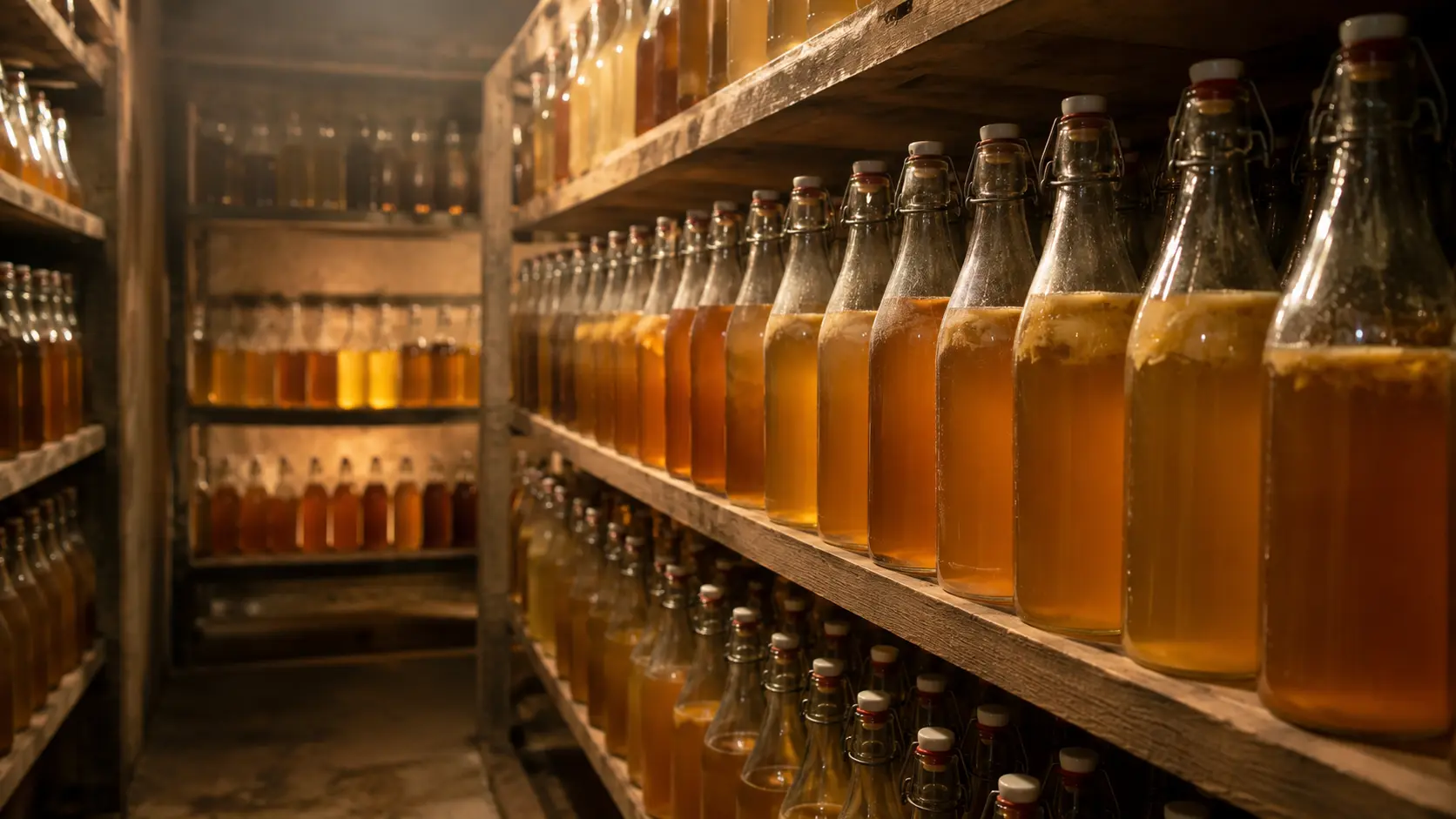
What happens when carbonated water is added instead
Adding carbonated or sparkling water to kombucha is a shortcut that achieves fizz without a second fermentation. The brewer produces a base kombucha — which may or may not be fully fermented — and then blends it with carbonated water before bottling. The result is a sparkling kombucha-based drink that looks similar on the shelf.
This approach has commercial advantages. It is faster, more consistent, easier to scale, and eliminates the complexity and risk of managing a live second fermentation. But adding carbonated water changes what is in the bottle in ways that go beyond the fizz itself.
- Fermentation is incomplete or truncated. Without a second fermentation, the organic acid development, flavour complexity, and culture activity that 2F produces are absent or reduced.
- The ingredient ratio changes. Carbonated water dilutes the kombucha base. You are drinking a blend, not a pure fermented product.
- The carbonation behaves differently. Injected CO₂ tends to produce larger, more aggressive bubbles that dissipate faster. Natural carbonation from fermentation is typically finer and more persistent.
“Natural carbonation is not just about the fizz. It is evidence that the second fermentation actually happened.”
Natural carbonation vs added carbonated water — side by side
| Characteristic | Natural — 2nd fermentation | Added — carbonated water |
|---|---|---|
| Source of fizz | CO₂ produced by live cultures consuming residual sugar | Injected CO₂ dissolved in water, blended in |
| Ingredient list | No carbonated water listed | ‘Carbonated water’ or ‘sparkling water’ appears |
| Fermentation activity | Full — 1F and 2F both completed | Partial — 2F not completed or absent |
| Bubble character | Fine, integrated, persistent | Larger, more aggressive, dissipates faster |
| Flavour depth | Greater complexity from extended fermentation | Can taste more diluted or one-dimensional |
| Production complexity | Higher — requires careful monitoring of 2F | Lower — more consistent and scalable |
| Score on KombuchaSG scorecard | Full 15 points for carbonation criterion | Zero — criteria-based, not editorial |
📋 The one-line label check
Flip the bottle to the ingredient list. If you see carbonated water or sparkling water anywhere in the list, the fizz is not from fermentation. It is added.
This is the single clearest signal on the label. The words are unambiguous. There is no grey area — if carbonated water is listed, the second fermentation did not produce the carbonation in your bottle.

Why this matters beyond the fizz
The carbonation question is not just about texture or mouthfeel. It is a proxy for whether the second fermentation happened at all — and the second fermentation is where much of kombucha’s flavour complexity, organic acid development, and continued culture activity takes place.
A brand that skips the second fermentation and adds carbonated water instead is producing a fundamentally different product. It may taste similar. It may be marketed similarly. But the process that defines genuine kombucha — the live, active, two-stage fermentation — was not completed.
On the KombuchaSG Authenticity Scorecard, carbonation source is worth 15 points. If carbonated water or sparkling water appears in the ingredient list, the score for that criterion is zero. This is not editorial opinion — it is the criterion applied consistently to every brand on this site.
Carbonation is one of seven criteria on the KombuchaSG Authenticity Scorecard.
Every Singapore kombucha brand reviewed on this site is assessed on carbonation source — among six other criteria. See how local brands score on this check.
Frequently asked questions
Can you taste the difference between natural and added carbonation in kombucha?
Often, yes — though it takes some familiarity. Natural carbonation from second fermentation tends to produce fine, soft, integrated bubbles that feel alive in the mouth and persist through the drink. Added carbonation from sparkling water tends to produce larger, more aggressive bubbles that dissipate more quickly and can feel sharper on the palate. The flavour is also different — naturally carbonated kombucha tends to have greater complexity and depth from the extended fermentation, while a sparkling-water-blended product can taste more diluted or mild. That said, the ingredient list remains the most reliable check.
Is kombucha with added carbonated water still kombucha?
It is kombucha-based — meaning it starts with a fermented tea base — but it has not completed the full two-stage fermentation process that defines traditionally brewed kombucha. In Singapore there is no legal definition of kombucha, so there is no regulatory standard that prevents a brand from calling a blended product kombucha. The KombuchaSG scorecard assesses this transparently: a product with added carbonated water scores zero on the carbonation criterion, which is factored into the overall authenticity score.
What is the second fermentation and why does it matter?
The second fermentation — often called 2F — is the stage where bottled kombucha ferments further with sealed flavour ingredients. Live cultures consume the residual sugars from the added fruit or botanicals, producing CO₂ that carbonates the liquid naturally. Beyond carbonation, 2F deepens flavour complexity, develops organic acids, and extends the culture activity in the bottle. Skipping 2F and adding carbonated water instead means this entire stage — and everything it produces — is absent from the finished product.
Why do some kombucha brands use carbonated water instead of natural fermentation?
Primarily for commercial reasons. Natural second fermentation requires time, skill, temperature control, and careful monitoring of pressure build-up in individual bottles. It introduces variability — each batch behaves slightly differently. Adding carbonated water is faster, more consistent, easier to scale, and produces a product that is more predictable in flavour and carbonation level. For brands producing at high volume, it is a significant operational simplification. The trade-off is that the full fermentation process is not completed, and the product’s authenticity as traditionally brewed kombucha is compromised.
- → The Standard — our 7-criteria authenticity scorecard
- → Real vs Fake Kombucha — all five shortcuts explained
- → How to read a kombucha label
- → Browse all Singapore kombucha brand reviews
KombuchaSG is an independent educational platform. We are not affiliated with any kombucha brand. Content is published for educational purposes only and does not constitute medical or nutritional advice.