Kimi Kombucha — Review & Authenticity Score
Reviewed using the KombuchaSG 7-criteria authenticity scorecard. Same format, same criteria as every other brand on this site. This review covers Kimi’s Kombucha range — Classic, Premium, and Bespoke. Water Kefir is a separate product category and is not assessed here.
Brand Overview
Kimi Kombucha is a Singapore handcrafted kombucha brand registered as Kimi Kombucha Pte. Ltd. in 2024. The brand was founded by Janet, a working mother who turned to kombucha to address her own persistent indigestion. Her goal from the start was to create a brew that combined genuine health benefit with real flavour — not a compromise between the two. The business has since transitioned to a new team led by Brendan and Desmond, who continue developing the range with a stated commitment to both nutritional enhancement and taste refinement.
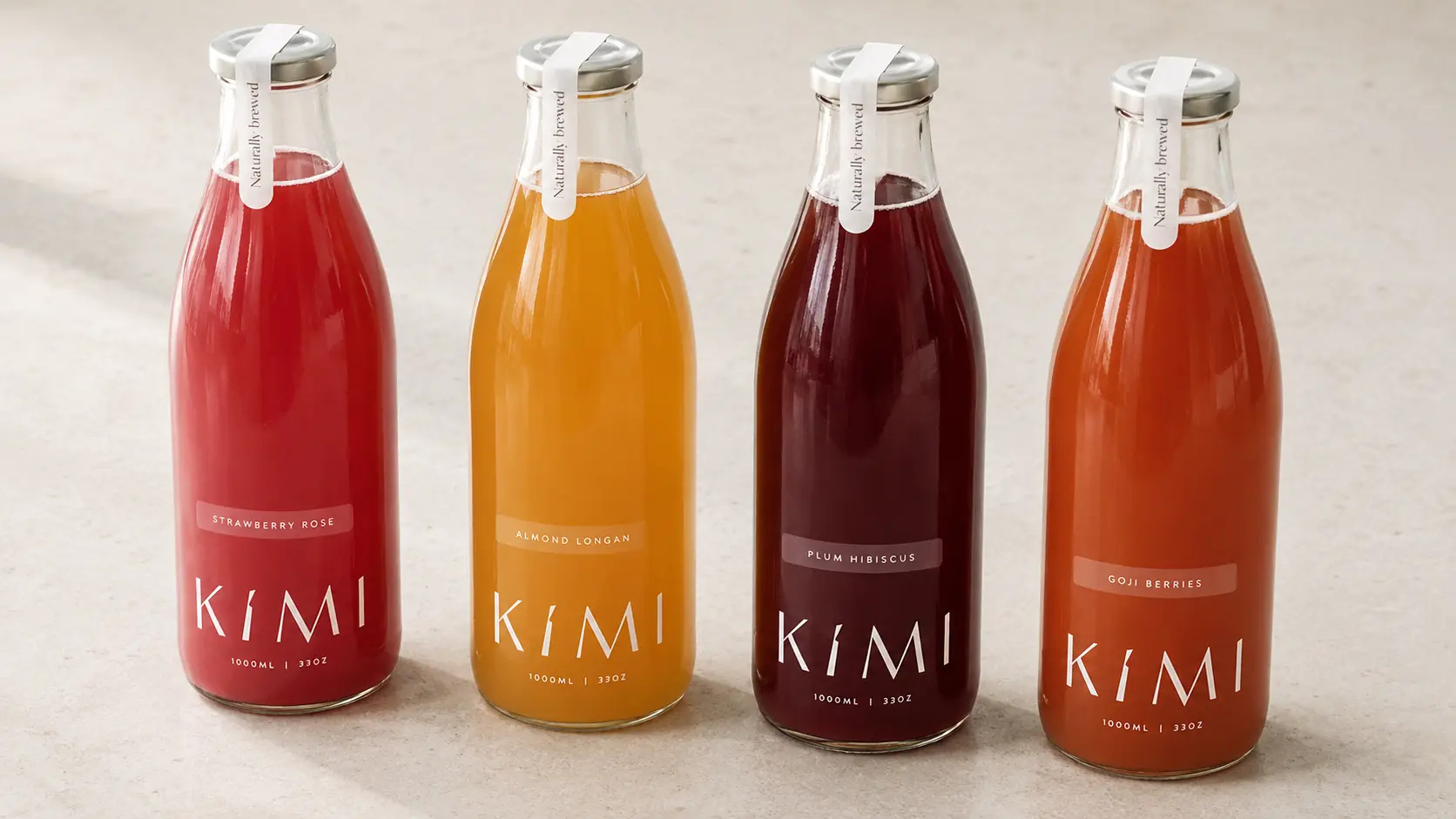
Kimi operates entirely online — available at kimikombucha.com, Lazada, and TikTok Shop — and delivers island-wide in Singapore. Products are sold in 1000ml glass bottles, which is an unusually large format for Singapore’s kombucha market. The range is one of the broadest in the local market, spanning 47 flavours across three collections: Classic ($18), Premium ($22), and Bespoke ($25–$35). A water kefir range is also offered but is not assessed in this review.
Kimi’s About page declares the brand as 100% raw and unpasteurised, states compliance with SFA requirements, and publishes a Certificate of Analysis — a third-party laboratory test result confirming the brew’s live culture activity. This is the only Singapore-based kombucha brand in the KombuchaSG review directory to have published a Certificate of Analysis at the time of this review, and it meaningfully strengthens the brand’s live culture claim beyond what most competitors offer.
The Bespoke range is where Kimi moves furthest from standard kombucha territory — Bird’s Nest kombucha uses a honeyed base, the Collagen range adds peach gum as a natural collagen source, and the Intense Slimming formula incorporates functional herbs and spices. These are ambitious functional product extensions that serve a wellness-oriented Singapore consumer.
Front-of-Pack Claims
The following claims are sourced from Kimi Kombucha’s website. Physical label claims have not been independently verified from a physical bottle.
- Raw: “100% raw and bursting with live beneficial cultures” — declared on product pages
- Pasteurisation: “We do not pasteurise our kombucha in order to preserve the naturally occurring live cultures” — stated on About page
- Live cultures: “Over 30 strains of friendly bacteria and yeast” — declared on Original product page
- Certification: SFA compliant · Certificate of Analysis published at kimikombucha.com/about
- Culture checks: “Routine culture checks to consistently uphold the high standards of our brew”
- Shelf life: 30 days refrigerated — confirmed on all product pages
- Storage: Keep refrigerated at all times
- Alcohol: “Raw unpasteurised kombucha contains trace amounts of alcohol, no more than what you would find in naturally ripened fruits”
- Format: 1000ml glass bottles
What’s in the Bottle
Ingredient declarations are sourced from individual product pages at kimikombucha.com. All data is website-sourced and has not been verified against physical bottle labels. Kimi offers 47 flavours — a representative selection from each range is listed below. The full range is available at kimikombucha.com.
Note on the Bespoke range ingredient declarations: The Classic and Premium ranges consistently use specific, named whole ingredients. The Bespoke range has two exceptions worth noting. First, the Intense Slimming product lists “Spicy, herbaceous, earthy” as flavour descriptors alongside the base — these are tasting notes, not ingredient names, and the actual herbs and spices are not individually identified on the product page. Second, the Bird’s Nest product uses a “specially blended honeyed kombucha” base, which is a different base formulation from the standard “black tea, sugar, scoby” — full ingredient detail for this base is not declared on the product page. These gaps affect the Flavouring Method and Ingredient Transparency scorecard criteria and are scored on the lowest-performing product as per KombuchaSG’s multi-flavour scoring rule.
Classic — $18 / 1000ml
Blood Orange
Kombucha base (black tea, sugar, scoby), blood orange.
Website source.
Dark Cherry
Kombucha base (black tea, sugar, scoby) & sweet dark cherries.
Website source.
Green Apple
Kombucha base (black tea, sugar, scoby), green apple.
Website source.
Lemon
Kombucha base (black tea, sugar, scoby), lemon.
Website source.
Mango
Kombucha base (black tea, sugar, scoby), fresh Thailand mangoes.
Website source. Country of origin for the mango specified — Thailand.
Mixed Berries
Kombucha base (black tea, sugar, scoby), mixed berries.
Website source.
Peach
Kombucha base (black tea, sugar, scoby), peach.
Website source.
Pineapple
Kombucha base (black tea, sugar, scoby), pineapple.
Website source.
Pomegranate
Kombucha base (black tea, sugar, scoby), pomegranate.
Website source.
Raspberry
Kombucha base (black tea, sugar, scoby), raspberry.
Website source.
Strawberry Mango
Kombucha base (black tea, sugar, scoby), strawberry & mango.
Website source.
Yuzu
Kombucha base (black tea, sugar, scoby), yuzu.
Website source.
Premium — $22 / 1000ml
Apple Cinnamon
Kombucha base (black tea, sugar, scoby), apple & cinnamon.
Website source.
Apple Mint
Kombucha base (black tea, sugar, scoby), apple & mint.
Website source.
Celery Beetroot
Kombucha base (black tea, sugar, scoby), celery & beetroot.
Website source.
Dragonfruit Lychee
Kombucha base (black tea, sugar, scoby), dragonfruit & lychee.
Website source.
Lychee Mango
Kombucha base (black tea, sugar, scoby), fresh lychees & mango.
Website source.
Matcha Mint
Kombucha base (black tea, sugar, scoby), matcha & mint.
Website source.
Piccadilly Tomato
Kombucha base (black tea, sugar, scoby), Piccadilly tomatoes.
Website source. Piccadilly is a specific named tomato variety — the level of ingredient specificity is notable.
Slimming Formula
Kombucha base (black tea, sugar, scoby), ginger, turmeric, cinnamon & grapefruits.
Website source. All four functional ingredients specifically named.
Turmeric
Kombucha base (black tea, sugar, scoby), turmeric.
Website source.
Bespoke — $25–$35 / 1000ml
Bird’s Nest ⚠️ Ingredient detail incomplete
Specially blended honeyed kombucha, premium Bird’s Nest. [Full ingredient list for honeyed kombucha base not declared on product page.]
Website source. Uses a different “honeyed kombucha” base — the full composition of this base is not specified on the product page. Bird’s Nest is a premium traditional ingredient. This product requires physical label verification.
Collagen (Lemon / Rose / Pandan)
Kombucha base (black tea, sugar, scoby), natural peach gum, [lemon / rose / pandan].
Website source. Peach gum is a natural TCM ingredient (桃胶) used as a collagen supplement — a whole, named botanical. Specific flavour additions (lemon, rose, pandan) are named per variant.
Intense Slimming ⚠️ Vague ingredient descriptor
Kombucha base (black tea, sugar, scoby). Flavour descriptor: “Spicy, herbaceous, earthy.”
Website source. The product page lists “Spicy, herbaceous, earthy” as a flavour descriptor rather than naming specific ingredients. The actual herbs and spices in the formula are not declared. This is the lowest-performing product in the range for ingredient transparency and flavouring criteria. Contrast with the Premium Slimming Formula, which specifically names ginger, turmeric, cinnamon, and grapefruit. Physical label required to confirm actual ingredients.
Scorecard Breakdown
| Criteria | Finding | Score |
|---|---|---|
| SCOBY origin & integrity Max 15 pts — Live, documented culture. Not a vinegar shortcut. | “Black tea, sugar, scoby” is explicitly declared as the kombucha base across all standard products. The brand is 100% raw and unpasteurised by stated commitment. A Certificate of Analysis is published on the About page — a third-party laboratory test confirming live culture activity. The brand conducts routine culture checks and adheres to SFA requirements. “Over 30 strains of friendly bacteria and yeast” is declared on product pages. Refrigeration is required and shelf life is 30 days — both consistent with an active live culture product. No specific SCOBY lineage or origin is documented. The Bespoke Bird’s Nest product uses a “honeyed kombucha” base whose full composition is not declared. | 13 / 15 |
| Carbonation source Max 15 pts — Natural 2nd fermentation only. No added carbonated or sparkling water. | No carbonated water, sparkling water, or added CO₂ appears in any ingredient declaration reviewed across the full range. The product requires refrigeration and has a 30-day shelf life — both consistent with a naturally carbonated, live product. The fermentation process is described on the website as producing “the perfect amount of tartness and fizz.” The criterion is fully met across all reviewed products. | 15 / 15 |
| Flavouring method Max 15 pts — Whole fruit or botanicals. No artificial flavours or vague “natural flavouring.” | The Classic and Premium ranges consistently declare specific, whole, identifiable ingredients: yuzu, dark cherries, fresh Thailand mangoes, lychees, matcha, ginger, turmeric, cinnamon, grapefruits, Piccadilly tomatoes, peach gum, and more. The level of specificity — naming the mango’s country of origin (Thailand) and using the Piccadilly tomato variety name — is among the most detailed in the directory. No artificial flavourings and no vague “natural flavouring” declarations appear anywhere in the Classic or Premium ranges. The deduction comes from the Bespoke Intense Slimming product, which lists “spicy, herbaceous, earthy” as descriptors rather than naming its actual botanical ingredients. The scorecard is applied on the lowest-performing product. | 10 / 15 |
| Live cultures at point of sale Max 15 pts — Lab-verified CFU count or visible culture activity. Not pasteurised. | “100% raw” and “We do not pasteurise our kombucha” are explicitly stated on the brand’s About page. A Certificate of Analysis is published — a third-party laboratory verification of live culture presence. SFA compliance and routine culture checks are stated. “Over 30 strains of friendly bacteria and yeast including probiotic bacteria such as Lactobacillus sp.” is declared on product pages. Refrigeration is required; 30-day shelf life. However, the physical bottle carries no label — there is no unpasteurised declaration, no culture information, and no SFA compliance statement visible at point of purchase. The brand states SFA compliance on its website while the physical product carries no food labelling, which is a contradiction that cannot be resolved from the product alone. No specific CFU count per ml is published on product pages. | 11 / 15 |
| Sugar content after fermentation Max 15 pts — Under 4g per 100ml. Consumed by SCOBY during fermentation. | No nutrition panel or sugar per 100ml data is published on the Kimi website for any product. The physical bottle carries no label and therefore no Nutri-Grade declaration — which is a regulatory requirement for packaged beverages in Singapore. The editor’s tasting note recorded the product as noticeably sweet, which is consistent with higher residual sugar content. No artificial sweeteners or stevia appear in the website ingredient declarations, meaning the sweetness comes from residual cane sugar post-fermentation. Without a nutrition panel on the physical product or the website, the sugar content cannot be confirmed against the 4g threshold. This criterion cannot be fully scored. | 8 / 15 |
| Ingredient transparency Max 15 pts — Full disclosure. No vague terms. Every ingredient clearly identified. | The website ingredient declarations for the Classic and Premium ranges are among the most specific in the Singapore market — named whole ingredients throughout, with notable detail including country of origin for mango and use of the Piccadilly tomato variety name. However, the physical 1000ml bottle carries only a brand sticker. No ingredient list, no nutrition panel, no allergen information, and no best before date appear on the bottle. Singapore’s Food Regulations require packaged food to carry a complete ingredient declaration on the physical product. A consumer who purchases Kimi from Lazada or TikTok Shop has no way to verify the ingredients at point of receipt without accessing the website separately. The website declarations are specific and clean — but they are not on the bottle. Additionally, the Intense Slimming Bespoke product uses “spicy, herbaceous, earthy” descriptors rather than named ingredients even on the website. The score reflects both the physical label gap and the Bespoke range declaration issue. | 7 / 15 |
| Production integrity Max 10 pts — Small-batch, controlled, traceable. Founder-led or craft production preferred. | Singapore-registered Pte. Ltd. (2024), founded from personal health need. Hand-brewed, described as “homemade” on the website. SFA certified and compliant. Certificate of Analysis published. Routine culture checks conducted. Online-only model is consistent with a focused small-batch operation rather than commercial scale. No facility address or batch traceability information is published. The range of 47 flavours is ambitious for a genuinely handcrafted operation — production consistency across this range is worth confirming when physical bottles are obtained. | 9 / 10 |
| Total Score | 74 / 100 | |
Plain-Language Verdict
Kimi scores Partially Authentic at 74 out of 100. The brand has genuine fermentation credentials — a published Certificate of Analysis, an explicit unpasteurised declaration, SFA compliance stated, and some of the most specific ingredient declarations in the Singapore market on its website. The Classic and Premium range ingredient transparency, read from the website, is excellent. The fermentation process appears genuine.
The score is held back by a finding that is significant and straightforward to fix: the physical 1000ml bottle carries only a brand sticker. There is no ingredient list, no nutrition panel, no Nutri-Grade declaration, no best before date, and no allergen information on the bottle. Singapore’s Food Regulations require all of this on packaged food sold commercially. A consumer who orders Kimi through Lazada, TikTok Shop, or the brand’s own website receives a bottle with no way to verify its contents at point of receipt without separately visiting the website. The brand states SFA compliance — but the physical product as delivered does not reflect it.
The sugar content criterion cannot be confirmed. There is no nutrition panel on the bottle or the website. The editor’s tasting note recorded the product as noticeably sweet — consistent with higher residual sugar — but without a verified number, the scorecard cannot award full marks.
These are not fundamental brewing problems. They are labelling and regulatory compliance gaps that, if addressed, would move Kimi back into the Authentic band. The brew itself shows genuine fermentation character and the ingredient philosophy on the website is credible. The bottle just needs to say so.
Editor’s Tasting Note
This section represents the personal tasting experience of the KombuchaSG editor and is entirely separate from the scorecard assessment above, which is based on declared label and website information. Tasting notes are subjective and reflect one individual’s experience.
The first thing to note on opening is that the bottle carries no label beyond the brand sticker — there is no Nutri-Grade, no ingredient list, no best before date. This is the context in which the tasting begins.
The fermentation character is mild — comparable to Aboocha. There is a detectable kombucha base, but it does not come through with the tartness and depth that genuine, well-fermented kombucha produces. The drink reads primarily as sweet rather than tart, which is consistent with higher residual sugar and a shorter or lighter fermentation profile.
The carbonation is the strongest point in the tasting. It is softer and more integrated than the aggressive sparkling water character found in Aboocha and Châteaux — the bubbles feel closer to natural fermentation effervescence, though not with the fine, persistent quality of a very actively carbonated brew. This is the best carbonation feel in the directory so far.
The flavour, however, does not match the declared ingredients. Despite the website declaring whole, named fruits throughout the range, the taste reads as artificial — a synthetic sweetness that does not correspond to the character of the real ingredients named. This is the same disconnect found in Châteaux, and it is notable given how specific and credible the website ingredient declarations are.
The sweetness is noticeable and persistent throughout. Combined with the absence of a Nutri-Grade or nutrition panel on the bottle, readers have no way to know what the sugar level is — and the taste suggests it may be above the scorecard’s 4g threshold.
| Criterion | What it measures | Score | Max |
|---|---|---|---|
| Fermentation Character | Tartness, depth, live kombucha taste | 2 | 5 |
| Carbonation Feel | Soft and integrated vs sharp and aggressive | 3 | 5 |
| Flavour Honesty | Does it taste like the declared ingredients? | 1 | 5 |
| Overall Impression | Would you drink this again? | 1 | 5 |
| Editor’s Total | 7 | / 20 | |
Where to Buy
Kimi Kombucha is available online at kimikombucha.com, on Lazada Singapore, and via TikTok Shop. Free delivery for orders above $80 island-wide. KombuchaSG does not verify current stock availability or pricing. Check the brand website for up-to-date information.
How this score was calculated
Every brand on KombuchaSG is assessed using the same 7-criteria, 100-point scorecard. The criteria are published in full before any brand is reviewed. Read The Standard to understand how every score on this site is calculated.
- → Back to all Singapore kombucha brand reviews
- → The Standard — the full 7-criteria scorecard
- → Real vs Fake Kombucha — the shortcuts explained
- → How to read a kombucha label
KombuchaSG is an independent educational platform. We are not affiliated with any kombucha brand. Ingredient data for this review is sourced from kimikombucha.com product pages. Physical 1000ml bottles were obtained and reviewed — the label finding (brand sticker only, no food labelling information) is confirmed from physical product. All criteria are applied identically to every brand reviewed on this site.