Kombucha begins as tea.
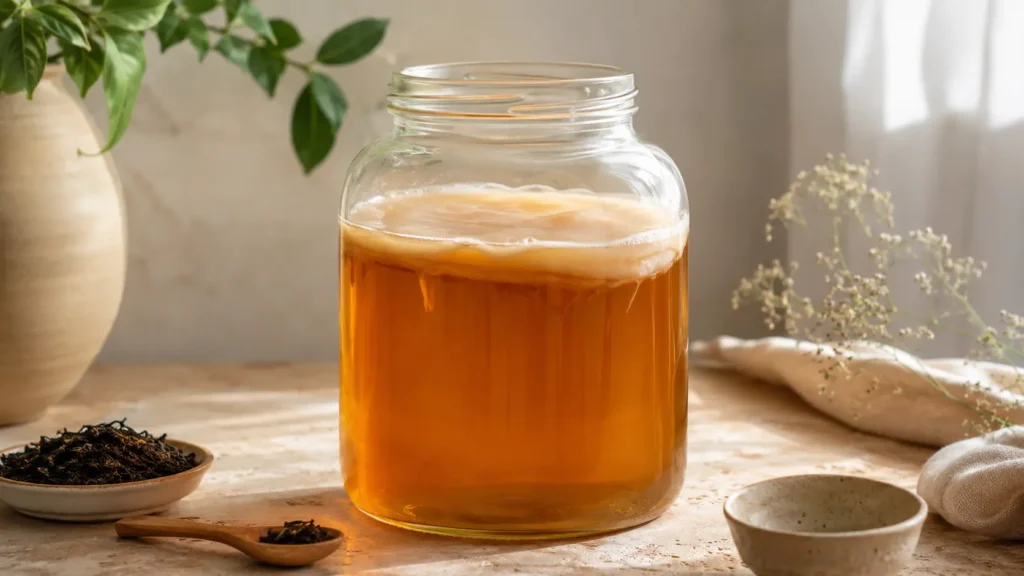
At its simplest, kombucha is made by fermenting sweetened tea with a living culture known as a SCOBY, which stands for Symbiotic Culture of Bacteria and Yeast.
That may sound scientific, but the idea is simple: tea provides the foundation, sugar feeds the culture, and time allows fermentation to happen.
Over several days, the culture transforms the sweetened tea into a tangy, lightly fizzy drink with a more complex flavour. This is why kombucha tastes different from regular iced tea, soda, or sparkling water. It is not just mixed. It is fermented.
What Does “Fermentation” Mean?
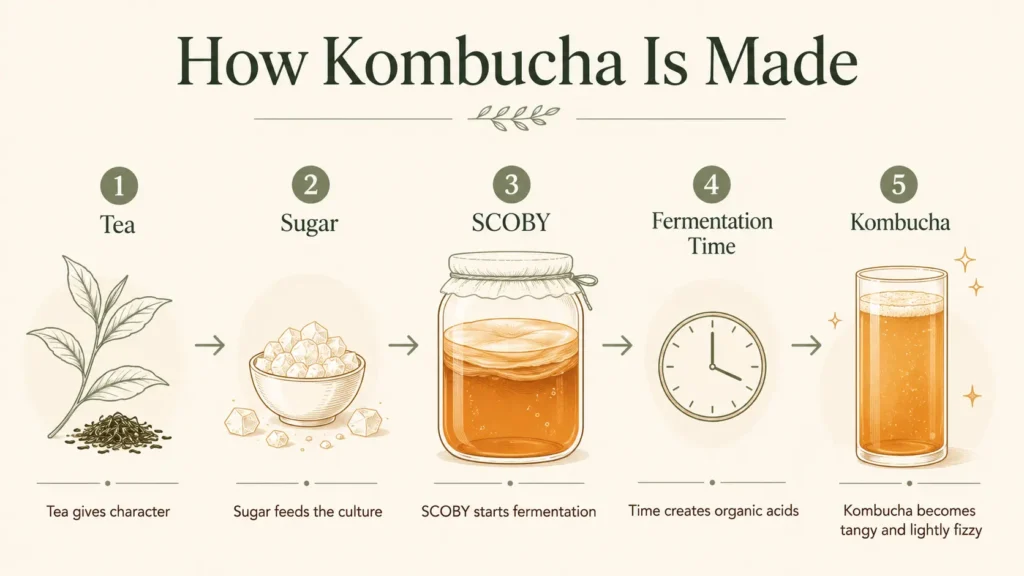
Fermentation is a natural process where microorganisms such as bacteria and yeast transform ingredients over time.
In kombucha, the yeast helps break down sugar. The bacteria then help convert some of the fermentation by-products into organic acids.
Organic acids are natural acids formed during fermentation. They give kombucha its bright, tangy taste and help create the flavour balance that makes kombucha refreshing rather than simply sweet.
This is the heart of kombucha: a living culture slowly changing tea into a fermented beverage.
The Four Basic Elements of Kombucha
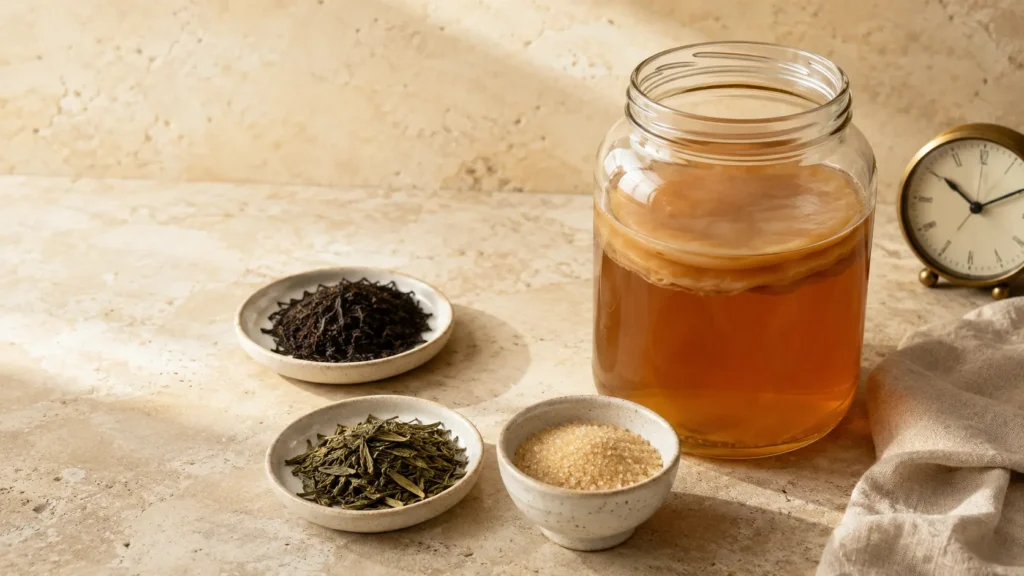
Most kombucha starts with four core elements:
- Tea
Tea gives kombucha its base flavour, colour, aroma, and plant compounds known as polyphenols. - Sugar
Sugar feeds the live culture during fermentation. It is not there only to sweeten the drink. - SCOBY
The SCOBY contains the bacteria and yeast that drive fermentation. - Time
Fermentation does not happen instantly. The flavour develops gradually as the culture works.
A good way to remember it:
Tea gives character. Sugar feeds the culture. SCOBY starts fermentation. Time creates complexity.
Why Is Sugar Needed?
Many people are surprised that kombucha needs sugar.
But sugar plays an important role. It acts as food for the yeast and bacteria. During fermentation, the live culture consumes part of the sugar and converts it into other compounds, including organic acids and natural carbonation.
This does not mean all kombucha has the same sugar level. The final amount depends on the recipe, fermentation time, flavouring ingredients, and whether extra sweeteners are added later.
For Singapore consumers who are more sugar-conscious, this is why reading the label matters. A better kombucha should be transparent about its sugar content and should not rely heavily on post-fermentation sweeteners to taste good.
What Does the SCOBY Do?
The SCOBY is the living culture behind kombucha.
It usually looks like a pale, jelly-like layer floating at the surface of the brew. Inside that culture are bacteria and yeast working together.
The yeast helps process the sugar. The bacteria help create acids that give kombucha its signature tang. Over time, this teamwork changes the tea’s taste, aroma, and texture.
Without a living culture, sweetened tea remains sweetened tea. With a healthy SCOBY and proper fermentation, it becomes kombucha.
Why Does Kombucha Become Tangy?
Kombucha becomes tangy because fermentation produces organic acids.
These acids are part of what gives kombucha its refreshing, slightly sour profile. The longer kombucha ferments, the more tart it usually becomes.
This is also why authentic kombucha should not taste like ordinary soft drink. A good kombucha has balance: tea depth, gentle sweetness, acidity, and natural fermentation character.
It should feel alive and layered, not flat, syrupy, or artificially flavoured.
Why Is Kombucha Fizzy?
Kombucha can become naturally fizzy because yeast produces carbon dioxide during fermentation.
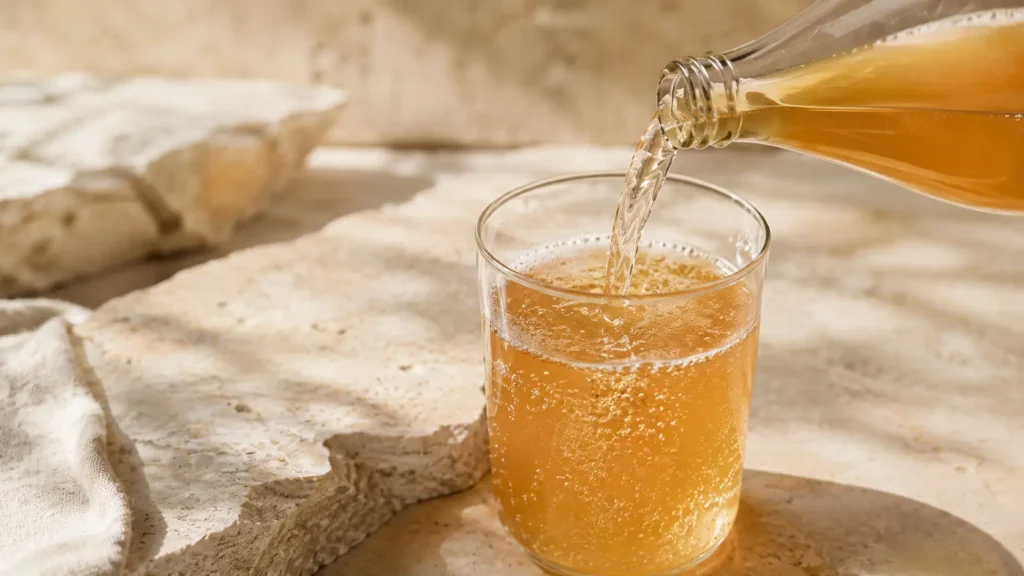
Carbon dioxide is the gas that creates bubbles. In traditional kombucha, this fizz can develop naturally, especially when the drink is bottled and allowed to continue fermenting carefully for a short period.
This natural carbonation is different from simply adding sparkling water. Natural fizz is part of the fermentation process and usually feels softer and more integrated.
That said, carbonation can vary between batches because kombucha is a living drink. Temperature, storage, sugar level, and fermentation time can all influence the final bubbles.
Why Do Time and Temperature Matter?
Fermentation is sensitive to time and temperature.
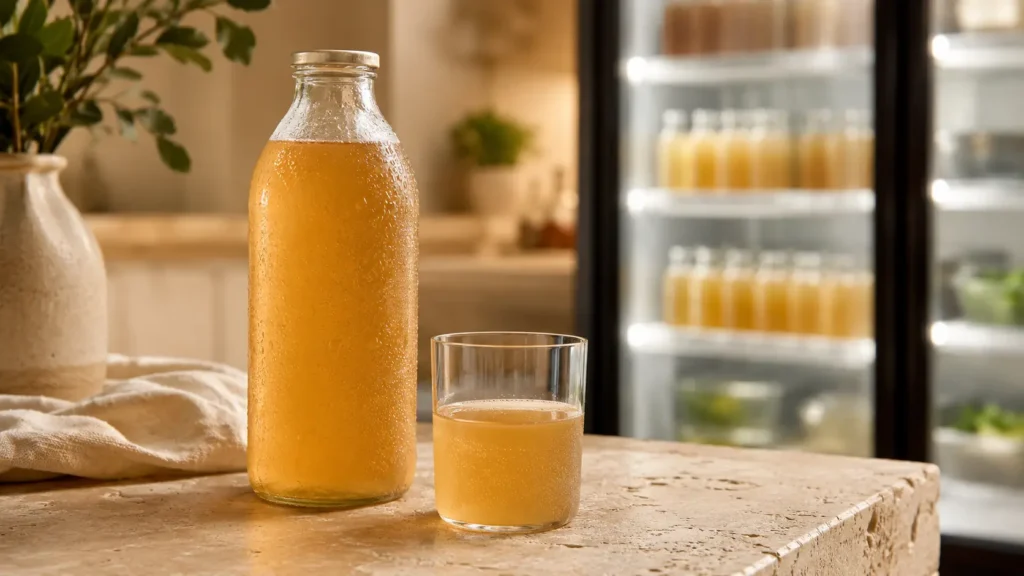
In Singapore’s warm and humid climate, fermentation can happen faster than in cooler countries. This can be helpful for active brewing, but it also means kombucha must be handled carefully.
If kombucha ferments too little, it may taste too sweet and underdeveloped. If it ferments too long, it may become too sour or vinegary.
Temperature also affects pressure inside bottles. Raw kombucha continues to ferment slowly, even after bottling. This is why proper refrigeration is important. Cold storage helps slow the culture down, preserve flavour, and maintain a more stable drinking experience.
Why Clean Brewing Matters
Because kombucha is made with live cultures, cleanliness matters.
Professional craft brewers pay close attention to hygiene, temperature, ingredient quality, fermentation time, and bottling conditions. These details help create kombucha that is safer, more consistent, and better balanced.
Home brewing can be interesting, but it also carries risks if the process is not controlled properly. Contamination, unsuitable containers, mould, or poor storage can affect the quality and safety of the drink.
For most beginners, professionally brewed kombucha is the easiest way to enjoy the benefits of fermentation without managing the complexity of the brewing process yourself.
What Happens After the First Fermentation?
After the initial fermentation, kombucha may be flavoured with ingredients such as fruits, herbs, flowers, roots, or botanicals.
This stage helps develop aroma and taste. For example, fruits can add brightness, botanicals can add fragrance, and tea quality can influence depth and finish.
This is where ingredient quality becomes important.
A clean kombucha should use ingredients that support the fermentation rather than cover it up. Real fruits, premium tea leaves, and botanicals create a more natural flavour profile than artificial flavouring or heavy sweeteners.
Is Kombucha Still Alive After Bottling?
Raw, unpasteurised kombucha can remain alive after bottling because it still contains active cultures.
This is why you may sometimes see cloudy sediment, floating strands, or small jelly-like pieces in the bottle. These are usually natural signs of live culture activity.
It is also why raw kombucha should be kept chilled. Refrigeration slows fermentation, helps preserve flavour, and reduces the risk of excess pressure building inside the bottle.
Pasteurised kombucha, on the other hand, is heat-treated. This can improve shelf stability, but it also reduces or removes live cultures. That is one reason raw and pasteurised kombucha can feel very different in both taste and character.
Craft Kombucha vs Shortcuts
Good kombucha takes time.
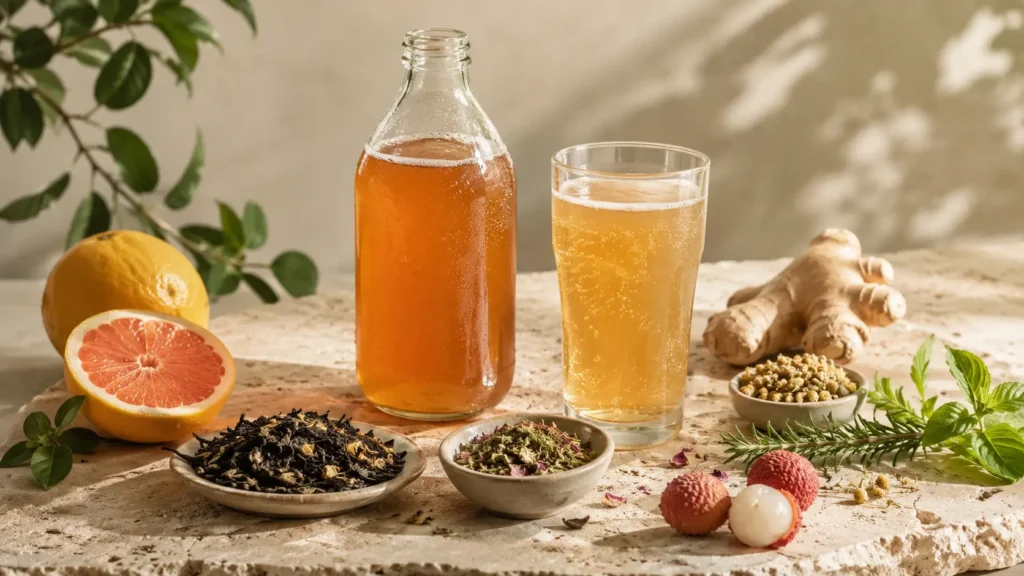
It is shaped by tea selection, fermentation control, live culture balance, and ingredient quality. Shortcuts can make a drink taste sweet, fizzy, or fruity, but that does not always mean it has the depth of properly fermented kombucha.
When choosing kombucha, ask:
- Is it made from real tea?
- Is it raw or pasteurised?
- Does it use real fruit or vague flavouring?
- Is the sugar level clearly stated?
- Does it need refrigeration?
- Are artificial sweeteners or additives used after fermentation?
These questions help you understand whether you are drinking a fermented tea or simply a flavoured sparkling beverage.
Final Takeaway
Kombucha is made through fermentation.
Tea, sugar, and a SCOBY work together over time to create a tangy, lightly fizzy, living drink. The process may sound complicated, but the basic idea is simple: microorganisms transform sweetened tea into something more complex.
The best kombucha is not just about bubbles or flavour. It is about balance, patience, clean ingredients, and proper fermentation.
So when you drink kombucha, you are not just drinking tea. You are tasting the result of time, culture, and craft.