
5 things to check before buying kombucha in Singapore
Most of what you need to know is already on the label. Here is how to read it in under a minute — standing at the shelf.
Singapore’s kombucha market has grown fast. Walk into any Cold Storage, FairPrice Finest, or health food café and you will find a shelf full of bottles making similar claims — probiotic, natural, live cultures, gut health. The problem is that many of these claims are unverified, and some products have very little in common with genuine fermented kombucha.
You do not need a nutrition degree to tell the difference. You need to know what to look for. These five checks take under a minute and work on any bottle, anywhere.
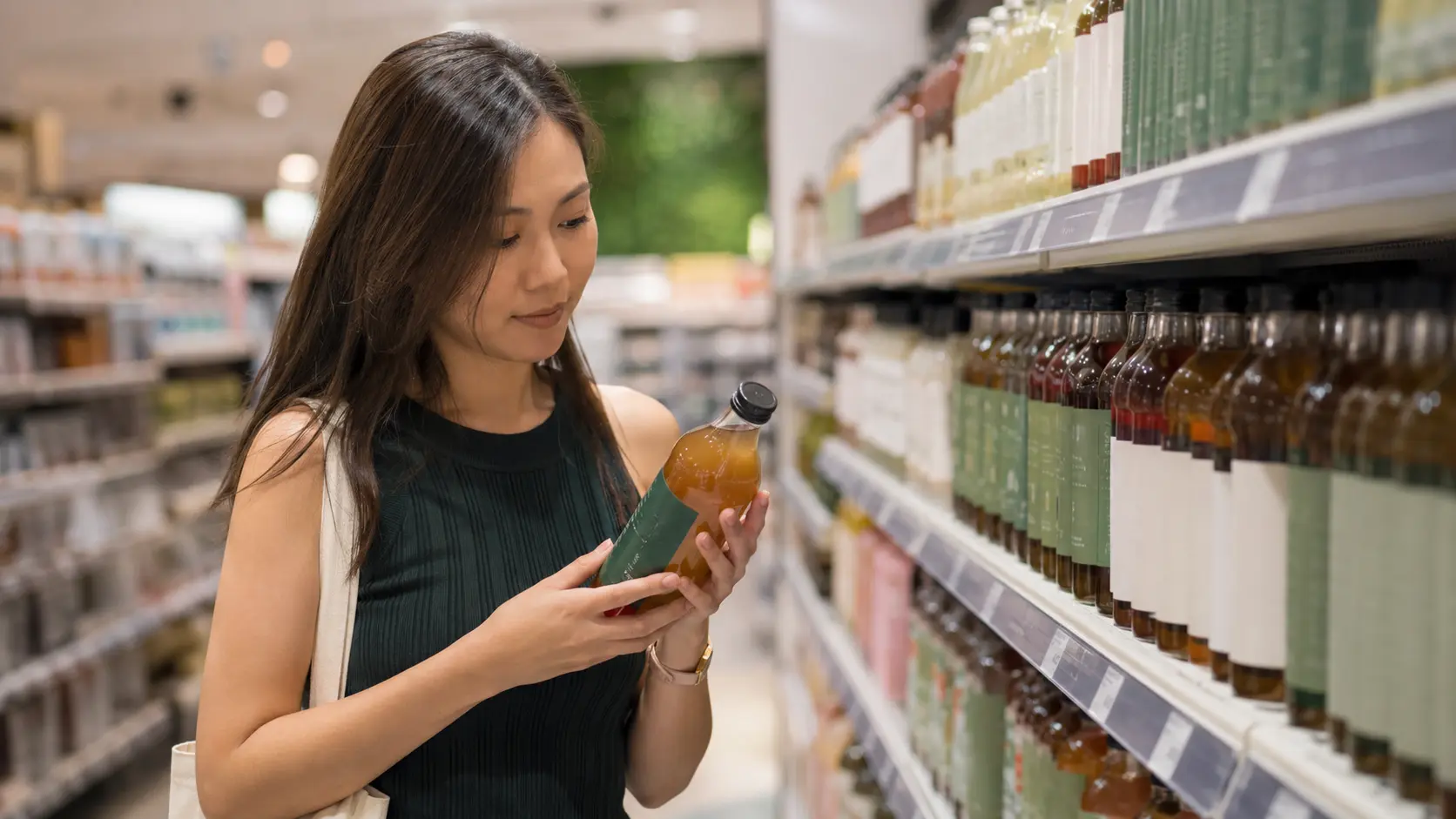
Before we go through the five checks, one important context: in Singapore, food and beverage labels are regulated by the Singapore Food Agency (SFA) for safety and nutrition claims — but words like “natural”, “probiotic”, and “live cultures” have no defined legal standard. Any brand can print these on a label without meeting a specific threshold. What you see on the front of the bottle is marketing. What matters is the ingredient list on the back.
1. Look for SCOBY or ‘kombucha culture’ in the ingredient list
Genuine kombucha is made by fermenting sweetened tea with a live SCOBY — a Symbiotic Culture of Bacteria and Yeast. The ingredient list of a real kombucha will typically include: tea, water, sugar, and a reference to the culture. It may say kombucha culture, SCOBY, or simply list the starter tea as an ingredient.
If no culture is mentioned anywhere — not in the ingredient list, not in the brand description — that is a signal worth noting. Some brands produce a tea-based beverage with added vinegar to create the sour taste without genuine fermentation. The ingredient list will tell you which you are holding.
⚠ Watch for: The presence of apple cider vinegar in the ingredients. ACV is sometimes added to mimic kombucha’s tangy character without a full fermentation cycle. It is not a standard kombucha ingredient.
2. Check the carbonation source — look for ‘carbonated water’ or ‘sparkling water’
Authentic kombucha is naturally carbonated. The fizz comes from a second fermentation — the live culture continues producing CO₂ inside the sealed bottle. No carbonated water is needed, because the carbonation is generated organically as part of the brewing process.
If you see carbonated water or sparkling water in the ingredient list, the fizz in the bottle is not coming from fermentation — it has been injected. This is a straightforward signal that the natural fermentation process has either not occurred fully or has been supplemented.
⚠ Watch for: Carbonated water or sparkling water listed as an ingredient. These words are unambiguous — if they are there, the carbonation is added, not fermented.
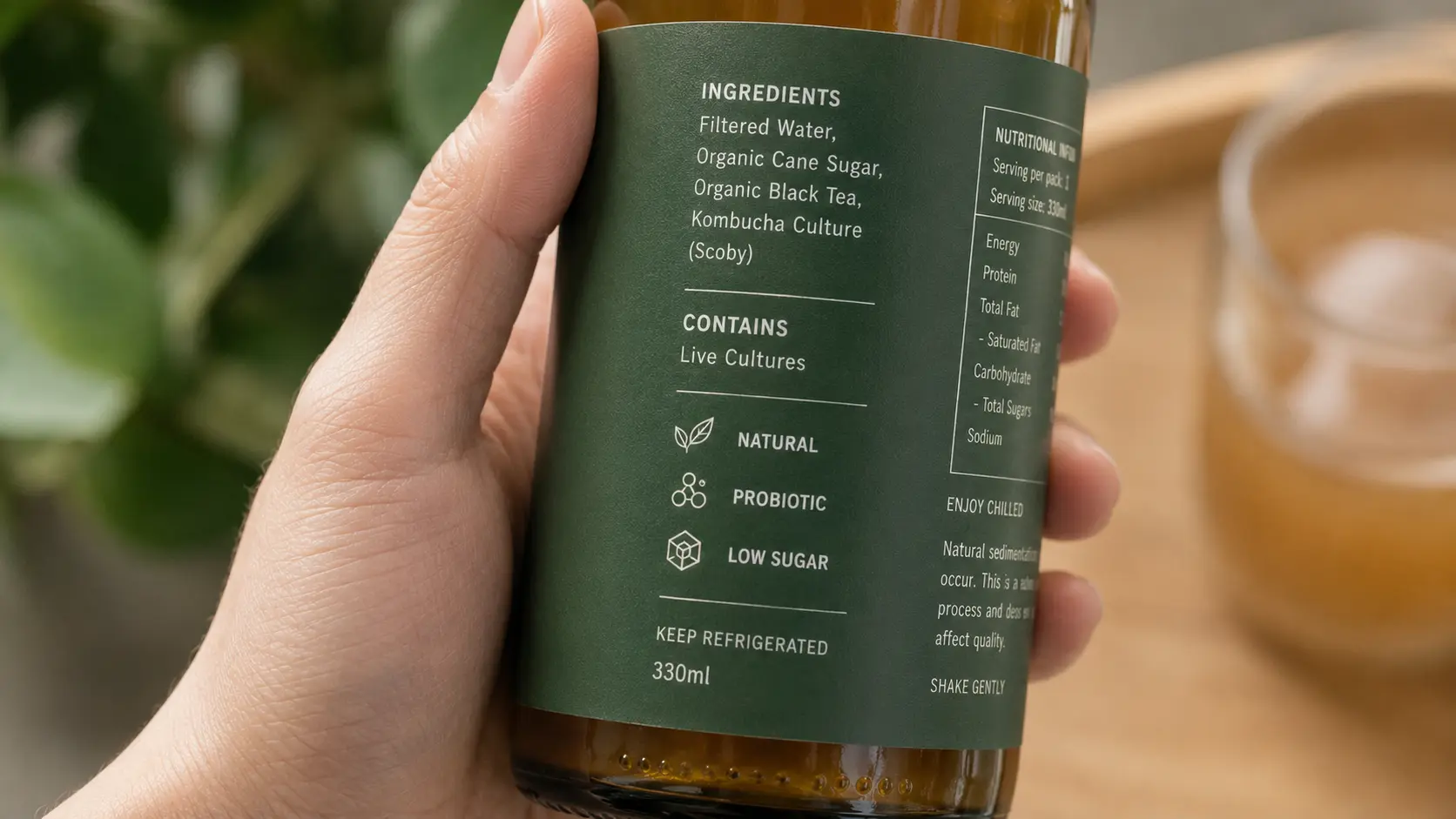
3. Read the flavouring — whole fruit or ‘natural flavouring’?
Authentically brewed kombucha uses real ingredients for flavour — whole fruit, fruit juice, herbs, flowers, roots, or spices. The ingredient list will name them specifically: fresh raspberry, ginger root, dried hibiscus, lemon juice. These are ingredients you can picture and trace.
When a brand uses real ingredients, naming them is easy. When a brand uses flavour concentrates or extracts, the ingredient list often defaults to a broad term instead.
⚠ Watch for: Natural flavouring, natural flavour (x), or flavour without specifics. In Singapore, ‘natural flavouring’ is a legally permitted catch-all term. It does not tell you what the actual ingredient is. A bottle can say raspberry kombucha on the front and list only natural flavouring (raspberry) on the back — meaning no actual raspberry was used in production.
4. Check the sugar content — look at the nutrition panel, not the front of pack
Sugar is essential in kombucha brewing — the SCOBY feeds on it to ferment. In a well-fermented product, much of the sugar is consumed by the culture during the process. A fully fermented kombucha typically contains 2–4g of sugar per 100ml. The lower the residual sugar, the more completely the fermentation has occurred.
⚠ Watch for: Sugar content above 6g per 100ml. High residual sugar suggests fermentation was cut short. Check the nutrition information panel on the back — it is regulated. The front claims are not.
Also watch for added sweeteners — erythritol, stevia, monk fruit extract — in the ingredient list. These are sometimes used to add sweetness after fermentation without increasing the sugar count. It is not inherently harmful, but it changes what you are drinking.
5. Check whether it is pasteurised — and whether the label tells you
Live kombucha is unpasteurised. Pasteurisation uses heat to kill microorganisms — which eliminates the live cultures that define genuine kombucha. An authentic product will typically say unpasteurised, raw, or contains live cultures somewhere on the label. It will also need to be refrigerated at all times.
⚠ Watch for: Products sitting on an ambient shelf — not refrigerated. Live kombucha must be kept cold. A kombucha sitting at room temperature for an extended period either does not contain live cultures, or will have over-fermented inside the bottle.
Also note: “contains probiotics” on the front label does not confirm live fermentation. Some products add probiotic strains at the bottling stage rather than fermenting them naturally. Both result in a label that says probiotics — but they are very different products.
“The front of the bottle is marketing. The ingredient list is the truth. Flip every bottle before you buy.”
Putting it all together — the 60-second shelf check
You do not need to memorise all five. At the shelf, this sequence takes under a minute:
- Pick up the bottle. Is it refrigerated? If it is sitting on an ambient shelf, put it back.
- Flip to the ingredient list. Is carbonated water or sparkling water listed? If yes, the fizz is added.
- Scan the flavouring. Does it name a real ingredient or just say ‘natural flavouring’?
- Check the sugar panel. Is it under 4g per 100ml? Under 6g is acceptable. Above 6g, ask why.
- Look for a culture reference. SCOBY, kombucha culture, or starter tea — if the label says nothing about a live culture, you are looking at a different kind of product.
Five checks. One minute. Most bottles will answer all five clearly — one way or another.
Want to go deeper on any of these checks?
Each of the five checks above maps directly to a criterion on the KombuchaSG Authenticity Scorecard — the 7-criteria, 100-point framework we use to review every Singapore kombucha brand on this site.
Frequently asked questions
Is all kombucha sold in Singapore genuine kombucha?
No. Some products sold as kombucha in Singapore use shortcuts that compromise authenticity — including added carbonated water instead of natural fermentation, flavour extracts instead of real fruit, and high residual sugar that suggests shortened fermentation. The ingredient list is the most reliable way to evaluate what you are buying. Singapore does not currently regulate what can be called kombucha.
What does ‘natural flavouring’ mean on a kombucha label in Singapore?
‘Natural flavouring’ is a legally permitted catch-all term in Singapore. It means the flavour has been derived from a natural source — a fruit, plant, or other natural material — but it does not mean the actual ingredient was used. A raspberry kombucha can list only ‘natural flavouring (raspberry)’ on the back while containing no actual raspberry. Authentic kombucha brands name their ingredients specifically: fresh raspberry, ginger root, dried hibiscus.
How much sugar should kombucha have?
Well-fermented kombucha typically contains 2–4g of sugar per 100ml. The SCOBY consumes much of the sugar added during brewing. Products with more than 6g per 100ml may have been fermented for a shorter time, or may have had sugar added post-fermentation. Check the nutrition information panel on the back of the bottle — this is regulated by the Singapore Food Agency and must be accurate. Front-of-pack sugar claims are not independently verified.
Why does it matter if kombucha is refrigerated or not?
Live kombucha must be kept cold. Refrigeration keeps the live cultures dormant, prevents over-fermentation, and maintains carbonation. A product sitting at room temperature either does not contain live cultures — meaning it is not genuine raw kombucha — or has been actively fermenting in the bottle, which builds CO₂ pressure and affects flavour and safety. If a kombucha is not refrigerated in the store, treat that as a signal about the product.
- → The Standard — our 7-criteria authenticity scorecard
- → Real vs Fake Kombucha — the shortcuts explained in full
- → How to read a kombucha label
- → Browse all Singapore kombucha brand reviews
KombuchaSG is an independent educational platform. We are not affiliated with any kombucha brand. Content is published for educational purposes only and does not constitute medical or nutritional advice.