Is ‘natural’ kombucha actually natural? What Singapore labels don’t tell you
‘Natural’ is one of the most powerful words in food marketing. It is also one of the least regulated. In Singapore, any kombucha brand can print it on a label — without meeting a single defined standard.
Walk along any health food aisle in Singapore and count how many kombucha bottles carry the word ‘natural’ somewhere on the label. Front banners, taglines, product descriptions — it is everywhere. It sounds like a promise. It is not.
Here is what ‘natural’ on a Singapore food or beverage label actually means — and what to look at instead.
What ‘natural’ claims look like on Singapore kombucha labels
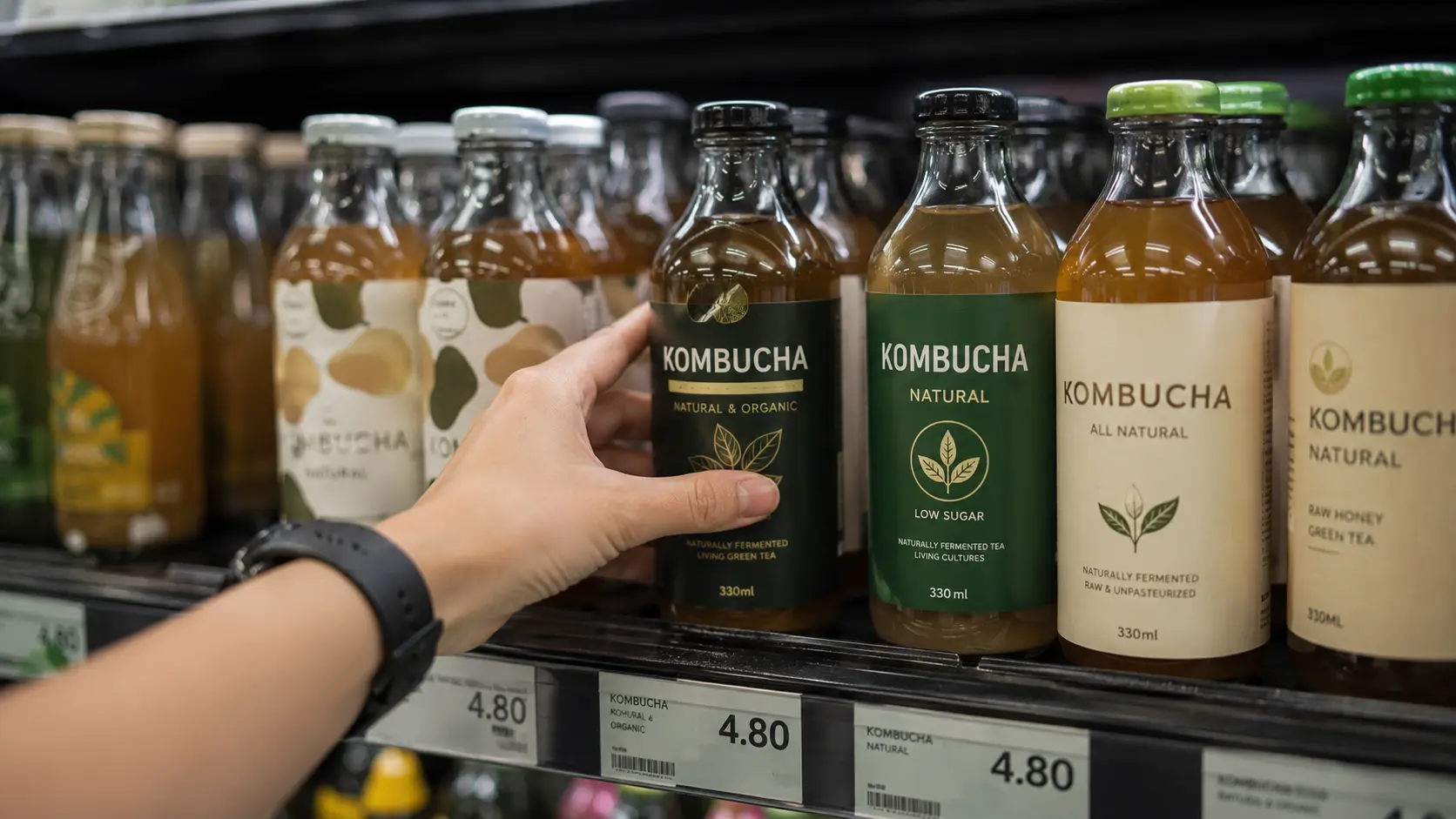
The word ‘natural’ appears on kombucha packaging in several forms — sometimes as a standalone claim, sometimes embedded in product descriptions or taglines. Here are the most common variations you will encounter:
Common ‘natural’ claims found on Singapore kombucha labels: 100% Natural · All Natural · Natural Ingredients · Naturally Brewed · Natural Flavors · No Artificial Additives · Natural Probiotics · Nature’s Own
Each of these phrases sounds meaningful. None of them is defined or enforced by a regulatory standard in Singapore. A brand can use any of them without meeting a specific threshold, having those claims verified, or being required to substantiate them beyond the general accuracy requirements that apply to all food labels.
What the Singapore Food Agency actually regulates
The Singapore Food Agency (SFA) regulates food and beverage labels under the Sale of Food Act and its accompanying Food Regulations. These regulations cover safety, nutrition claims, health claims, and the accurate declaration of ingredients. They do not define what ‘natural’ means.
| Label element | Regulated by SFA? | What that means |
|---|---|---|
| Ingredient list | Yes | Must be accurate and complete. Ingredients listed in descending order of weight. |
| Nutrition information panel | Yes | Mandatory for most packaged foods. Sugar, fat, sodium must be declared accurately. |
| Health claims | Yes (limited) | Specific health claims require pre-approval. General wellness language sits in a grey area. |
| ‘Natural’ claim | No | No defined standard. Any brand may use it without meeting a specific threshold. |
| ‘Probiotic’ claim | No | No Singapore regulatory definition. Used freely without verification requirements. |
| ‘Live cultures’ claim | No | No minimum CFU count or verification standard required in Singapore. |
The practical implication is straightforward: the parts of the label that are regulated — the ingredient list and the nutrition panel — are where the useful information is. The front-of-pack claims, including ‘natural’, are marketing. The back of the bottle is the substance.
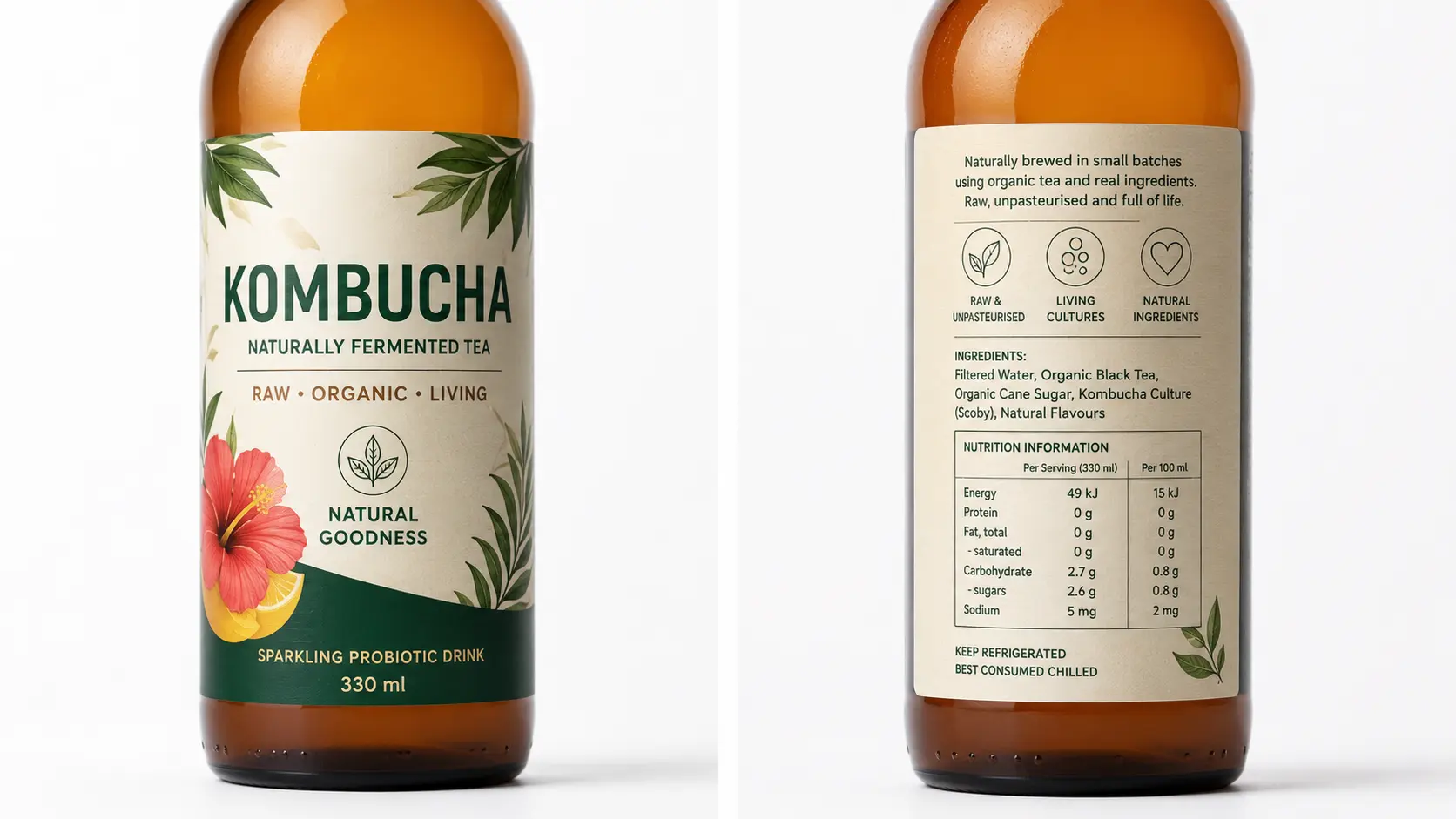
“The front of the bottle is a brand’s best argument for itself. The back is the evidence. One is regulated. One is not.”
What ‘natural’ can coexist with on the same label
Because ‘natural’ is unregulated in Singapore, it is entirely possible — and not uncommon — for a label to carry ‘natural’ claims alongside ingredients that many consumers would not consider natural at all.
‘100% Natural’ alongside artificial or synthetic ingredients
There is no rule preventing a brand from printing ‘100% Natural’ on the front while listing artificial flavoring, synthetic preservatives, or highly processed additives on the back ingredient list. The front claim is marketing. The ingredient list is regulated. They are not required to be consistent.
‘Naturally Brewed’ alongside added carbonated water
‘Naturally brewed’ suggests the product was fermented through a natural process. But if carbonated water or sparkling water appears in the ingredient list, the fizz was injected — not fermented. The phrase ‘naturally brewed’ may refer only to the initial fermentation stage, with no implication about how the carbonation was achieved.
‘Natural Flavors’ instead of real fruit
‘Natural flavors’ or ‘natural flavouring’ is a legally permitted catch-all for flavoring derived from a natural source. It does not mean actual fruit or botanicals were used. A bottle labelled ‘Raspberry Kombucha — Natural Flavors’ may contain no actual raspberry.
‘No Artificial Additives’ with added sweeteners
Sugar alcohols like erythritol and stevia leaf extract are derived from natural sources — so a brand can claim ‘no artificial additives’ while using them. These sweeteners are not harmful, but they are added post-fermentation and do not appear in genuinely fermented, well-sweetened-and-fermented kombucha.
The ingredient list is the single most reliable piece of information on a kombucha label in Singapore. It is regulated, it must be accurate, and it must list every ingredient present in descending order of weight.
No ‘natural’ claim can override what the ingredient list tells you. If carbonated water is there, the carbonation is added. If natural flavouring appears without specifics, real fruit was not used. If erythritol is listed, sweetener was added post-fermentation. The ingredient list is immune to marketing.
What to do instead of trusting ‘natural’
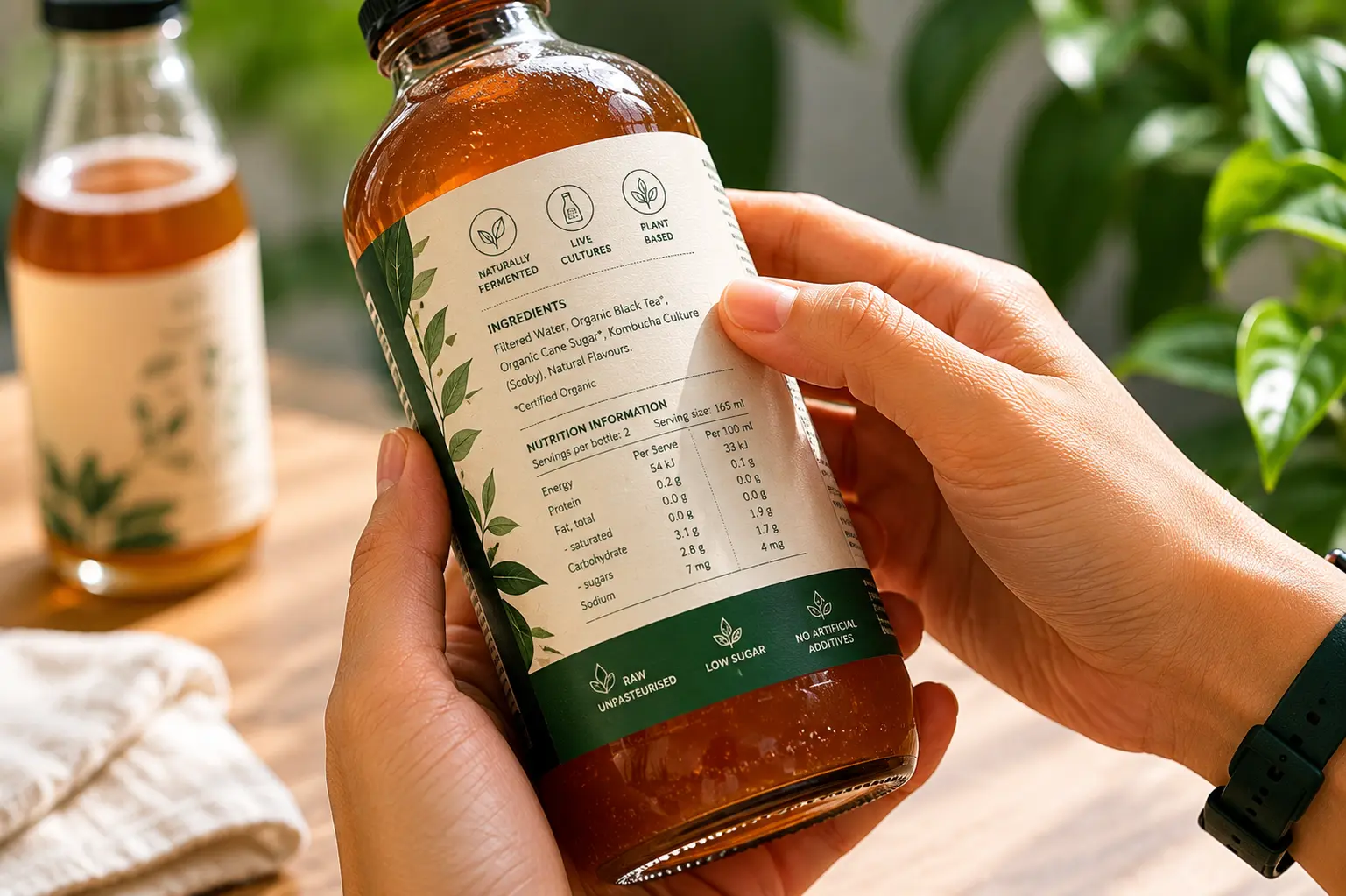
Rather than relying on front-of-pack claims, three questions answered from the back of the bottle tell you more than any marketing language can:
- What are the actual flavoring ingredients? Named whole fruit and botanicals, or ‘natural flavouring’ without specifics?
- Is carbonated water listed? If yes, the carbonation is not from fermentation — regardless of what the front says about natural brewing.
- What is the sugar content per 100ml? Under 4g suggests full fermentation. Above 6g suggests it was cut short or sweetener was added.
Those three checks — done from the ingredient list and nutrition panel — give you more useful information about the product than any number of ‘natural’ claims on the front.
Ingredient transparency is one of seven criteria on the KombuchaSG Authenticity Scorecard — worth 15 points.
Every brand reviewed on this site is assessed on the clarity and completeness of their ingredient list. Vague claims on the front of the bottle do not improve a brand’s score. The ingredient list is what we look at.
→ Read The Standard — the full 7-criteria scorecard
Frequently asked questions
Is ‘natural’ a regulated term on food labels in Singapore?
No. The Singapore Food Agency does not define or regulate the use of ‘natural’ on food and beverage labels. There is no minimum standard a product must meet to carry this claim. Any brand may print ‘natural’, ‘100% natural’, ‘all natural’, or ‘naturally brewed’ on its packaging without verification or approval. This applies across the food and beverage industry in Singapore — not just to kombucha.
Does ‘no artificial additives’ mean a kombucha is genuinely natural?
Not necessarily. ‘No artificial additives’ is a negative claim — it says what is not in the product, not what is. A product with no artificial additives can still contain highly processed flavoring extracts, added sweeteners like erythritol, added carbonated water, and a tea base with minimal fermentation. The absence of artificial additives does not confirm the presence of real ingredients, genuine fermentation, or authentic kombucha character. The ingredient list tells you more than this claim ever can.
Are other countries more regulated on the word ‘natural’?
Some are — partially. The United States FDA has an informal policy that ‘natural’ means nothing artificial or synthetic has been added, but this is guidance, not binding regulation, and it is not comprehensively enforced. The European Union has stricter controls on specific health and nutrition claims but does not regulate ‘natural’ as a standalone term either. Australia and New Zealand have some of the clearer standards through their joint food standards code, but gaps remain. The short answer is that ‘natural’ is a poorly regulated term in most jurisdictions — Singapore is not unusual in this respect.
If ‘natural’ means nothing, why do brands keep using it?
Because it works. Research consistently shows that consumers perceive ‘natural’ labeling as a positive signal — associated with health, quality, and absence of harmful additives. Because the term is unregulated, it is a low-cost way to create a positive impression without the expense or verification requirements of a legitimate certification. Brands that use it are responding rationally to consumer behaviour. The solution for consumers is not to wait for regulation — it is to read past the front label to the ingredient list, where the truth is.
- → The Standard — our 7-criteria authenticity scorecard
- → Real vs Fake Kombucha — the shortcuts explained
- → How to read a kombucha label
- → Browse all Singapore kombucha brand reviews
KombuchaSG is an independent educational platform. We are not affiliated with any kombucha brand. Content is published for educational purposes only and does not constitute medical or nutritional advice.