
Real vs Fake Kombucha
The five shortcuts brands take — and exactly how to spot each one on any Singapore label
The word kombucha is unregulated in Singapore. Any brand may print it on a label regardless of how the drink was produced. The result is a market where genuinely fermented kombucha sits on the same shelf as drinks that replicate its appearance and taste while bypassing the fermentation process that gives it meaning.
This guide identifies the five most common shortcuts in the Singapore kombucha market, explains why each one matters, and shows you exactly where to find the evidence on any label. No brand is named. The criteria speak for themselves.
Why the distinction matters
This is not a question of taste preference. A kombucha that uses carbonated water instead of second fermentation, artificial flavouring instead of real fruit, or pasteurisation instead of live cultures is a fundamentally different product — not just a different style of the same thing.
The health properties associated with kombucha — live probiotic cultures, organic acids, B vitamins, enzymes — are products of genuine SCOBY-driven fermentation. A drink that bypasses this process does not contain them in any meaningful quantity, regardless of what the front of the label claims.
For a consumer buying kombucha for gut health, the difference between a genuinely fermented product and a commercial imitation is not cosmetic. It is the entire point.
The five shortcuts
Each shortcut below corresponds to one or more criteria in the KombuchaSG authenticity scorecard. Each one is identifiable from the label — if the information is disclosed.
Shortcut 1 — Adding carbonated water instead of second fermentation
Carbonation criterionAuthentic kombucha gets its carbonation from a second fermentation — bottling the kombucha with natural flavouring ingredients and allowing the live cultures to continue producing CO₂ in a sealed environment over 2 to 4 days. This process produces fine, naturally integrated carbonation and deepens the flavour of the drink.
Adding carbonated water or sparkling water to a kombucha base eliminates the need for second fermentation entirely. It is significantly faster, cheaper, and more consistent at industrial scale. The result is a drink with carbonation — but carbonation that was produced by an industrial process, not by live cultures working in the bottle.
This shortcut also means the drink never underwent the flavour development and additional probiotic activity of a genuine second fermentation. It is a different product.
Look for carbonated water or sparkling water anywhere in the ingredient list. If either appears, the carbonation is not natural. This is a binary test — there is no partial or grey area.
Shortcut 2 — Using “natural flavouring” instead of real ingredients
Flavouring & transparency criteriaAuthentic kombucha is flavoured with real, whole ingredients — fresh fruits, herbs, flowers, roots, and spices — added at the second fermentation stage. These ingredients interact with the live culture, contribute to the carbonation process, and produce a complex, natural flavour profile that varies slightly between batches.
Manufactured flavour compounds — sold as natural flavouring or flavouring — are significantly cheaper than real fruit and far more consistent. They produce a predictable flavour that does not vary between batches and does not require the handling and storage of fresh or whole ingredients. They also contribute nothing to the fermentation process.
In Singapore, natural flavouring is a legal catch-all declaration. It does not require the brand to disclose what the flavour source actually is. A mango flavouring derived from mango skin extract and a mango flavouring derived from a synthetic compound can both legally be called natural flavouring in Singapore.
Look for natural flavouring, flavouring, or artificial flavouring in the ingredient list. A brand using real passion fruit, genuine ginger root, or actual hibiscus has every reason to name these specifically — they are selling points. If they are not named, ask why.
Shortcut 3 — Pasteurising to extend shelf life
Live cultures criterionKombucha is a living product. Its probiotic properties, enzymatic activity, and ongoing flavour development all depend on live cultures remaining active in the bottle. This living nature is also what makes kombucha perishable — it requires refrigeration, has a limited shelf life, and continues to ferment slowly over time.
Pasteurisation — heating the product to kill microorganisms — solves the shelf-life problem entirely. A pasteurised kombucha is shelf-stable, consistent, and easy to distribute at scale. It also contains no live cultures, no active enzymes, and none of the probiotic properties associated with genuine fermented kombucha.
A pasteurised product labelled as probiotic or claiming live cultures is making claims that are not supported by the production process. The cultures that may have existed during fermentation were killed before the product reached the consumer.
Look for the word pasteurised or heat-treated on the label or the brand’s website. Also look for preservatives such as sodium benzoate or potassium sorbate — these are used to inhibit microbial growth and are incompatible with a genuinely live product. A product requiring no refrigeration is also a signal.
Shortcut 4 — Shortening fermentation to retain sweetness
Sugar content criterionA fully fermented kombucha is tart, complex, and relatively low in residual sugar — because the SCOBY has had sufficient time to consume most of the input sugar and convert it into organic acids and other fermentation by-products. This flavour profile is an acquired taste for consumers accustomed to sweet beverages.
Shortening the fermentation period produces a sweeter drink that is more immediately palatable to a broad consumer base. It also produces a drink with higher residual sugar, fewer organic acids, reduced probiotic activity, and a flavour profile that is closer to a sweetened sparkling tea than a genuinely fermented kombucha.
Some brands also add sweeteners post-fermentation to adjust the taste profile — producing a drink that reads as sweet regardless of fermentation completeness.
Check the nutrition panel for sugar per 100ml. Under 4g indicates well-fermented. Above 6g suggests shortened fermentation or post-fermentation sweetening. Also check for non-sugar sweeteners such as stevia or sucralose in the ingredient list — the SCOBY cannot ferment these, and their presence suggests a modified production process.
Shortcut 5 — Using vinegar or acidulants instead of genuine SCOBY fermentation
SCOBY integrity criterionThe acidity of authentic kombucha comes from organic acids — primarily acetic acid and gluconic acid — produced by the SCOBY during fermentation. This fermentation-derived acidity carries with it the full range of bioactive compounds that give kombucha its character: live cultures, enzymes, B vitamins, and a complex acid profile.
Adding vinegar or citric acid to a sweetened tea base produces a drink with a similar acidity and taste — at a fraction of the time and cost of genuine SCOBY fermentation. It does not, however, produce live cultures, organic acid diversity, or any of the other fermentation by-products that define authentic kombucha.
This shortcut is harder to detect from the label than the others, because a brand using this approach is unlikely to declare it explicitly. The absence of fermentation-related language — no mention of SCOBY, no mention of fermentation duration, no mention of live cultures — combined with the presence of added acids in the ingredient list is the clearest signal.
Look for acetic acid, citric acid, or vinegar appearing early in the ingredient list. Check whether the brand discloses any information about SCOBY origin or fermentation process on their website. The complete absence of fermentation language alongside the presence of added acidulants is the clearest combination of signals.
Beyond the bottle — powder and concentrate formats
A separate category entirelyKombucha powder and liquid concentrates are not a variation of kombucha. They are a different product entirely that borrows the kombucha name.
Genuine kombucha fermentation produces live cultures, organic acids, natural carbonation, and enzymes. None of these survive the dehydration process required to produce a powder. Reconstituting a kombucha powder with water does not restore them. What you get is a flavoured, acidified powder drink that may taste broadly similar to kombucha but contains none of its fermentation-derived compounds.
Liquid concentrates present the same issue from a different angle. Genuine kombucha cannot be meaningfully concentrated without either pasteurising it — killing the live cultures — or fundamentally altering the organic acid and flavour profile that defines the product. A concentrate designed to be diluted at home is not a live, fermented product in any practical sense.
Both formats are marketed heavily on wellness platforms and appear in Singapore’s health supplement retail channels. The kombucha name on the label is the claim. The format is the counter-evidence.
The format itself is the signal. If a product is sold as a powder to be mixed with water, or as a concentrate to be diluted, it is not kombucha in any fermented sense — regardless of what the label says. No scorecard criteria apply because no genuine fermentation has taken place.
⚠️ The Singapore regulatory context
Singapore currently has no regulatory standard for kombucha. The word may be applied to any product regardless of how it was produced. The following terms are unregulated on food and beverage labels in Singapore:
Natural — any brand may use this without meeting a defined standard.
Probiotic — no verified CFU count or specific strain disclosure is required.
Live cultures — no proof of live culture activity at point of sale is required.
Raw — no legal definition in the context of beverages.
This is not a criticism of Singapore’s food regulatory framework — which is rigorous in many other areas. It is simply the current reality of this specific category. Consumers who want to verify these claims must look beyond the front-of-pack declaration to the ingredient list, nutrition panel, and available brand information.
Quick reference — real vs commercial kombucha
| Characteristic | Authentic kombucha | Commercial shortcut |
|---|---|---|
| Carbonation source | Natural 2nd fermentation | Added carbonated water |
| Flavouring | Real, named ingredients | Natural or artificial flavouring |
| Live cultures | Present — unpasteurised | Absent — pasteurised |
| Residual sugar | Under 4g per 100ml | Often 6g+ per 100ml |
| Acidity source | Organic acids from fermentation | Added citric acid or vinegar |
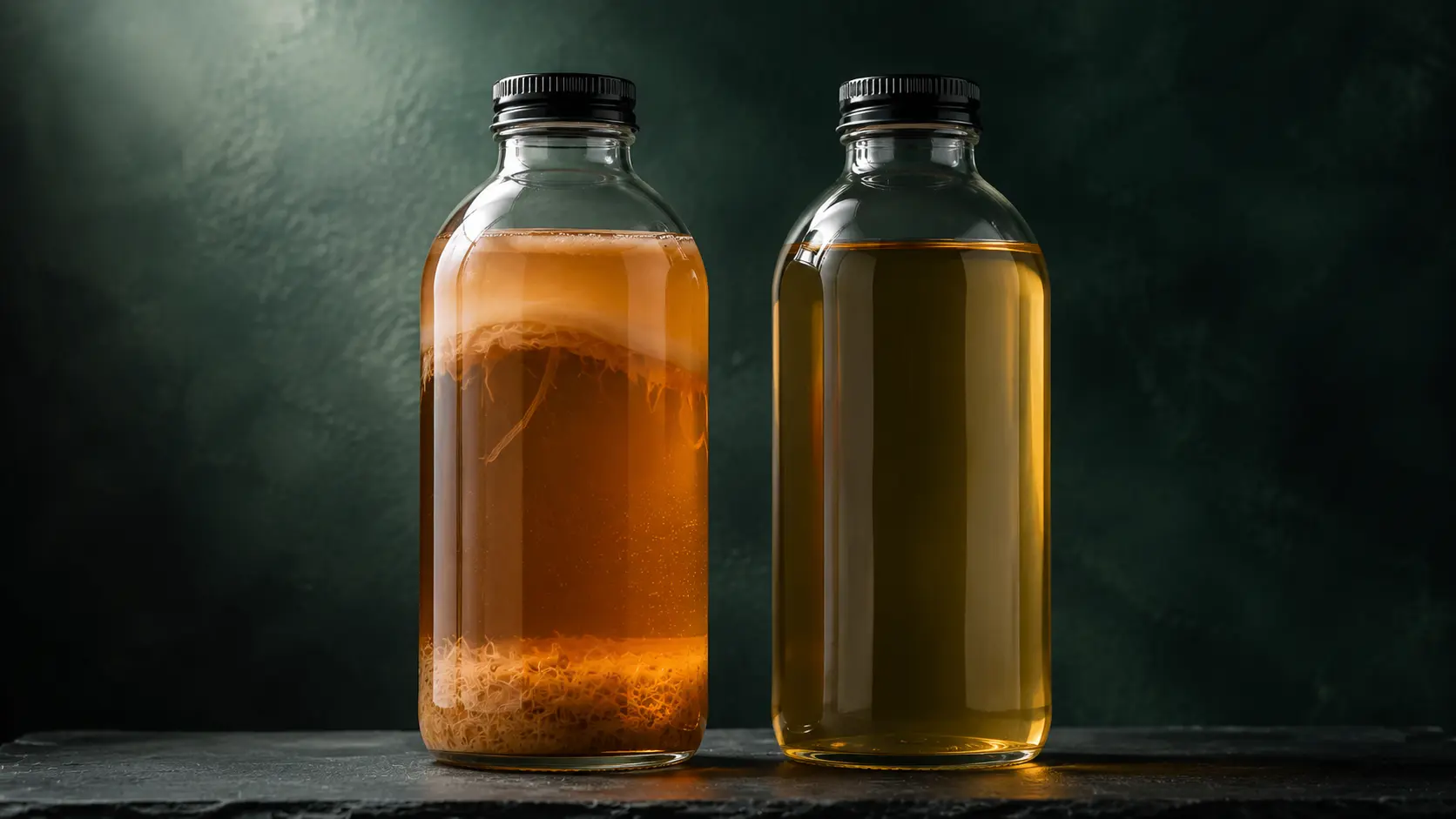
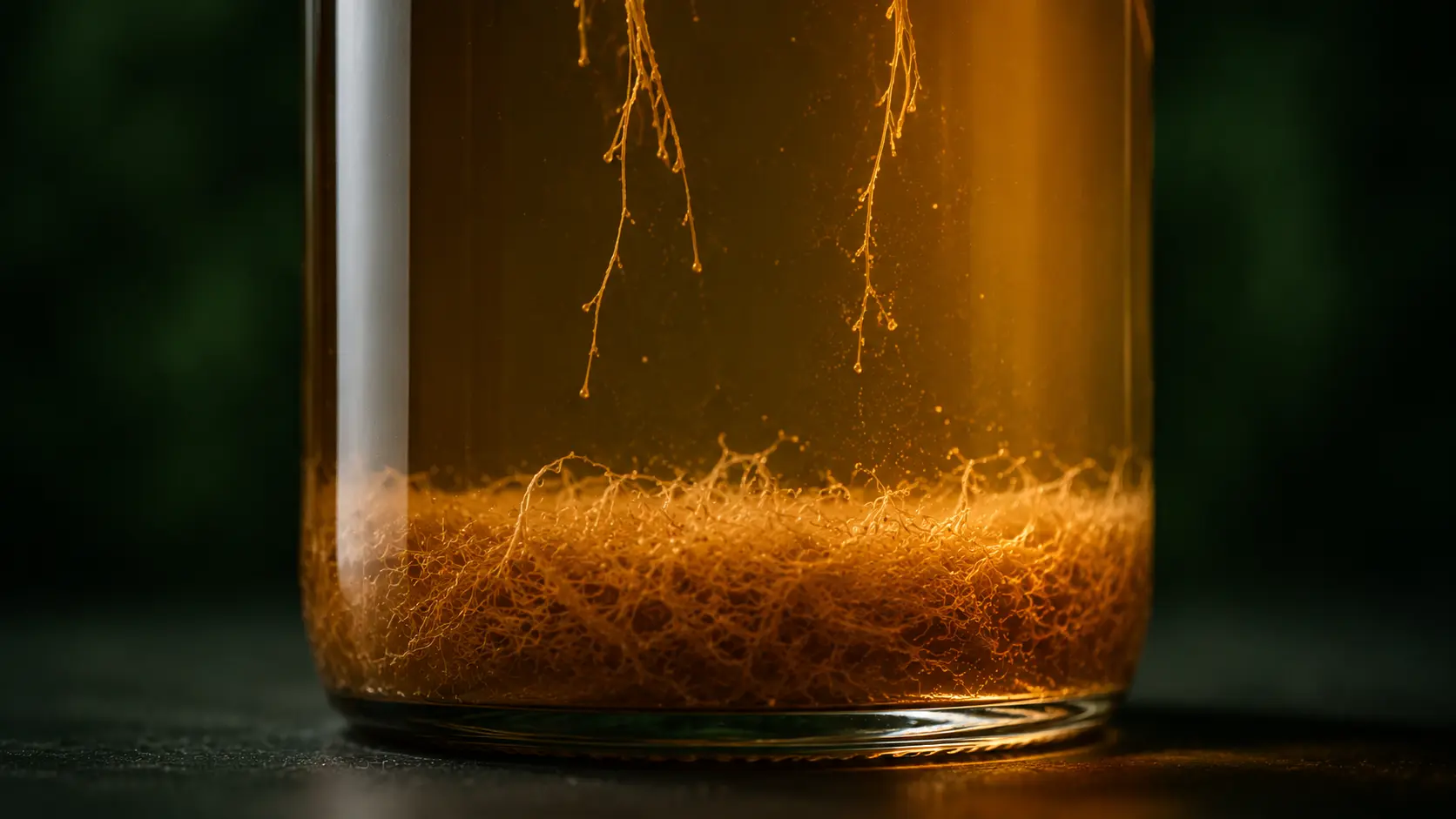
| Appearance | Slightly cloudy, may have sediment | Often crystal clear and uniform |
| Batch variation | Natural variation between batches | Highly consistent — engineered |
| Storage | Refrigerated — live product | May be shelf-stable |
| Format | Ready-to-drink liquid in bottle | Powder or concentrate — not fermented |
The scorecard puts numbers to what this guide describes
Each of the five shortcuts above corresponds directly to one or more criteria in the KombuchaSG authenticity scorecard. Every brand reviewed on this site is assessed against these criteria using the same 100-point framework — applied identically, without exception.
Read The Standard to see the full scorecard before reading any brand review. Then read the reviews. By that point, you will not need us to tell you what the scores mean.
Frequently Asked Questions
- Is a kombucha with carbonated water still kombucha?
- It is a kombucha-flavoured drink — not a genuinely fermented kombucha. The word kombucha is unregulated in Singapore, so any brand may use it. But a product whose carbonation comes from added sparkling water rather than second fermentation has bypassed the process that defines authentic kombucha. The fizz is industrially produced. The flavour integration of a genuine second fermentation is absent.
- Can a pasteurised kombucha still be good for gut health?
- Significantly less so. Pasteurisation kills the live cultures that are central to kombucha’s probiotic properties. A pasteurised product retains some antioxidant polyphenols from the tea base but loses the live organisms, enzymes, and full organic acid profile of a genuinely fermented drink. If you are buying kombucha specifically for its probiotic or gut-health properties, a pasteurised product does not deliver them in any meaningful quantity.
- Why does batch variation indicate authenticity?
- A living fermentation product — made with a live SCOBY, real fruit, and natural fermentation — will vary slightly between batches. Seasonal temperature changes, the composition of the SCOBY, tea quality, and fermentation duration all influence the final flavour. A product that is perfectly identical in every bottle and every batch has been engineered for consistency — which typically means the living, variable elements of genuine fermentation have been replaced or controlled out of the process.
- What if a brand scores low on one criterion but high on others?
- That is what the scorecard is designed to show. A brand may use real fruit ingredients and have documented SCOBY provenance but still add carbonated water — scoring well on flavouring and SCOBY integrity while scoring zero on carbonation. The total score reflects the full picture. No single criterion disqualifies a brand from being reviewed — but each shortcut reduces the overall score, and the scorecard makes each trade-off visible.
- Does a higher price mean more authentic kombucha?
- Not necessarily. Price reflects many factors — packaging, branding, distribution, and margin — that are unrelated to fermentation authenticity. Some genuinely fermented, small-batch kombucha products are competitively priced. Some expensive products take significant shortcuts. Price is not a reliable proxy for authenticity. The ingredient list and nutrition panel are.
- Should I avoid commercial grade kombucha entirely?
- That is a personal decision. A commercial grade kombucha — one that scores below 50 on the KombuchaSG scorecard — is not necessarily a bad drink. It may taste pleasant and be a reasonable alternative to a soft drink or juice. What it is not is an authentically fermented kombucha with the full profile of live cultures, organic acids, and natural carbonation. If that is what you are looking for, the score tells you whether you are getting it.
- Is kombucha powder ever worth buying?
- As a kombucha product, no — because it is not one in any meaningful fermented sense. The live cultures, organic acids, and natural carbonation that define genuine kombucha are absent. As a flavoured supplement or convenience product, that is a separate question outside the scope of this site. What it should not be evaluated as is kombucha.
- → The Standard — our 7-criteria authenticity scorecard
- → How to read a kombucha label
- → What is Kombucha — the complete guide
- → Browse all Singapore brand reviews
KombuchaSG is an independent educational platform. We are not affiliated with any kombucha brand. No brand is named or targeted in this guide. All assessments on this site are criteria-based, applied identically to every brand reviewed.