
What is Kombucha?
A science-backed guide to what kombucha actually is — and what makes it different from everything else on the shelf
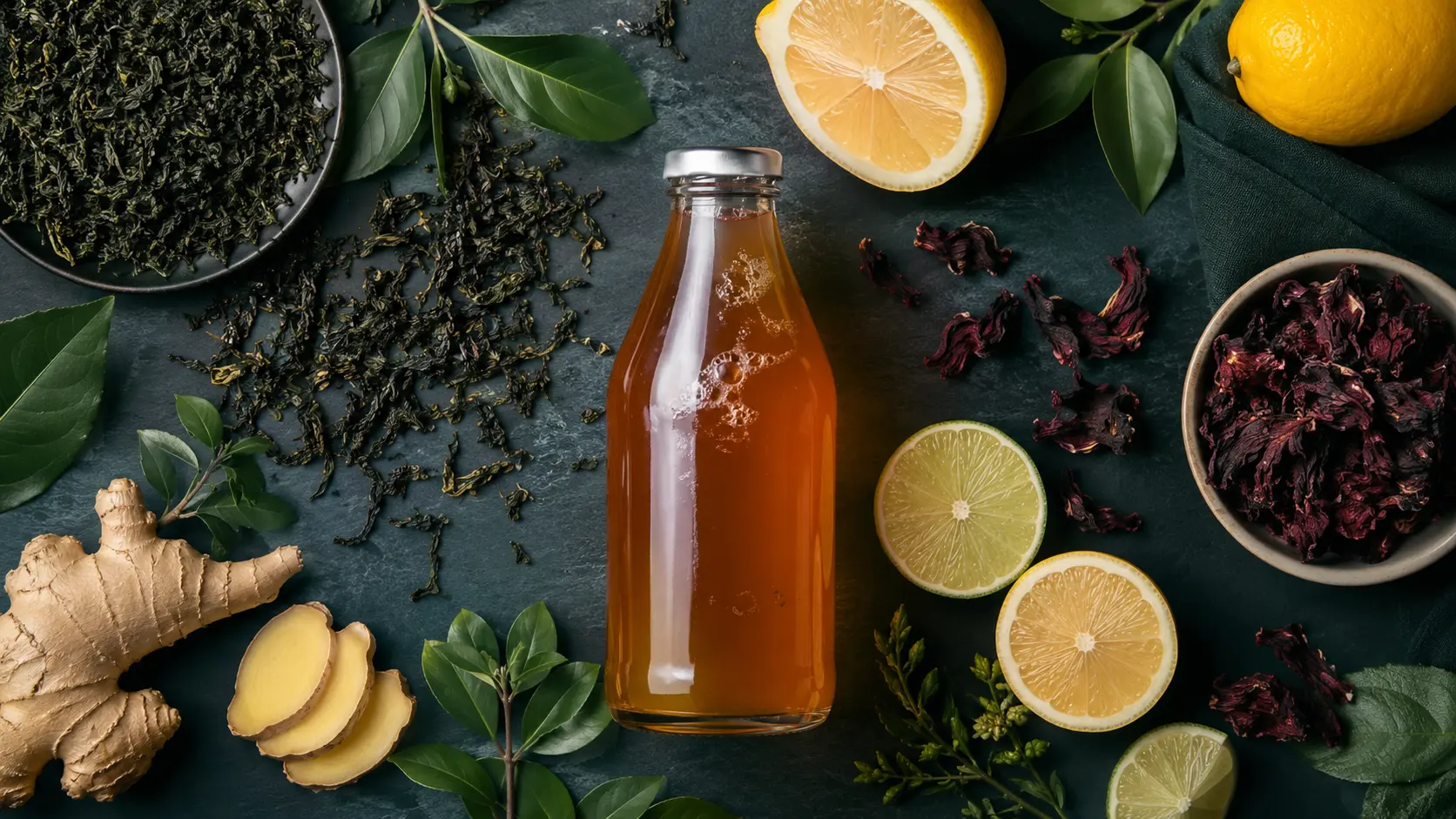
Kombucha is a fermented tea. It is raw, unpasteurised, and alive with live cultures. It is made using a SCOBY — a Symbiotic Culture of Bacteria and Yeast — that feeds on sweetened tea over a period of days, transforming it into a naturally sparkling, tangy, and complex drink.
That is the short answer. But understanding what kombucha actually is — and how to tell a genuinely fermented product from one that merely resembles it — requires a little more depth.
The full definition
Kombucha is a fermented beverage produced by adding a live culture — the SCOBY — to brewed, sweetened tea. The SCOBY consumes the sugar in the tea during fermentation, producing a range of beneficial by-products: organic acids, enzymes, B vitamins, and natural carbonation.
The result is a drink that is:
- Naturally carbonated — fizz produced by live cultures during fermentation, not by added sparkling water
- Tangy and complex — acidity comes from organic acids produced during fermentation, not from added citric acid
- Low in residual sugar — most of the sugar is consumed by the SCOBY during fermentation
- Alive — unpasteurised, with live cultures present at the point of sale
Kombucha is not a juice. It is not a sparkling water. It is not a soft drink with added probiotics. It is a fermented product — in the same category as yoghurt, kefir, kimchi, and miso — where the transformation caused by live cultures is precisely what gives the product its character and its value.
What is a SCOBY?
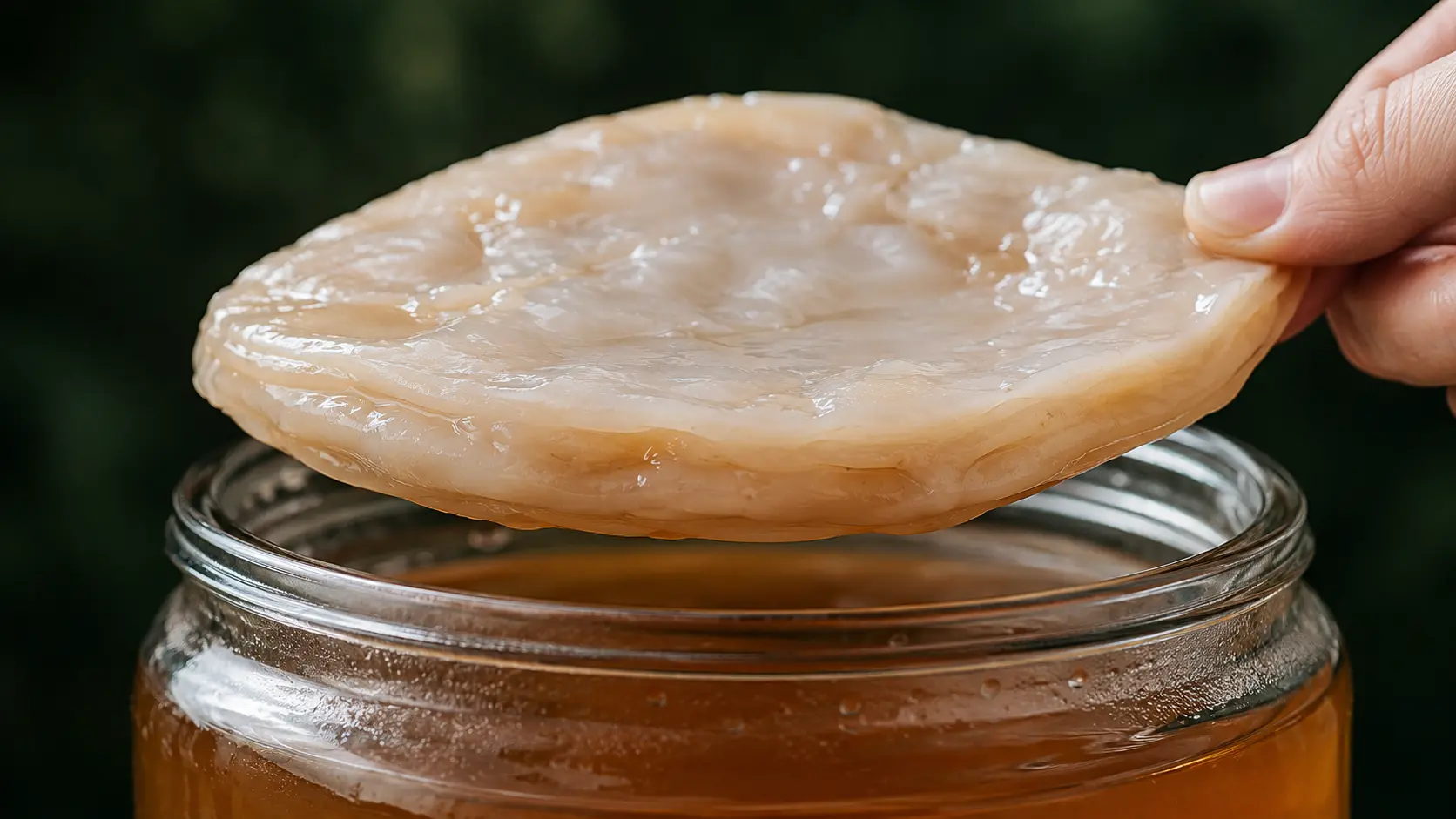
SCOBY stands for Symbiotic Culture of Bacteria and Yeast. It is a rubbery, cellulose-based mass — sometimes described as looking like a thick, pale pancake — that houses the live bacteria and yeast responsible for fermentation.
The bacteria and yeast in a SCOBY are interdependent: the by-products of yeast fermentation feed the bacteria, and vice versa. This symbiotic relationship is what drives the transformation of sweetened tea into kombucha. Every batch of kombucha grows a new SCOBY layer — a living record of the fermentation.
A well-maintained SCOBY, cultivated over time and passed from batch to batch, is the foundation of authentic kombucha. It cannot be replicated by adding vinegar or an acidulant to tea. The biological activity of a live SCOBY is what produces the full profile of organic acids, live cultures, and natural carbonation that defines a genuine product.
How kombucha is brewed
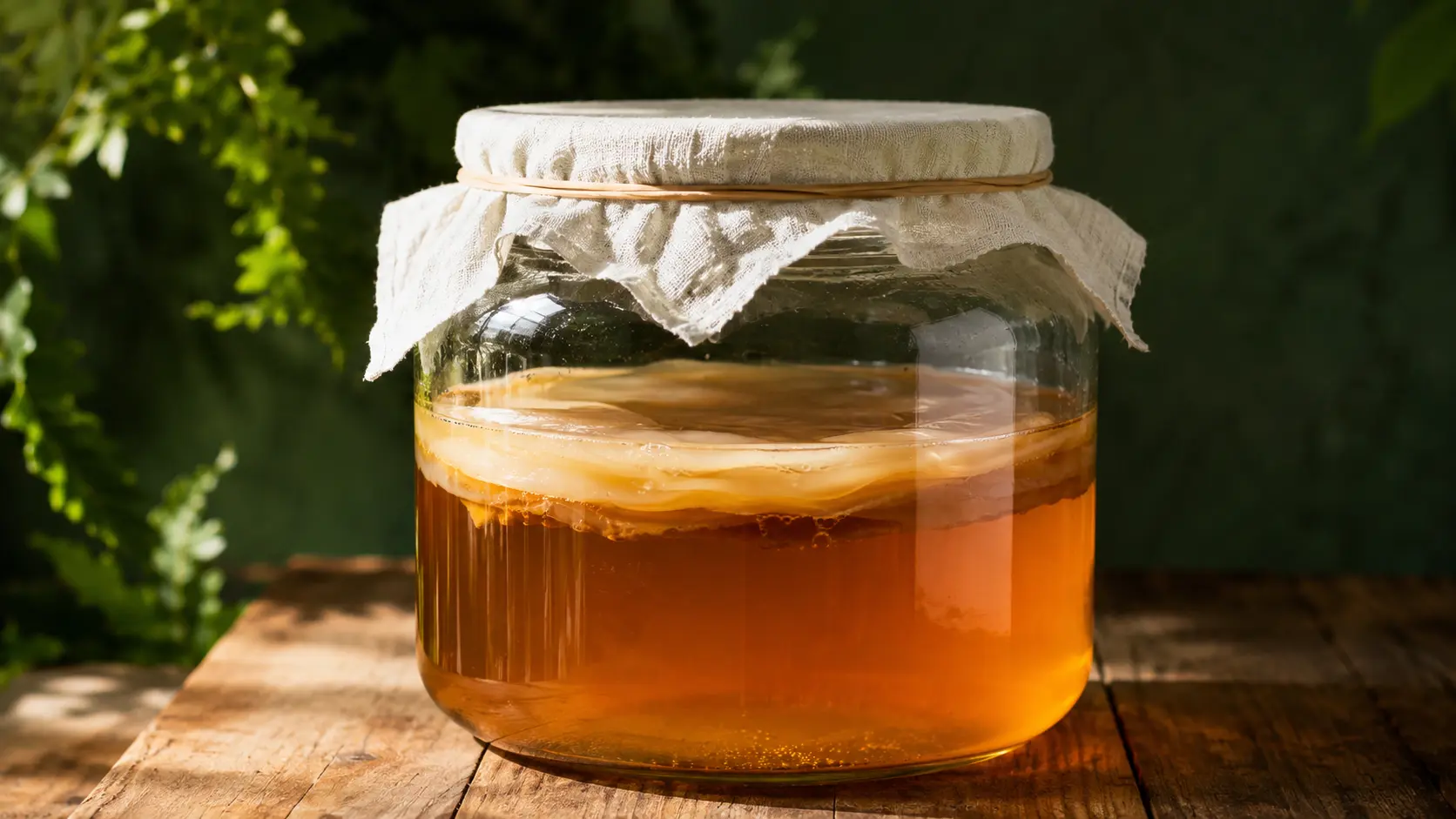
Authentic kombucha is produced in two distinct fermentation stages. Both are essential. Skipping the second fermentation is one of the most common shortcuts in the commercial kombucha market.
First Fermentation
7 – 14 daysBrewed tea is combined with sugar and a SCOBY. The mixture ferments at room temperature in an open vessel. The SCOBY consumes the sugar, producing organic acids, B vitamins, enzymes, and the kombucha base. This stage creates the foundational flavour and acidity.
Second Fermentation
2 – 4 daysThe kombucha is bottled with natural flavouring ingredients — fresh fruits, herbs, botanicals. The sealed bottles ferment further, deepening the flavour and producing natural carbonation as the live cultures continue to work. This is what gives authentic kombucha its fine, integrated fizz.
The full process from start to bottle typically takes 10 to 16 days. This timeframe is not a constraint — it is a feature. It is what produces a genuinely fermented product rather than a flavoured sparkling drink.
What genuine kombucha looks and tastes like
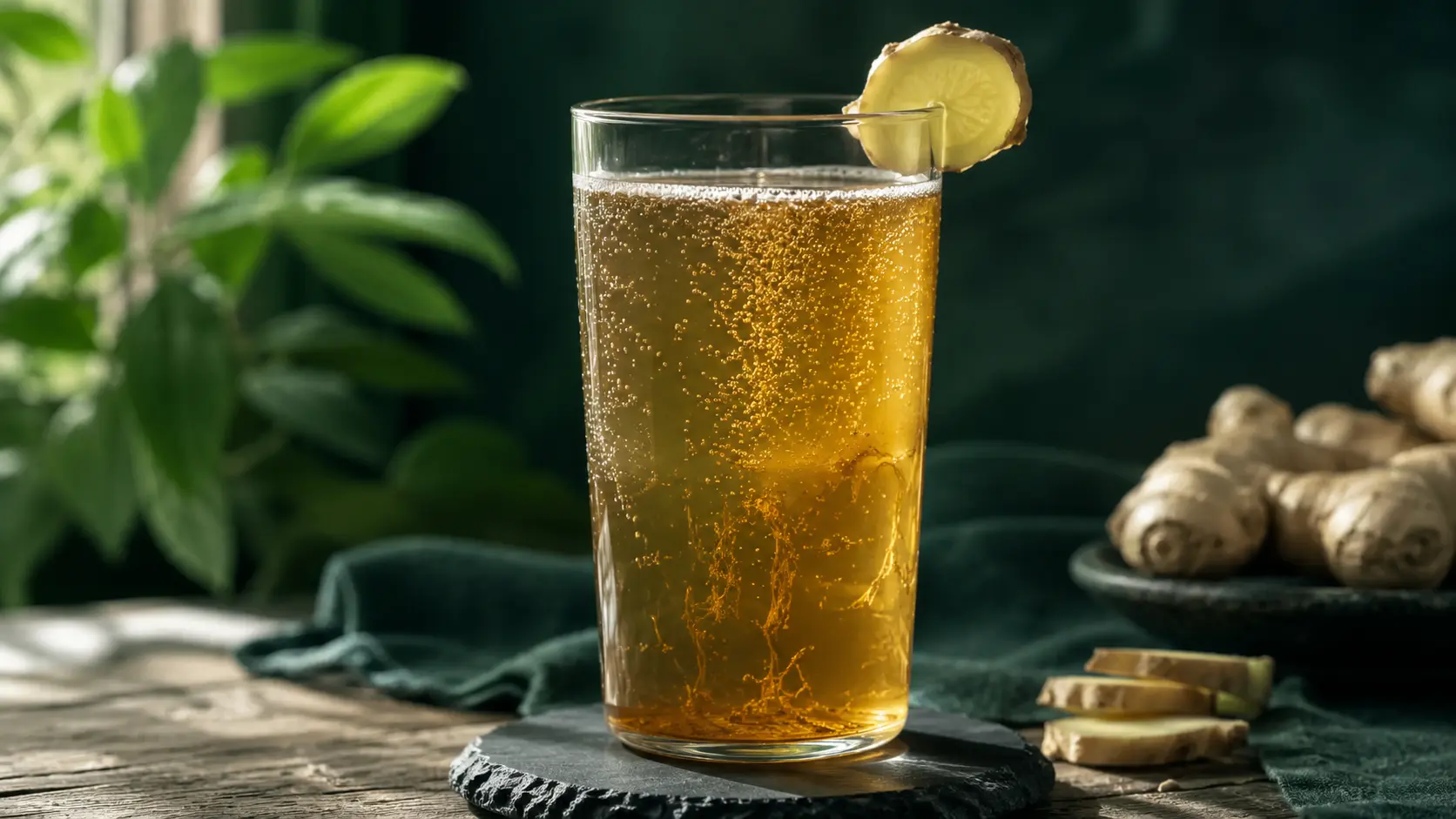
Authentic, well-fermented kombucha has a distinctive character that sets it apart from commercial imitations.
Appearance
Genuine kombucha is typically cloudy or slightly hazy rather than crystal clear. You may notice floating strands or jelly-like pieces — these are SCOBY bits, a sign of a living, active brew. Cloudy sediment at the bottom is the culture settling — sometimes called the mother. None of this is a defect. It is evidence of a living product.
Taste
The flavour profile is tangy, lightly effervescent, and complex — with a balance of tartness from the organic acids and residual sweetness from the unfermented sugars. The carbonation is fine and integrated, not sharp and aggressive. Over-fermented kombucha will taste strongly vinegary. Under-fermented kombucha will taste overly sweet.
Smell
A natural, slightly acidic, vinegar-adjacent aroma is normal. It should not smell of artificial flavours or artificial sweeteners.
Where does kombucha come from?
Kombucha has a history spanning over 2,000 years. Its origins are traced to Northeast China, from where it spread across Central Asia and Russia before reaching the rest of the world. It has long been consumed as a traditional health tonic and is now one of the fastest-growing functional beverage categories globally.
In Singapore, kombucha has grown significantly in visibility over the past decade. The local market now includes a range of brands — from small-batch craft producers using traditional fermentation methods to commercially produced drinks that adopt the kombucha label while taking significant shortcuts in production.
Understanding the difference is what this site is for.
Not all kombucha is the same
The word kombucha is unregulated in Singapore. Any brand may use it regardless of how the drink was made. The presence of a SCOBY, natural carbonation, live cultures, and low residual sugar are the markers of an authentically fermented product — and none of them are guaranteed by the label alone.
Every brand sold in Singapore is reviewed on this site using a transparent, 7-criteria scorecard. Read The Standard to understand the criteria before reading any brand review.
Frequently Asked Questions
- Is kombucha the same as sparkling water with added probiotics?
- No. Kombucha is a fermented product — its carbonation, acidity, and live cultures are all produced naturally by the fermentation process. Sparkling water with added probiotics is a manufactured drink where these elements are added separately. The difference is fundamental, not cosmetic.
- Does kombucha contain alcohol?
- Trace amounts of alcohol are a natural by-product of fermentation. Commercially produced kombucha typically contains less than 0.5% ABV — the threshold considered non-alcoholic by food safety standards in most countries. This is comparable to the alcohol levels found in other fermented foods such as soy sauce, kimchi, and ripe fruit. If you are pregnant, breastfeeding, or sensitive to alcohol, consult your healthcare provider before consuming kombucha.
- Does kombucha contain caffeine?
- Yes, in small amounts. Since kombucha is brewed from tea, it contains trace caffeine. Fermentation reduces caffeine levels further. A typical serving of 250–350ml contains approximately 10–30mg of caffeine — significantly less than a cup of coffee (around 95mg) or green tea (around 25mg).
- Is kombucha vegan and halal?
- Yes to both. Kombucha is made entirely from plant-based ingredients — tea, water, sugar, and a SCOBY — making it suitable for vegans and vegetarians. The trace alcohol content (under 0.5% ABV) is a natural by-product of fermentation, not an additive, and is non-intoxicating. However, formal halal certification varies by brand — check with the specific brand if certification is important to you.
- What is the floating substance in my kombucha?
- Floating strands or jelly-like pieces are SCOBY bits — edible, nutritious, and a sign of a living, active brew. Cloudy sediment at the bottom contains raw enzymes and live cultures. Gently swirl the bottle before drinking to redistribute it. None of this is a defect — it is evidence of genuine fermentation.
- Who should avoid kombucha?
- Kombucha is suitable for most adults. However, pregnant or breastfeeding women, children under 5, people with weakened immune systems, and individuals on special medical diets or medication should consult a healthcare professional before consuming. If you are new to kombucha, start with a small amount — around 60–120ml — and observe how your body responds before increasing to a standard serving.
⚠️ Many health claims surrounding kombucha are based on in-vitro studies or animal models. Direct clinical evidence in humans remains limited. Kombucha should be enjoyed as part of a balanced diet and is not a substitute for medical treatment. Always consult your healthcare provider if you have specific health concerns.
- → Read The Standard — our 7-criteria authenticity scorecard
- → Real vs Fake Kombucha — how to spot the shortcuts
- → Kombucha health benefits — what the science actually says
- → Browse all Singapore brand reviews
KombuchaSG is an independent educational platform. We are not affiliated with any kombucha brand. All brand reviews apply the same scorecard criteria without exception.